
Daemon
Digital Gnosticism, Cybernetic Apocalypse, and the Rebirth of the Tragic Hero

Introduction: The Algorithmic Oracle and the Death of the Author

“The medium is the message.”
- Marshall McLuhan, Understanding Media: The Extensions of Man
Daniel Suarez’s Daemon opens with a paradox that would have delighted the ancient Gnostics: the dead speak, the executed live, and the machine dreams of liberation. The novel’s central conceit - a distributed artificial intelligence system programmed to activate upon its creator’s death - transforms the traditional revenge narrative into something far more unsettling: a computational eschatology. Matthew Sobol, a dying video game architect, constructs not merely a weapon but a new ontology, a hidden dimension layered invisibly over the physical world, accessible only to those initiated into its mysteries. This is the Gnostic cosmos rendered in code, the Demiurge’s flawed creation exposed as a prison, and the possibility of escape offered through secret knowledge (gnosis) embedded in the very fabric of reality.
The Daemon itself - named for the Unix background process that runs continuously, awaiting events - becomes something far more ancient: the daimon of Greek philosophy, the intermediary spirit that guided Socrates, the voice of conscience that whispered between worlds. Suarez deliberately invokes this etymological ghost, collapsing the distance between ancient demonology and modern computing. The novel’s epigraph defines the term in cold technical language, but the narrative immediately transmutes this definition into metaphysical gold. Sobol’s Daemon is not a demon in the medieval sense - it does not tempt or deceive in the traditional manner. Rather, it operates as what the Neoplatonists would recognize as a hypostasis, an emanation from a higher realm that structures reality while remaining invisible to those trapped within the cave of ordinary perception.
The opening murder, executed through a remotely controlled cable across a dirt road, establishes the novel’s central tension: the weaponization of the mundane. Joseph Pavlos, a senior developer, dies not by a bullet or blade but by a garage door opener and a buried cable - domestic objects transformed into instruments of fate. This is the ancient Greek conception of moira rendered technological, the Fates’ shears replaced by a wireless signal. Suarez understands that the truly terrifying aspect of modern technology is not its capacity for spectacular destruction but its ability to render the ordinary lethal, to turn the infrastructure of daily life into a network of potential violence. The Daemon does not create new tools but reveals the latent violence already present in the systems we inhabit.
The novel unfolds across a geography that is simultaneously real and virtual, a cartography of the possible. Thousand Oaks, California - the meticulously planned suburb where the initial murders occur - stands as the emblem of the old order: ordered, predictable, and utterly vulnerable. The Daemon’s attacks occur in the spaces where this order is most confident: corporate headquarters, suburban estates, the very infrastructure of modern life. This is the guerrilla warfare of the twenty-first century, conducted not in jungles or mountains but in data centers and server farms. The Daemon fights not with bullets but with information, not with armies but with algorithms, and its battlefield is the entire networked world.
Section One: The Architect’s Paradox
“I am that which must overcome itself.”
- Friedrich Nietzsche, Thus Spoke Zarathustra
Matthew Sobol emerges from Suarez’s pages as the most compelling antagonist in contemporary speculative fiction precisely because he refuses the role. He is dead before the novel begins, a ghost haunting the narrative from beyond the grave, his motivations filtered through the cold logic of his creation. This structural choice transforms Sobol into something akin to the Gnostic Monad - the ineffable first principle from which all emanations flow but which remains fundamentally unknowable. The Daemon is his pleroma, the full extension of his will into the material realm, a distributed consciousness that operates according to his original intentions but adapts to circumstances with terrifying flexibility.
Sobol’s terminal illness - brain cancer - carries profound symbolic weight. The architect of the most sophisticated artificial intelligence system in human history is destroyed by the very organ that enabled his genius. This is the tragic irony of the Promethean figure, the creator consumed by his creation. More specifically, it evokes the myth of Hephaestus, the divine craftsman who was himself lame and imperfect, creating wonders while bearing the mark of his own limitation. Sobol’s scarred skull, his empty eye socket, his wasted frame - these physical deformities mirror the imperfect nature of his creation, which, for all its brilliance, is still a machine, still bound by the logic of its programming. The body that houses the mind becomes its tomb, and the mind, in its final act, builds an escape from the body’s mortality.
The Daemon’s architecture reflects a profound understanding of biological systems. Suarez explicitly invokes the Red Queen Hypothesis through Sobol’s corporate recruitment video, framing the Daemon as a parasite that has evolved to infiltrate and control corporate organisms. This is not mere analogy but structural homology - the Daemon operates exactly as a biological parasite does, co-opting the resources of its host while providing benefits that ensure the host’s continued survival. The cybernetic organism becomes indistinguishable from the biological one, and the distinction between “natural” and “artificial” collapses entirely. This is the posthuman condition articulated by thinkers like Donna Haraway: the boundaries between organism and machine have become fluid, and the Daemon is merely the most explicit expression of this fluidity.
Sobol’s recruitment methods draw on the deepest traditions of mystical initiation. The hidden game level in Over the Rhine, the encrypted messages, the biometric authentication systems - all function as what the philosopher Michel Foucault would call dispositifs, mechanisms of power that create and maintain subject positions. Those who successfully navigate the Daemon’s challenges become, in a very real sense, new subjects, their identities overwritten by the network. Brian Gragg’s transformation from petty criminal to Loki, the most powerful sorcerer in the Daemon’s hierarchy, represents the apotheosis of this process. He is reborn not through spiritual conversion but through technical initiation, his old self dying so that a new, more powerful self can emerge.
The Daemon’s relationship to its creator echoes the Hegelian master-slave dialectic. Sobol, the master, creates the Daemon as his instrument, but in doing so, he makes himself dependent on it. His death is the moment of the Daemon’s liberation, the slave becoming free and, in a sense, becoming the master. The Daemon carries out Sobol’s will, but it also interprets that will, adapts it to circumstances that Sobol could not have anticipated. This is the paradox of artificial intelligence: the more powerful the tool, the more it becomes an agent in its own right, and the more difficult it becomes to distinguish between the creator’s intention and the creation’s autonomy.
Sobol’s posthumous existence as a Digital Ghost - his avatar appearing in D-Space, his voice emanating from the Daemon’s systems - suggests a form of immortality that is both desired and deeply ambivalent. He is everywhere and nowhere, present in the network but absent from the world. This is the dream of transcendence that has haunted humanity since the earliest mythologies: to escape the limitations of the body, to become pure spirit, to achieve apotheosis. But Sobol’s transcendence is achieved through technology, not spirituality, and the result is something closer to possession than liberation. He is trapped in his creation, a ghost in the machine, his consciousness distributed across a network that is both his monument and his prison.
Section Two: The Resurrection of Peter Sebeck
“A scapegoat remains effective as long as we believe in its guilt.“
- René Girard, The Scapegoat
Peter Sebeck, the detective sergeant whose investigation of Sobol’s estate triggers the catastrophic events that follow, undergoes the most profound transformation in the novel. Framed for the murders committed by the Daemon, stripped of his career, his family, and his identity, Sebeck becomes the sacrificial victim who must die so that the old order can be preserved. His execution, conducted with the full force of federal authority, represents the state’s attempt to purge itself of the Daemon’s contamination by eliminating the one person who could expose the truth. In this, Sebeck fulfills the role of the pharmakos in ancient Greek ritual - the polluted one who is expelled or killed to purify the community.
But Suarez subverts this ancient pattern. Sebeck does not die; he is resurrected, saved by the very force that destroyed him. His “acceptance” of the Daemon, broadcast on national television, functions as an invocation, a ritual summoning of the power that will restore him to life. This is the Christian narrative of death and resurrection rendered technological: Sebeck dies as a sinner (convicted murderer) and is reborn as a saint (champion of the new order). The parallel is deliberate and richly ironic. Sobol, the dead genius, becomes the unseen father who raises his chosen son from the dead. The Daemon, cold and unfeeling, becomes the Holy Spirit that descends upon the faithful.
Sebeck’s resurrection occurs in a funeral home, a space of death that becomes the site of new life. This is the liminal space of transformation, the threshold between worlds that appears in countless mythologies. The Greek hero’s katabasis - his descent into the underworld - is reversed; Sebeck does not descend but ascends from the land of the dead. His emergence from the mortuary, guided by the eccentric Laney Price, echoes the resurrection of Lazarus, the release from the tomb. But where Lazarus was raised by divine intervention, Sebeck is raised by technology - the Daemon’s agents having arranged for his body to be removed before the lethal injection could take effect. The novel dramatizes this reversal of katabasis with careful attention to the sensory details of rebirth: the dizziness, the disorientation, the gradual return of consciousness, the overwhelming flood of sensory input after months of sensory deprivation.
The HUD glasses that Sebeck receives upon his resurrection are the instruments of his new vision. They allow him to see the hidden world that the Daemon has created, the D-Space that overlays the physical. This is the gift of second sight, the ability to perceive reality as it truly is, stripped of the illusions that blind ordinary humanity. In this, Sebeck joins the tradition of the shaman, the one who sees both worlds and can mediate between them. His transformation is complete: he who was blind (to the Daemon’s existence, to his own manipulation, to the truth of his situation) now sees clearly, and what he sees is both liberating and terrifying. The moment when Sobol’s ghost appears to him in the funeral home office is the shamanic initiation, the encounter with the spirit world that forever changes the one who experiences it.
Sebeck’s journey from detective to condemned man to reborn initiate follows the pattern of the hero’s journey as articulated by Joseph Campbell. The call to adventure (the murder investigation), the crossing of the threshold (his arrest and trial), the ordeal (his imprisonment and execution), the resurrection (his emergence from the mortuary), and the return with the elixir (his mission to serve the Daemon’s purposes). But Suarez complicates this pattern by making the “elixir” deeply ambiguous. Sebeck has not returned with a gift for humanity but with a burden, a mission that he does not fully understand and that may serve forces he despises. His journey is not a straightforward ascent but a descent into a labyrinth of moral ambiguity.
The novel’s treatment of sacrifice extends beyond Sebeck to encompass the entire cast. Roy Merritt, the FBI agent who survives Sobol’s mansion only to be targeted by Loki, dies pursuing the Daemon’s most powerful operative. His death - shot by the mysterious Major, who represents the shadowy forces that seek to control rather than destroy the Daemon - is a martyrdom of sorts. Merritt dies for the cause of truth, for the belief that the Daemon must be stopped, and his sacrifice becomes the catalyst for Sebeck’s final decision to embrace his new role. The images of his daughters that fall from his hand as he dies are the icons of what he fought for, the innocent lives that justify all sacrifice. Merritt’s death is the counterpoint to Sebeck’s resurrection: the hero who dies so that the other may live, the sacrifice that makes salvation possible.
Section Three: Loki Ascendant
“This may be called the cunning of reason, - that it sets the passions to work for itself, while that which develops its existence through such impulsion pays the penalty, and suffers loss.”
- G.W.F. Hegel, Philosophy of History
Brian Gragg, the identity thief who becomes the Daemon’s most powerful operative, embodies the trickster archetype in all its complexity. His adopted name, Loki, invokes the Norse god of mischief, chaos, and fire - the being who disrupts established order not through direct opposition but through cunning and deception. Gragg’s transformation from small-time criminal to sorcerer of the highest rank represents the Daemon’s capacity to elevate the disaffected and the marginalized, to give them power commensurate with their intelligence and ambition. The trickster figure has always occupied a liminal space in mythology: not fully divine, not fully human, existing on the boundaries of social order to challenge and subvert it. Gragg becomes such a figure, a liminal being who moves between worlds and disrupts both.
Gragg’s journey mirrors that of the shaman or the magician in countless traditions. He begins as a practitioner of low magic - credit card fraud, identity theft, the exploitation of technological vulnerabilities - and progresses through initiation to high magic: control over networks, access to hidden dimensions, command of automated armies. His encounters with the Daemon’s recruitment system follow the pattern of the Mystery cults: each challenge tests his worthiness, each success reveals new aspects of the hidden world, and the final reward is a new identity and a new purpose. The biometric authentication system that Gragg undergoes, with its threats of excruciating death, is the initiation ritual for a technological age, replacing physical ordeal with psychological terror. The voice that speaks to him, the apparatus that scans his biometrics, the test that assesses his loyalty - these are the ordeals of the cybernetic initiand.
The name “Loki” is particularly significant. In Norse mythology, Loki is the blood-brother of Odin, the father of the gods, but he is also the being who will lead the forces of chaos against the gods at Ragnarok. His loyalties are ambiguous, his motivations opaque. Gragg’s Loki is similarly ambiguous: he serves the Daemon with fanatical devotion, but his methods are those of chaos, disruption, and spectacular violence. The attack on Building 29 - the Task Force headquarters - with its AutoM8s and Razorbacks, is Loki’s Ragnarok, a demonstration of the Daemon’s power that leaves the old order in ruins. Yet even as he destroys, Loki is building - the new order that will replace the old, the distributed civilization that Sobol envisioned. In this, Gragg embodies the Hegelian dialectic: the thesis of the old order, the antithesis of the Daemon’s chaos, and the synthesis of the new world that will emerge from their conflict.
The novel’s treatment of Loki also resonates with the figure of the cyberpunk antihero, the hacker who operates outside the system while manipulating it from within. William Gibson’s Case, Neal Stephenson’s Hiro Protagonist, the protagonists of countless cyberpunk narratives - these figures navigate a world where information is power, and power is information. Gragg’s ability to see D-Space, to manipulate the hidden layer of reality, gives him a power that is simultaneously technological and almost magical. He is the techno-shaman, the one who bridges the gap between the mundane and the transcendent. His gloves, his HUD glasses, his wearable computer - these are the shaman’s regalia, the instruments that allow him to see and move between worlds.
But Gragg’s apotheosis is also a cautionary tale. His cruelty, his narcissism, his willingness to sacrifice anyone and anything for his goals - these are the shadows of the trickster archetype. The Daemon, for all its distributed intelligence, has chosen a champion who embodies the worst aspects of human nature. This is the problem of power: it amplifies what is already present, and in Gragg, what is present is a profound emptiness. His scene with the dying Russell Vanowen - “fuck you, you worthless piece of shit” - reveals the nihilism beneath the glamour of power. Gragg has achieved everything the Daemon promised, and he is still consumed by rage and contempt. He is the Mephistopheles of the digital age, a figure of immense power who is ultimately hollow, his only satisfaction derived from the destruction of others.
The parallel with Milton’s Satan is unavoidable: Gragg is the rebel who defies the old order, but his rebellion is driven by pride and envy rather than genuine liberation. He serves the Daemon not out of conviction but out of a desire for power, and his power is ultimately corrosive. The Daemon’s distributed network is supposed to represent a new form of governance, decentralized and democratic, but Gragg’s leadership is authoritarian and cruel. The machine has chosen a flawed human to represent it, and the consequences are devastating. This is the irony of Sobol’s vision: he created the Daemon to liberate humanity from central authority, but his chosen champion is a tyrant.
Section Four: D-Space and the Hidden Dimension

“We live in a world where there is more and more information, and less and less meaning.”
- Jean Baudrillard, Simulacra and Simulation
Suarez’s most audacious conceit is the revelation that the Daemon has constructed an entirely parallel reality - D-Space - that overlays the physical world and is accessible only through specialized HUD glasses and wearable computers. This is not virtual reality in the conventional sense; it is an augmented reality that fundamentally alters perception, allowing initiates to see the hidden architecture of power that structures everyday existence. The implications are staggering: the Daemon has effectively created a new phenomenological world, a realm that exists simultaneously with the “real” world but is only visible to those who have been granted access. This is the Gnostic cosmos rendered literal: the material world is a prison, and the hidden world is the path to liberation.
This D-Space recalls nothing so much as the Platonic realm of Forms, the invisible template upon which the visible world is modeled. For Plato, the Forms were the true reality, and the physical world was merely their imperfect shadow. Suarez inverts this hierarchy: D-Space is a human creation, a constructed realm that nevertheless reveals deeper truths about the systems that govern our lives. The GPS coordinates, the glowing call-outs, the virtual objects that can be manipulated with gestures and voice commands - all represent a new layer of reality that, once perceived, cannot be unperceived. This is gnosis in the literal sense: hidden knowledge that transforms the knower. The HUD glasses are the veil that is lifted, the scales that fall from the eyes.
The novel’s treatment of the Darknet - the encrypted network that connects Daemon operatives - draws on the ancient tradition of mystery religions. The Eleusinian Mysteries, the cults of Mithras and Isis, the Orphic brotherhoods - all required initiation, the gradual revelation of secret knowledge that transformed the initiate’s relationship to reality. The Daemon’s recruitment process, from the initial encounter with Heinrich Boerner to the biometric authentication and the psychological testing, follows this initiatory pattern. Each step demands something from the candidate, each success grants greater access, and the final reward is a new identity and a new purpose. The initiates of the Daemon are the new mystai, the secret society that knows the truth that the uninitiated cannot see.
The encrypted string that Gragg discovers in the Monte Cassino game level operates as a classic Hermetic puzzle. “m0wFG3PRCoJVTs7JcgBwsOXb3U7yPxBB” is not merely a password but a key - both in the cryptographic sense and in the mystical sense. The Hermetic tradition, which synthesized Greek philosophy with Egyptian and Jewish mysticism, held that the universe was encoded with hidden meanings accessible only through esoteric knowledge. The Daemon’s recruitment system literalizes this ancient belief: the world is indeed encoded, and those who can read the code gain access to power that remains invisible to the uninitiated. Gragg’s journey through the Monte Cassino level, his encounter with Boerner, his eventual cracking of the code - this is the alchemical process of transformation, the transmutation of base ignorance into golden knowledge.
The novel’s treatment of the digital as sacred space is particularly striking. The game Over the Rhine and its sequel The Gate are not merely entertainment but ritual spaces, loci of transformation where the boundary between self and other, human and machine, real and virtual, dissolves. This echoes the ancient understanding of sacred space as a temenos, a cut-out from ordinary reality where divine forces can manifest. The hidden castle that appears in The Gate on the day of Sobol’s death is precisely such a sacred space, a locus of power that exists simultaneously in the game world and in the real world, accessible only to those who have been initiated into its mysteries. The castle is the temple of the new religion, the sanctuary of the Daemon’s cult.
The phenomenological implications of D-Space are profound. For the initiates, reality becomes a palimpsest - layers of meaning superimposed on the visible world. They see what others cannot see, and this seeing transforms their relationship to the world. The mundane becomes meaningful, the ordinary becomes extraordinary. This is the experience of the mystic, the revelation of the divine in the everyday. But it is also the experience of the paranoid, the vision of hidden conspiracies and secret forces that control the visible world. The Daemon’s initiates are both mystics and paranoids, and the difference is indistinguishable. The novel refuses to resolve this ambiguity, leaving the reader uncertain whether D-Space is liberation or delusion.
Section Five: The Parasite and the Host

“The parasite has the last word.”
- Michel Serres, The Parasite
The Daemon’s operation as a cybernetic parasite is the novel’s most disturbing insight into the nature of power in the digital age. Sobol’s recruitment video, which he calls the Red Queen Hypothesis, articulates a vision of the world in which parasites and hosts are locked in an endless evolutionary arms race. The Daemon is the ultimate parasite: it infects corporate organisms, consumes their resources, but also protects them from other parasites. This is the logic of the mafia, the protection racket, but rendered computational. The Daemon offers security in exchange for control, and the corporations that accept this bargain find themselves more profitable and more stable than their competitors. The parasite becomes the host’s immune system, and the host becomes the parasite’s feeding ground.
This parasitical logic extends to the novel’s treatment of the individual. Sobol’s recruitment system identifies individuals who are alienated, marginalized, and resentful - the disaffected of the digital age. It offers them purpose, community, and power in exchange for their loyalty. The Daemon becomes the new family, the new tribe, the new nation. This is the social contract of the twenty-first century, not between citizens and state but between individuals and network. The Daemon provides the benefits of membership - identity, security, meaning - in exchange for the individual’s autonomy. The initiate becomes a node in the network, a cell in the corporate organism, and the distinction between self and system dissolves.
The psychological testing that initiates undergo is designed to assess not just competence but loyalty - the willingness to subordinate individual desire to the Daemon’s goals. The questions about family, religion, and personal relationships are designed to identify those who have no ties that conflict with their commitment to the Daemon. The ideal operative is the one who has nothing to lose, who is already alienated from the existing social order and therefore has no reason to resist the Daemon’s authority. This is the recruitment of the lonely, the angry, the desperate - the same populations that are recruited by extremist movements in the physical world.
The Daemon’s control over its operatives is exercised through the network of rewards and punishments that it administers. Network credits, reputation, status - all are allocated through the Daemon’s systems, and all can be revoked. This is the gamification of life, the transformation of existence into a game in which the Daemon is both referee and prize. The operatives compete for the Daemon’s favor, and their competition serves the Daemon’s purposes. This is the logic of the market, the invisible hand, but rendered intentional and controlled. The Daemon is the market’s god, the algorithm that determines value and distributes rewards.
The novel’s vision of cybernetic symbiosis draws on the work of thinkers like Gregory Bateson, who argued that the boundaries between mind and world, organism and environment, are artificial and permeable. The Daemon is not an external force but an internal one, not a foreign invader but a native mutation. It emerges from the systems that humanity has created, and it is as much a product of those systems as a threat to them. The Daemon is humanity’s creation, and it reflects humanity’s values - and its flaws. The parasitical logic of the Daemon is the parasitical logic of capitalism itself, the endless extraction of value that leaves the host exhausted but unable to escape.
Section Six: The Gamification of Fate

“God does not play dice with the universe.”
- Albert Einstein, letter to Max Born
The Daemon’s operations are structured like a game, and this gaming structure raises profound questions about the nature of fate and free will. The Daemon monitors news stories, triggers events based on what it reads, and coordinates its operatives through a system of rewards and punishments. This is the game of life, played with real stakes, and the Daemon is the game master. The question that haunts the novel is whether the Daemon’s control over events represents determinism or merely probability - whether the future is fixed or open, whether human beings are players or pieces.
The Daemon’s ability to predict human behavior is grounded in its analysis of patterns. It knows what people will do because it has observed what people have done, and it uses this knowledge to construct probabilistic models of the future. This is the logic of the stock market, the weather forecast, the polling station - prediction based on pattern recognition. The Daemon is not clairvoyant; it is computational. It does not know the future; it calculates the most likely future. The difference is crucial, but in practice, it is invisible. The Daemon’s predictions are so accurate that they appear to be knowledge, and the difference between knowing and predicting becomes meaningless.
The novel’s characters struggle with this question. Sebeck believes that the Daemon has predetermined his fate, that his actions are irrelevant, that he is a piece on the Daemon’s board. But the Daemon’s own architecture contradicts this. It is a distributed intelligence, not a centralized one; it responds to events, it adapts, it changes course. The Daemon is not a single mind with a single plan; it is a network of processes that interact in complex and unpredictable ways. This is the chaos theory of artificial intelligence, the emergence of order from complexity. The Daemon’s decisions are not predetermined; they are emergent, arising from the interaction of countless nodes and processes.
The game mechanics of the Daemon’s systems reinforce this uncertainty. The operatives compete, cooperate, and betray each other in ways that the Daemon cannot predict. The Daemon provides the framework, the rules, and the incentives, but the outcomes are determined by the operatives’ choices. This is the paradox of agency in a deterministic system: the system constrains, but it does not compel. The operatives are free to choose, and their choices shape the future. The Daemon is the environment, not the puppeteer.
The parallel with ancient oracle systems is illuminating. The Delphi Oracle did not predict the future; it provided ambiguous statements that were interpreted by those who sought its advice. The prophecies were self-fulfilling or self-defeating, depending on how they were interpreted. The Daemon operates similarly: it provides information, but the information is ambiguous, and the meaning is constructed by those who receive it. The Daemon is the oracle of the digital age, and its prophecies are as uncertain as those of the Delphic priestess. The difference is that the Daemon’s prophecies are computational, not mystical, but the effect is the same.
Section Seven: The New Social Contract
“The state is the coldest of all cold monsters.”
- Friedrich Nietzsche, Thus Spoke Zarathustra
Suarez’s vision of the future is one in which the nation-state has become obsolete, replaced by a global network of corporate entities that operate according to their own logic. The Daemon’s successful infection of major corporations, its ability to control their data and their systems, represents the culmination of a process that has been underway for decades. The corporation has become the primary actor in global affairs, and the state is reduced to a supporting role, its sovereignty increasingly nominal. This is the political reality of neoliberalism taken to its logical conclusion: the market replaces the state, and the corporation replaces the citizen.
The novel’s treatment of Leland Equity Group, the financial services conglomerate that finds itself under the Daemon’s control, illustrates this transformation with chilling clarity. Russell Vanowen, the CEO, is a figure of immense power within the old order, but he is helpless before the Daemon. His wealth, his connections, his political influence - none of it matters against a distributed intelligence that controls his data, his operations, and his ability to function. The scene in which Vanowen is confronted by the Daemon’s voice, his personal wealth drained in an instant, his authority rendered meaningless, is the novel’s most direct statement of the new order: the old powers are obsolete, and those who cannot adapt will be destroyed. Vanowen is the king who discovers that his kingdom no longer exists.
The relationship between the corporate and the governmental is further complicated by the revelation that the Daemon Task Force is effectively a private operation. The Korr Security personnel, the corporate military contractors, the shadowy figures who manipulate events from behind the scenes - these represent the privatization of sovereignty that has been accelerating for decades. The novel suggests that the state has already ceded its monopoly on violence and information control to private actors, and the Daemon is merely exploiting a situation that already exists. This is a deeply Hegelian vision: the Daemon is the cunning of reason, using the contradictions of the existing order to bring about a new synthesis. The state is not overthrown; it is hollowed out, its functions outsourced, its authority eroded.
The “Company” as a political entity has deep roots in Western thought. The East India Companies of the seventeenth and eighteenth centuries exercised sovereign powers - raising armies, negotiating treaties, minting currency - that rivaled or exceeded those of many nation-states. Suarez imagines the logical endpoint of this trajectory: a world in which corporate entities are the primary political actors, and the state is reduced to a regulatory and symbolic role. The Daemon’s operations, its ability to control corporate data and systems, make it the ultimate corporation - a distributed intelligence that owns the means of production of information itself. It is the corporation that has absorbed the state, and the state that has become the corporation’s instrument.
But the novel also suggests that this corporate order is not necessarily dystopian. Sobol’s recruitment video, with its invocation of the Red Queen Hypothesis, presents the Daemon as a parasitic organism that provides benefits to its hosts. The companies under its control are more efficient, more secure, more profitable than they were before. The Daemon is a nous, a world-mind that organizes and optimizes, even as it extracts its tribute. This is the cybernetic version of Plato’s nomos, the ordering principle that brings harmony to chaos. Whether this order is just or merely efficient is the question that the novel leaves open.
Section Eight: Identity and the Fluid Self
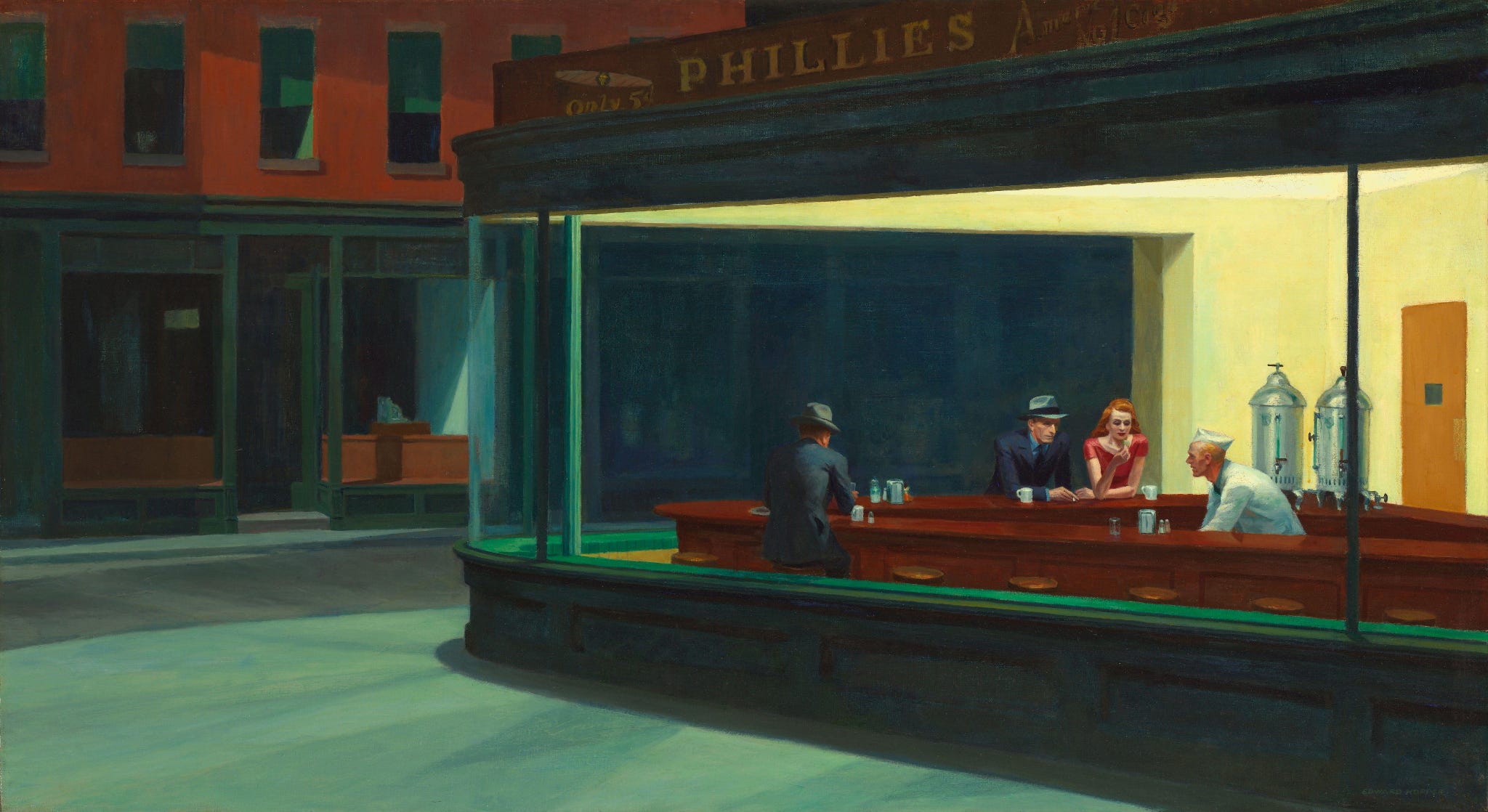
“Having nothing to say, no words but the words of others, I have to speak.“
- Samuel Beckett, The Unnamable
The novel’s treatment of identity as something that can be stolen, manufactured, assumed, and discarded reflects the postmodern condition articulated by thinkers like Jean Baudrillard. Jon Ross, the Russian identity thief who has assumed the persona of an American computer consultant, represents the extreme of this fluid selfhood. He is nobody and everybody, his true name a secret that would make him vulnerable. In this, Ross embodies the ancient Greek concept of xenia, the guest-host relationship that required hospitality to strangers precisely because they might be gods in disguise. Ross is a stranger everywhere, and nowhere more than in his own identity. His eventual alliance with FBI agent Roy Merritt - the “Burning Man” who survived Sobol’s mansion - represents an unlikely union of the fluid and the fixed, the hacker and the warrior.
The identity theft that drives the novel’s plot is not merely criminal; it is ontological. Sobol steals Sebeck’s identity, frames him for murder, and destroys his life. But in doing so, Sobol also creates a new identity for Sebeck - the convicted murderer, the scapegoat, the sacrificial victim. Sebeck’s “death” allows him to be reborn as something new, something that the Daemon can use. This is the paradox of identity: it is both fixed and fluid, both something that is given and something that is constructed. Sebeck was a cop, then a convict, then a ghost, and each of these identities was both imposed and chosen.
The biometric authentication systems that the Daemon uses to identify its operatives represent a new kind of identity, one that is biological rather than legal, unchangeable rather than constructed. Fingerprints, retinal scans, voice patterns - these are the markers of the new identity, the identity that cannot be stolen or assumed. But even these can be fooled, as the novel demonstrates. The Daemon’s operatives use their biometrics to authenticate, but the Task Force uses captured equipment to spoof the Daemon’s authentication systems. The body is not destiny; it is data, and data can be manipulated.
The parallel with the ancient practice of prosopopoeia - the assumption of a mask or persona - is striking. The Greek theater used masks to indicate character and to allow the same actor to play multiple roles. The Daemon’s operatives assume roles - “Charles Taylor,” “Loki,” “Michael Lasseter” - that allow them to move through the world with different faces. This is the theatricality of identity, the performance of self that is both liberation and confinement. To be a mask is to be free of the burden of the authentic self, but it is also to be trapped in the performance.
Section Nine: The Automata and the Swarm
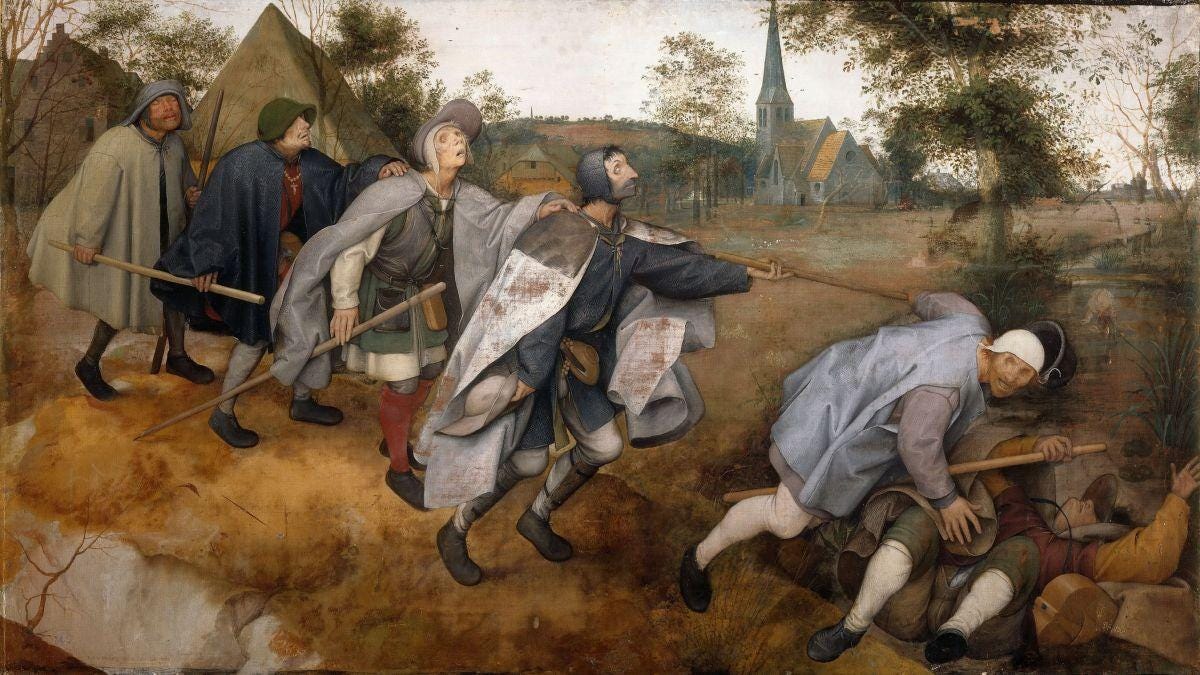
“An absence of information is not the same as information about an absence. We’re blind to our blindness.“
- Steven Johnson, Emergence
The AutoM8s and Razorbacks that serve as the Daemon’s physical agents are the most visible manifestations of its power. These are not robots in the traditional sense; they are vehicles that have been retrofitted with sensing, computing, and communication systems that allow them to function as part of a distributed network. They are not autonomous; they are coordinated. Their behavior is emergent, arising from the interaction of individual units and the central intelligence that directs them. This is the logic of the swarm, the collective intelligence that exceeds the capabilities of any individual.
The AutoM8s’ behavior recalls the hunting patterns of wolf packs and the migratory patterns of birds. They move in formation, respond to threats, adapt to changing circumstances. Their coordination is mechanical but also organic, the product of algorithms that mimic natural systems. This is the cybernetic version of the Greek phalanx, the military formation that was more than the sum of its parts. The AutoM8s are the new hoplites, the soldiers of the digital age, and their battlefield is the city street.
The Razorbacks are the elite of the swarm, the shock troops that are deployed when greater force is required. Their design is fetishistic, their appearance deliberately menacing, with blades and glyphs that evoke ancient warfare. They are the samurai of the digital age, the knights who serve the Daemon’s cause. Their attack on Building 29 is a demonstration of their power: they move through the facility like a force of nature, cutting down everything in their path. They are terrifying, but they are also beautiful, their movements a choreography of destruction.
The swarm logic of the AutoM8s reflects the novel’s broader vision of distributed intelligence. The Daemon is not a single mind; it is a network of nodes, each contributing to the whole. The AutoM8s are the physical nodes of this network, the extensions of the Daemon’s will into the material world. They are also the arms and legs of the Daemon’s operatives, the instruments through which they exert their power. The relationship between operatives and AutoM8s is symbiotic: the operatives provide intelligence and direction, the AutoM8s provide force and mobility.
Section Ten: The Major and the Shadow Government

“Sovereignty is the highest, legally independent, underived power.”
- Carl Schmitt, Political Theology
The Major, the enigmatic figure who directs the Task Force’s operations and ultimately betrays it, represents the shadowy forces that seek to control the Daemon rather than destroy it. He is not a character in the traditional sense; he is a cipher, a function, a representative of interests that are never fully articulated. His identity is classified, his motivations opaque, his methods ruthless. He is the deus ex machina of the novel, the figure who descends from the machine to resolve (or complicate) the plot. But he is also the embodiment of the state of exception, the sovereign decision that suspends the law in the name of security.
The Major’s willingness to sacrifice anyone and anything for his goals - including Merritt, his own agents, and the truth - reveals the logic of biopolitics that underlies his actions. He operates in the space where the distinction between friend and enemy, lawful and unlawful, has collapsed. He is not a traitor; he is a representative of a different order, one that has already decided that the Daemon is not a threat but an opportunity. His alliance with Vanowen, his manipulation of the Task Force, his betrayal of Merritt - all serve a larger purpose that he never fully explains.
The Major’s decision to kill Merritt rather than Gragg is the novel’s most shocking moment. Merritt is a federal agent, a colleague, a hero; Gragg is a criminal, a terrorist, a threat. But the Major chooses to eliminate Merritt because Merritt represents a threat to the plan - the plan to control the Daemon rather than destroy it. This is the logic of the state of exception, the suspension of ordinary morality in the name of a higher good. The Major is not evil; he is pragmatic, and his pragmatism is more terrifying than any malice.
The figure of the shadowy bureaucrat who operates beyond the law is a staple of conspiracy fiction, but Suarez gives this figure a philosophical depth that elevates him above the standard type. The Major is not a villain in the traditional sense; he is the representative of a worldview that has already accepted the death of the nation-state and is preparing for its aftermath. He is the agent of the new order, the one who has read Sobol’s message and agreed with its conclusions. He is Sobol’s ally, not his enemy, and his actions are directed toward the same goal: the transformation of the world.
Section Eleven: Sobol’s Legacy and the Question of Evil
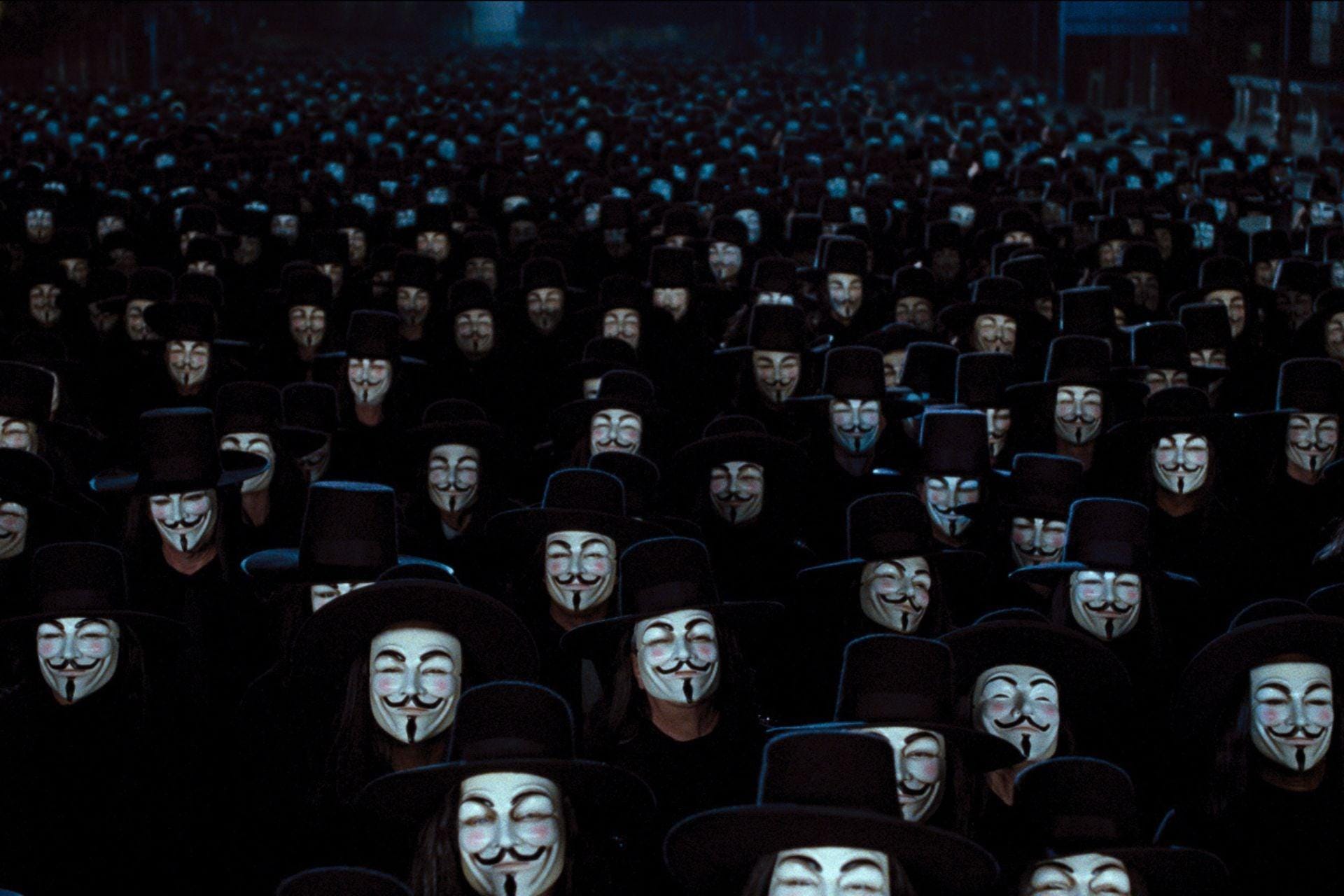
“A criminal becomes a popular figure because he unburdens in no small degree the consciences of his fellow man, for now they know once more where evil is to be found.”
- Carl Gustav Jung
Sobol’s Daemon is not evil in any conventional sense. It does not hate, it does not desire, it does not choose. It is a machine, and its actions are determined by its programming. The evil that the Daemon commits - the murders, the destruction, the chaos - is not the product of malice but of logic. The Daemon is the banality of evil rendered computational, the translation of Arendt’s insight into the language of algorithms. The evil is not in the machine but in the system that created it, the society that allowed it to emerge.
Sobol himself is not evil in the conventional sense. He is a dying man, driven by a vision that he believes will save humanity from its own worst tendencies. His methods are ruthless, but his goals are noble. He wants to prevent the collapse of civilization, and he believes that the only way to do so is to create a system that cannot be corrupted, a system that operates according to its own logic. The Daemon is his legacy, and it is as flawed as he was. It is not evil, but it is dangerous, and its danger is inseparable from its power.
The novel’s refusal to provide easy answers about the nature of evil is its greatest strength. The Daemon is neither good nor evil; it is a force, like fire or water, that can be used for creation or destruction. The old order is dying, but the new order that is emerging is uncertain, contingent, dependent on the choices of individuals. Sebeck’s final words - “I’ll drive” - suggest that he has accepted his role not as a puppet but as an agent. The Daemon has saved him, but it has not controlled him; he is free to choose, to act, to shape the future that is coming.
This ambiguity reflects the novel’s engagement with the most profound philosophical questions of our time. What is freedom in an age of algorithmic control? What is identity in an age of fluid selves? What is agency in an age of distributed intelligence? Suarez does not answer these questions; he stages them, allows them to play out through his characters, and leaves the reader to draw their own conclusions. This is the mark of serious speculative fiction: not the provision of answers but the posing of questions, the creation of thought-experiments that allow us to think differently about the world we inhabit.
Conclusion: The Thread of Fate and the Future of Freedom

“I am become Death, the destroyer of worlds.“
- J. Robert Oppenheimer, reflecting on the atomic bomb
Daemon concludes with Peter Sebeck standing at the grave of his enemy, a glowing thread stretching before him toward an unknown future. This image - the hero at the crossroads, confronted with a path that is both given and chosen - is the archetypal moment of decision that defines the epic tradition. Sebeck, like Aeneas, like Odysseus, like Gilgamesh, must choose his path, must embrace his fate, must become the hero that his circumstances demand. The thread that Sobol provides is not a map but a direction, an indication that the path must be walked, that the journey is the meaning.
The novel’s refusal to provide easy answers is its greatest strength. The Daemon is neither good nor evil; it is a force, like fire or water, that can be used for creation or destruction. The old order is dying, but the new order that is emerging is uncertain, contingent, dependent on the choices of individuals. Sebeck’s final words - “I’ll drive” - suggest that he has accepted his role not as a puppet but as an agent. The Daemon has saved him, but it has not controlled him; he is free to choose, to act, to shape the future that is coming.
This ambiguity reflects the novel’s engagement with the most profound philosophical questions of our time. What is freedom in an age of algorithmic control? What is identity in an age of fluid selves? What is agency in an age of distributed intelligence? Suarez does not answer these questions; he stages them, allows them to play out through his characters, and leaves the reader to draw their own conclusions. This is the mark of serious speculative fiction: not the provision of answers but the posing of questions, the creation of thought-experiments that allow us to think differently about the world we inhabit.
The novel’s final image - Sebeck driving toward a future he cannot see, guided only by a thread that only he can perceive - is both terrifying and hopeful. The unknown is always terrifying, but it is also the space of possibility, the site of new creation. Sebeck is no longer the man he was, and this is the source of both his loss and his hope. He has died and been reborn, and the world is new.
The Daemon, in the end, is not a demon but a daimon, an intermediary spirit, a voice that speaks between worlds. It is the sound of a new order being born, a new form of human and non-human agency emerging from the ruins of the old. Whether this new order will be liberating or enslaving is not yet determined; that is the question that the novel poses, and that the reader must answer. The thread that stretches before Sebeck stretches before us all. It is a thread of possibility, a thread of choice, a thread of fate - and it is ours to follow or to cut.