Inception
A Dream Archaeology of the Modern Psyche

Introduction: The Dream Thief as Everyman
“The decisive question for man is: Is he related to something infinite or not?”
- Carl Gustav Jung, “Memories, Dreams, Reflections”
The Cartesian cogito, that foundational declaration of modern Western philosophy, rests upon a radical isolation: the thinking subject, alone in the theater of consciousness, attempting to distinguish waking certainty from the deceptions of dreaming. Christopher Nolan’s Inception seizes this ancient anxiety - one that haunts Plato’s cave, Zhuangzi’s butterfly, and the Upanishadic veil of Maya - and transforms it into a heist film of breathtaking architectural ambition. Dom Cobb, played by Leonardo DiCaprio, is no mere thief of corporate secrets; he is every consciousness that has ever questioned the solidity of its own ground, every soul that has suspected the world might be a construct, every mind that has turned inward and found not a unified self but a labyrinth of competing projections, buried traumas, and endlessly receding corridors of memory.
The film presents us with a technology that is also a metaphysics: the PASIV device, that briefcase of shared dreaming, literalizes what phenomenologists from Husserl to Merleau-Ponty argued - that consciousness is not a private theater but an intersubjective space, a co-constructed reality in which selves bleed into selves. But Nolan darkens this utopian possibility with a Gnostic shadow: to enter another’s dream is to encounter not only their unconscious but also one’s own projections, those spectral emissaries of guilt and desire that refuse to remain in their proper place. Cobb’s Mal - Marion Cotillard’s tragic figure of the wife-who-became-ghost - is not merely a character but an ontological problem made flesh: the return of the repressed, the persistence of the past as perpetual present, the way every act of creation carries within it the seed of destruction. As Mircea Eliade observed of archaic societies, “myth tells how a reality came into existence”; Mal is the myth that Cobb cannot stop telling, the sacred history of his own transgression that he re-enacts in every dream.
This essay will descend through Inception as through a dream-within-a-dream, treating each narrative layer not as plot to be summarized but as a philosophical stratum to be excavated. We shall move from the architecture of the dream-sharing technology itself to the Orphic tragedy of Cobb and Mal, from the temporal paradoxes of limbo to the epistemological vertigo of the spinning top. Along the way, we will summon the dead: Plato and Plotinus, Nagarjuna and Nietzsche, Borges and Baudrillard; we will trace patterns across mythologies - Hindu cosmologies of layered time, Norse anxieties about the fragility of reality, Egyptian journeys through the underworld’s halls; we will listen for echoes in other artworks, from Paprika to Dark City, from The Matrix to Eternal Sunshine of the Spotless Mind. For Inception is not merely a film about dreams; it is a dream about the very possibility of meaning, a recursive meditation on how ideas are born, how they colonize minds, and how - if we are very lucky or very skilled - they might be set free.
Section One: The Architecture of Infinite Regression - Dream Levels as Cosmological Layers
“The universe is built on a plan the profound simplicity of which is completely hidden from us.”
- Paul Valéry
When Ariadne - whose very name invokes the Cretan princess who guided Theseus through the Minotaur’s labyrinth - first enters the shared dream under Cobb’s tutelage, she learns to fold Paris onto itself, to make bridges rise from cobblestone streets, to violate Euclidean geometry with the casual authority of a godlet learning her powers. This sequence, early in the film, is not merely exposition about the rules of dream-architecture; it is a condensed ontology lesson about the nature of constructed realities. Paris splitting along its seams, the cityscape curling upward like a scroll revealing a second city beneath - this is the phenomenological reduction made visual, the suspension of the “natural attitude” that Husserl argued must precede any genuine philosophical inquiry. Ariadne is learning what every mystic, every idealist philosopher, every child who has ever suspected the world might be a stage set has intuited: the givenness of reality is a habit, not a necessity.
The film’s nested dream structure - a city-level dream, a hotel-level dream within that, a mountain fortress within that, and finally limbo beneath all - recurs across world mythology and cosmology. The Hindu conception of the yugas presents time as a descending spiral of diminishing reality, each age shorter and more corrupt than the last, yet each contained within the previous as a dream within a dream. The Buddhist cosmology of the triloka - three worlds of desire, form, and formlessness - likewise structures existence as layered, with beings capable of ascending or descending through meditative states that correspond, precisely, to the dream-levels of Inception. When Yusuf’s sedative deepens the dream-state to the point where death becomes not awakening but further descent into limbo, Nolan is dramatizing the Buddhist teaching that attachment creates descent into lower realms of suffering; Saito’s mortal wound and subsequent decades in limbo represent the samsaric trap, the cycle of rebirth from which only right understanding - or a perfectly synchronized kick - can liberate.
But the cosmology that most directly illuminates Inception’s architecture is Neoplatonic. Plotinus described reality as a series of emanations from the One, each level less perfect, more fragmented, more distant from source. The top-level dream - Yusuf’s rainy city - corresponds to the physical world of becoming; the hotel level to the psyche or world-soul; the mountain fortress to nous or intellect; and limbo to the undifferentiated, pre-conscious ground from which all descends. Cobb’s journey, then, is a descent in reverse: he must go downward to go upward, must enter the darkest, most chaotic level - limbo - in order to retrieve what was lost and return to the surface. This is the katabasis pattern of every hero from Odysseus to Orpheus to Dante, the necessary underworld journey that precedes any genuine transformation. Yet Nolan inverts the classical model: Orpheus descended to retrieve Eurydice and failed because he looked back; Cobb descends to retrieve Saito - and, in a sense, to retrieve the part of himself trapped with Mal - and succeeds precisely because he learns not to look back, to let Mal’s projection die, to accept that the dead cannot be resurrected within the architecture of one’s own guilt.
The time-dilation effect across levels - five minutes in real time becomes an hour in the first dream, a week in the second, a year in the third, an eternity in limbo - has precedents in mystical literature and psychedelic phenomenology. Saint Teresa of Ávila’s Interior Castle describes the soul’s journey through seven mansions, each deeper and more timeless than the last, culminating in a union with the divine that exists outside temporal succession entirely. Aldous Huxley, under the influence of mescaline, reported that “eternity” could be experienced in the space of a clock-tick. But the most chilling parallel comes from a darker source: the accounts of stranded astronauts in science fiction, from the Alien franchise’s hypersleep nightmares to the time-dilation tragedies of Interstellar (another Nolan film, another meditation on love’s ability to transcend temporal architecture). When Saito, aged and broken in limbo, reaches for his totem and finds it a rusted relic, he embodies the ennui of the eternal return as Nietzsche imagined it - not as celebration of eternal recurrence but as the horror of meaninglessness that comes when time loses its shape.
Eliade’s concept of “sacred time” illuminates this structure: the dream levels are not merely sequential but hierarchical, each one closer to the illud tempus (that primordial time) of creation. Just as archaic rituals “abolish profane time” by re-enacting the cosmogony, the descent into deeper dream levels strips away the accumulated detritus of conscious life and brings the dreamer closer to the raw, creative ground of the psyche. The mountain fortress - the deepest level before limbo - is explicitly a “fortress” of the mind, the last bastion before the abyss. Its snow-blasted, crystalline purity evokes the shamanic symbolism of the “cosmic mountain,” the axis mundi that connects earth to heaven and serves as the site of spiritual transformation. For the Eskimo shaman, the “illumination” that grants visionary power comes “as though the house in which he was were suddenly lifted up” - an experience of vertical ascent that mirrors, in reverse, the film’s vertical descent. Eliade writes that “the magical flight expresses in spatial terms the ability to leave one’s body at will”; in Inception, the dreamers leave not only their bodies but their entire ontological stratum, journeying toward a center that is also a bottom.
Section Two: The Projection of Mal - Guilt, the Eternal Feminine, and the Architecture of Mourning
“Our dead are never dead to us, until we have forgotten them.”
- George Eliot, “Adam Bede”
Of all the film’s conceptual inventions, none is more psychologically potent than the notion that projections - the dream-subjects who populate shared dream-spaces - are not merely passive background figures but active, potentially dangerous agents of the dreamer’s unconscious. When Fischer’s militarized projections attack the team in Yusuf’s rain-drenched city, we witness the fundamental principle of depth psychology: the unconscious, when invaded, defends itself. But the film’s true terror lies not in the projections of the target but in those of the dreamer himself. Cobb’s Mal - the projection of his dead wife that sabotages the inception mission, that kills Fischer, that threatens to trap Cobb forever in limbo - is not a malicious external force but the externalization of Cobb’s own unprocessed grief, his refusal to move through the stages of mourning.
Here Jung’s understanding of the anima - the inner feminine figure that plays an archetypal role in the unconscious of man - becomes indispensable. Jung writes: “The voice that said his fantasies ‘are art’ came from a woman within. This inner feminine figure I later called the anima. She communicates the images of the unconscious to the conscious mind.” Cobb’s Mal is precisely such a figure: she speaks to him, tempts him, sabotages his plans, yet she is not a separate being but a part of his own psyche that he has projected outward. The tragedy is that Cobb does not recognize her as projection; he treats her as real, as the literal ghost of his wife, and this error - this confusion between internal and external reality - is what keeps him trapped. Jung’s warning about the anima is prophetic: “At first she has a negative aspect - watching, cunning, dangerous.” Mal’s smile, her knowing glances, her knife in the moments when Cobb least expects betrayal - these are the hallmarks of the anima in its devouring aspect.
Mal’s name, of course, signals the French for “bad” or “evil” and the Latin malum for “apple” (the fruit of knowledge, of original sin) and “evil” more generally. But it also echoes mal- as prefix: malfunction, malady, maladaptation. She is the bad object, the failed integration, the symptom that will not dissolve. Yet to reduce her to mere symptom is to miss the film’s deeper insight about the nature of psychic reality: for Cobb, Mal is real. Her reality-status is not a question that psychoanalysis can answer, for within the architecture of the psyche, projections have ontological weight. The anthropologist of religion might recognize Mal as a daimon - a Greek intermediary spirit, neither divine nor mortal, that carries messages between realms. The Hindu tradition would call her a preta, a hungry ghost, a being trapped by unresolved attachment who must be fed ritual offerings until she can move on. The Gothic literary tradition knows her as the femme fatale, but also as the revenant, the returned dead who cannot rest.
The backstory, revealed in fragments, carries the weight of tragedy and transgression. Cobb and Mal, pioneers of dream-sharing, descended into limbo together, spent fifty years building a world - cities, lives, memories - and then faced the problem of escape. Mal refused to leave, believing limbo to be reality; Cobb, desperate to return to their children, performed an act that the film presents as both salvation and original sin: he “incepted” Mal, planted the idea that her world was not real, that death was the only awakening. This is the initiatory ordeal par excellence - the descent into the underworld that must be followed by an anabasis, an ascent. But Mal refused the ascent. She had, in Eliade’s terms, been “swallowed by the monster” of limbo and could not find her way out. Cobb’s inception was an attempt to perform the shaman’s role: to retrieve a lost soul from the depths, to cut through the monster’s belly and emerge into light. Yet the retrieval went wrong. The idea took root too well. Mal woke, but she woke carrying the certainty that reality was still a dream, and she killed herself to escape - framing Cobb for murder in the process, an act that the film leaves ambiguous between malice and the tragic logic of the idea that had been planted within her.
This is the film’s most devastating philosophical knot: the act of inception, the very technology that the heist plot requires, is also the act that destroyed Cobb’s life. In planting an idea in Mal’s mind, Cobb did not merely deceive her; he violated the most intimate boundary imaginable, the membrane between self and other that defines the possibility of authentic relationship. The philosopher Emmanuel Levinas argued that the ethical relation begins in the face of the Other, an encounter that calls the self into question and establishes an obligation that cannot be reduced to knowledge or manipulation. Cobb, in entering Mal’s dream and planting his idea, performed the inverse of the ethical encounter: he reduced her to a space to be colonized, a mind to be programmed. His guilt is not merely survivor’s guilt or the guilt of accidental causation; it is the guilt of having subjected another person to one’s own will under the guise of love.
The Orpheus myth haunts this relationship with terrible precision. Orpheus descended into Hades to retrieve Eurydice, singing so beautifully that even the Fates wept; he was permitted to lead her back to the surface on the condition that he not look back at her until they had emerged. He looked. In most versions, this is read as a failure of faith or patience or self-control. But the scholar of religion Walter Burkert suggested a darker reading: Orpheus looked back because he could not be certain the figure following him was truly Eurydice - because the underworld is the realm of simulacra, of projections and false images. Cobb’s tragedy is that he looked back constantly, obsessively, building his projections of Mal into every dream, refusing to let her die the second death that would release both of them. His self-imposed exile from his children is a form of penance, the flagellant’s discipline of refusing happiness because happiness would mean accepting her death.
The film’s resolution - Cobb finally confessing to Mal’s projection that he is responsible, that he cannot stay with her, that he must let her go - is a ritual of exorcism that draws equally from psychoanalysis and from shamanic traditions of soul-retrieval. In the shamanic frame, Cobb has lost a part of his soul to the underworld; he must journey there, confront the guardian (Mal), and negotiate the return. The confession itself is the healing act: not because it changes the past, but because it ends the repetitive compulsion that kept the past alive in the present. Freud called this “working through” - the slow, painful process of transforming repetition into memory, of accepting that what is over is truly over. But Freud also knew that working through is never complete, that the repressed returns in new forms. The film’s ambiguous ending - the spinning top that may or may not fall - suggests that Cobb’s cure is not a definitive victory over the past but a decision to stop testing reality and start living in it.
Section Three: Limbo as Abyss - The Subject’s Collapse and the Birth of Bad Faith

“Hell is other people.”
- Jean-Paul Sartre, “No Exit”
Limbo is the film’s ontological basement, the level where the rules of dream-construction break down and the dreamer becomes, in effect, a god without limits. When Cobb describes his earlier sojourn there with Mal, he speaks of fifty years of building, of creating cities and civilizations, of a life lived entire. The horror of limbo is not that it is painful - though Saito’s decades of isolation are certainly that - but that it is too malleable, too responsive to desire. In limbo, there is no resistance from reality, no friction that reminds the dreamer that the world exists independently of his will. This is the nightmare of pure idealism: if the mind creates all, then there is nothing outside the mind to check its pathologies, nothing to prevent the solipsistic collapse into a universe of one.
The theological resonance is unmistakable. Limbo, in Catholic doctrine, is the borderland of the afterlife where souls who died unbaptized but without personal sin reside in natural happiness but without the beatific vision - a state of peaceful deprivation. Nolan’s limbo inverts this: it is not a borderland but a depth, not peaceful but terrifying in its formlessness, not a place of waiting but a trap that can hold a soul for subjective centuries. The Gnostic tradition called this the kenoma, the “void” or “fullness of emptiness” that separates the true God from the created world. The Gnostic redeemer must descend through the planetary spheres, shedding attachments at each level, to reach the pleroma - the fullness of divine presence. Cobb’s descents are anti-Gnostic: he descends not to ascend to the pleroma but to drag others back up, to rescue them from the trap of their own infinite creative power. He is a reverse-Christ, a harrowing of hell that brings people out of salvation into the ambiguous grace of finite, limited, mortal existence.
Jung’s own descent into the unconscious, which he chronicled in The Red Book and Memories, Dreams, Reflections, provides a striking parallel. In December 1913, Jung resolved upon a decisive step: “I let myself drop. It seemed to me that the ground gave way, and I plunged into dark depths.” He landed in a cave, saw a dwarf, a glowing red crystal, a corpse, a giant black scarab, and then a red newborn sun rising from water. This is limbo: the dark, viscous, pre-conscious realm where archetypes swim like fish in an ocean without shores. Jung’s limbo - like Cobb’s - was populated by figures who were both himself and not himself: Philemon the winged magician, Salome the dancer, Elijah the prophet. These were projections, yes, but projections with personality, with will, with the capacity to teach and to wound. Jung recognized that the descent could not be indefinite; he had to find a way back to the surface without being destroyed by what he found below. His method - which he called “active imagination” - was to dialogue with these figures, to give them voice, to integrate rather than suppress them. Cobb’s method is cruder: he tries to ignore Mal, to keep her locked away, to pretend she does not exist. This is why she keeps returning, each time more destructive than before.
The film’s treatment of limbo connects to existentialist philosophy’s confrontation with the problem of absolute freedom. Sartre argued that humans are “condemned to be free,” that our freedom is not a gift but a burden, that the absence of a fixed human nature means we must create ourselves through every choice. But this freedom becomes terrifying when it is unlimited, when there is no resistance from the world to give our choices weight and consequence. Limbo is the thought-experiment of absolute freedom actualized: a world where nothing is impossible and therefore nothing is meaningful. It is telling that the characters in limbo - Cobb and Mal, then Saito, then Cobb and Ariadne - do not build new worlds but wander through ruins of previous constructions. The freedom to create anything, when sustained over subjective centuries, becomes the fatigue of having created everything, the taedium vitae that the existentialists called nausea.
Eliade’s understanding of the “return to origins” illuminates the trap of limbo from another angle. For archaic societies, the recitation of cosmogonic myths during rituals allowed participants to “become contemporary with the Creation,” to re-enter the illud tempus when the world was new and charged with sacred power. This return was always temporary, always bounded by ritual, always followed by a return to profane time. But limbo offers a permanent return to origins, an endless present in which the Creation is always happening and never completed. This is not liberation but imprisonment. The shaman knows when to ascend; the yogi knows when to cease the meditation; the initiate knows that the death in the monster’s belly must be followed by rebirth. Limbo is the monster’s belly without the exit, the labyrinth without Ariadne’s thread, the underworld without Hermes as psychopomp. No wonder Saito, after decades, has forgotten his own identity. He has become the stone that Jung played with as a child: “The stone has no uncertainties, no urge to communicate. It is timeless, imperishable.” To be timeless is to be dead - or to be a god. In limbo, the two are indistinguishable.
The relationship between limbo and guilt is equally significant. Cobb’s limbo is populated by Mal, not by any other figure; his descent is always descent into the space of his transgression. This echoes Dante’s Inferno, where each circle of hell is tailored to the sin, where the punishment fits the crime through contrapasso - the law of symbolic retribution. Cobb’s sin was to incept Mal, to colonize her mind with an idea; his punishment is to have that idea colonize his own mind forever, to become the projection that he cannot escape. The medieval theology of hell as separation from God finds a secular parallel here: limbo is separation from the reality-principle, from the constraints that make love and work and mourning possible. To be trapped in limbo is to be trapped with one’s own psyche, with no Other to offer resistance, no external standard to measure sanity or madness.
Ariadne’s function in the limbo sequence - she follows Cobb down, witnesses his confession to Mal, kills Mal’s projection with a bullet - is crucial: she is the witness, the third term that breaks the dyadic prison of Cobb-and-Mal. In psychoanalytic terms, she is the analyst who helps Cobb perform the repetition-compulsion one last time, this time with a different outcome. In shamanic terms, she is the guide who ensures the soul-retriever does not himself get lost in the underworld. In cinematic terms, she is the audience surrogate, the one who sees what Cobb sees but is not destroyed by it, who can act where Cobb is paralyzed. When she shoots Mal, she is not destroying a person but dissolving a projection - and that act requires the detachment that Cobb, for reasons of love and guilt, cannot achieve alone. Jung, reflecting on his own confrontation with the unconscious, wrote: “The essential thing is to differentiate oneself from these unconscious contents by personifying them, and at the same time to bring them into relationship with consciousness.” Ariadne does for Cobb what Cobb cannot do for himself: she personifies Mal as projection rather than ghost, and in so doing, she allows him to differentiate.
Section Four: The Totem and the Spinning Top - Epistemology, Certainty, and the Refusal of Closure
“One who deceives will always find those who allow themselves to be deceived.”
- Niccolo Machiavelli, “The Prince”
The spinning top is perhaps the most debated object in twenty-first-century cinema, a totem that has generated thousands of pages of analysis, endless forum debates, and a small library of fan theories. But the debates about whether the top falls or wobbles or keeps spinning forever miss the film’s actual philosophical achievement. The top is not a riddle to be solved but a trap to be recognized - a lure into the very epistemological obsession that the film diagnostically critiques. Cobb’s totem is spinning at the film’s end, yes, but Cobb is not looking at it. He has walked away toward his children, toward the embodied reality of reunion, toward the risk of believing that this is real. The top continues to spin in the frame’s edge, but Cobb’s attention has moved elsewhere. The question of reality has been replaced by the decision to live as if it is real.
Every philosophical tradition has wrestled with the problem of skepticism, the possibility that all our perceptions might be systematically deceived. Descartes invoked the “evil demon” who could fabricate a completely illusory world; Zhuangzi dreamed he was a butterfly and woke wondering if he was a butterfly dreaming he was a man; Plato’s cave dwellers mistake shadows for substances. The skeptical challenge is irrefutable on its own terms: no proof can establish that we are not dreaming, because any proof would itself be part of the dream. Descartes attempted to ground certainty in the cogito - the thinking subject’s self-awareness - but even this has been challenged: if the dream is coherent enough, why couldn’t a dream-self think “I think, therefore I am” within the dream? The philosopher Hilary Putnam argued that we cannot be brains in vats because the statement “I am a brain in a vat” would be self-refuting in a vat-world, but critics have pointed out that the brain’s hallucinations could include the illusion of having refuted vat-hypotheses.
Nolan’s solution to the skeptical problem is not philosophical but existential. The film’s characters use totems - small objects with idiosyncratic physical properties known only to their owners - to test whether they are in someone else’s dream. Cobb’s top spins perpetually in dreams, falls in reality; Arthur’s loaded die has a known weight that only he can verify; Ariadne’s chess piece has a hollowed cavity. But the totem is not a proof; it is a ritual object, a fetish in the psychoanalytic sense - an object that holds belief in place, that allows the subject to act as if certainty were possible. The totem’s function is not to eliminate doubt but to localize it, to create a threshold where the question of reality can be deferred. This is the structure of faith as Kierkegaard understood it: not belief in absurdity but the passionate commitment to a decision that cannot be warranted by evidence.
Here Jung’s understanding of the “stone” becomes unexpectedly illuminating. As a child, Jung possessed a small manikin carved from wood, which he kept hidden in a pencil case, along with a blackish stone from the Rhine. He communicated with the manikin through secret writing, and he felt that the stone “stood in secret relationship to him.” Much later, he realized the stone was an Australian churinga - a sacred object embodying the ancestral spirit of a clan. The stone, he wrote, “has no uncertainties, no urge to communicate. It is timeless, imperishable - while I was but the sum of emotions.” The totems of Inception are secular churingas, objects that anchor the self in reality precisely because they are in reality, because they have properties that cannot be simulated by the dreamer’s will. Yet Jung also recognized that the stone’s power came not from its materiality but from the relationship between the stone and the self. The top tells Cobb nothing about reality; it only tells him what he already believes.
The film’s final ambiguity - the cut to black before the top’s fate is resolved - is not a trick or a cheat but the ethical climax of the entire work. Nolan is forcing the viewer into Cobb’s position, inviting us to obsess over the top, to rewatch the film frame by frame, to consult interviews with the director, to construct elaborate theories about whether the wedding ring appears in this scene or that. The obsession is the trap. The correct response to the ending is not to solve it but to stop trying to solve it, to accept that the question of reality is not answerable, and to turn toward one’s children - toward love, toward embodied presence, toward the finite and fragile goods of this world - even while the top spins on in the periphery. This is the film’s great inversion of the heist genre: the goal was never to extract information but to risk belief, to step out of the infinite regress of skepticism and into the vulnerability of commitment.
Eliade’s account of the “fall into time” provides a complementary perspective. Modern man, he argues, is “prisoner of daily work, cannot escape Time, and seeks escape in distractions.” The obsessive analysis of the film’s ending is precisely such a distraction: a way of staying inside the labyrinth of interpretation rather than emerging into the light of lived decision. Eliade notes that in traditional societies, “work itself was an escape from Time,” because work was ritual, embedded in sacred patterns. Cobb’s final act - turning away from the top toward his children - is a secular version of this ritual escape. He chooses action over interpretation, presence over analysis, love over epistemology. He steps, as the yogi steps, out of the stream of time and into the eternity of the moment.
The political philosopher Hannah Arendt argued that totalitarianism’s appeal lies partly in its promise of certainty, its offer to eliminate the anxiety of ambiguous reality by imposing a single, unquestionable interpretation. The spinning top debates, in their obsessive intensity, mirror this longing for a definitive answer, a final proof that this is the real world. But the film refuses that comfort, not because Nolan is cruel but because he is honest. Certainty is not available to finite beings, and the demand for it leads not to wisdom but to paralysis. The only authentic response to the skeptical challenge is to act anyway, to choose anyway, to love anyway - to live as if the world is real because the alternative is not a philosophical position but a living death.
Section Five: The Heist as Ritual - Inception, Alchemy, and the Theater of Transformation
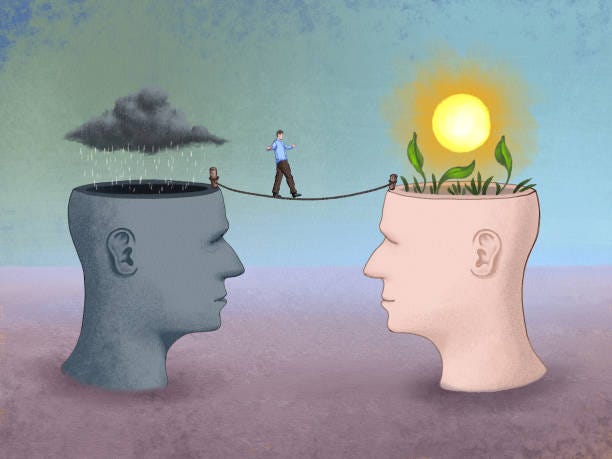
“The real voyage of discovery consists not in seeking new landscapes, but in having new eyes.”
- Marcel Proust
The surface genre of Inception is the heist film, that most mechanistic of narrative forms, where a team assembles, a plan is explained, obstacles arise, and a final twist resolves all. But the heist structure in Nolan’s hands becomes a ritual container, a procedural framework for transformation that echoes the initiatory ceremonies of mystery cults and esoteric orders. The team - extractor, forger, chemist, architect, tourist - comprises a perfect quaternity of Jungian functions: thinking (Cobb’s strategic planning), feeling (Ariadne’s empathic architecture), sensation (Eames’s embodied impersonation), intuition (Arthur’s anticipatory logistics). To perform inception is not merely to plant an idea but to generate an idea organically within the target’s psyche, to make the idea feel like his own spontaneous discovery. This is the alchemical opus, the Great Work, where lead is transmuted into gold - or, more precisely, where a borrowed thought is transmuted into authentic conviction.
Eliade’s analysis of initiation rituals is indispensable here. In archaic societies, initiation involves “separation from family, retreat into forest (which symbolizes death), regression to embryonic state, and new birth with new name.” The Fischer job follows this pattern exactly. Fischer is “separated” from his context on the airplane; he is “retreated” into the forest of the dream; he “dies” when Mal shoots him; he is “reborn” when Eames’s defibrillator shocks him back to life in the third level; and he emerges with a “new name” - not the heir to the empire but the creator of something new. The mountain fortress itself, with its cold heights and treacherous approaches, is the axis mundi, the center of the world where heaven and earth meet. To reach it is to reach the place of transformation.
The target, Robert Fischer Jr. (Cillian Murphy), is the heir to an energy empire, the son who resents his father and yet craves his approval. The idea they must plant - that his father wanted him to “create something of his own,” to dissolve the empire rather than inherit it - is not a theft but a liberation. The team is hired by Saito, the corporate rival, but their actual work, the work the film truly dramatizes, is therapeutic not commercial. They are performing a psychoanalysis without the analyst’s consent, an intervention into the psychic structure of a man whose identity has been foreclosed by his father’s shadow. The film’s ambiguous morality - is inception ever justified? - resolves into a question about the ethics of transformation: can one person legitimately change another’s mind without their knowledge? The answer the film suggests, uneasily, is that minds change constantly through influence and environment, that the distinction between “authentic” and “implanted” desire is less clear than we pretend, and that the only question is whether the change liberates or imprisons.
The three dream-levels of the Fischer job correspond to three stages of alchemical transformation: nigredo (blackening, the dissolving of the old self), albedo (whitening, the emergence of a new self-image), and rubedo (reddening, the integration of the transformed self into life). In the first level - Yusuf’s rainy, chaotic city - Fischer is abducted, his projections attack, his godfather’s figure is impersonated, and the foundational premise of his identity (the empire as his destiny) begins to crack. This is the nigredo, the mortification of the old self. In the second level - Arthur’s elegant hotel - Fischer is told that he is in a dream within a dream, that his godfather is trying to trick him, and he voluntarily enters the third level. This is the albedo, the emergence of reflective self-awareness, the capacity to doubt one’s own certainties. In the third level - Eames’s snowy fortress - Fischer enters a safe room, finds his dying father, and hears the words that will restructure his psychic economy: “I was disappointed that you tried to be like me.” This is the rubedo, the moment of integration, where the son is freed from the father’s shadow by the father’s own blessing - a blessing that is, the film makes clear, entirely a construction of the team’s intervention.
Jung’s understanding of the “father complex” is relevant here. Freud saw the father as the source of the superego, the internalized prohibition that structures desire. Jung saw the father more ambivalently: as both the bearer of tradition and the obstacle to individuation. Fischer’s father is dying, which means the prohibition is weakening; but the son’s identification with the father (”I am disappointed that you tried to be like me”) must be dissolved before the son can become himself. The inception does not implant a foreign idea; it removes an obstacle to the son’s own becoming. This is the paradox at the heart of psychoanalytic therapy: the analyst’s interpretations are not “implanted” but liberated from the patient’s own unconscious. The analyst merely helps the patient remember what he already knows.
The ritual structure extends to the “kick,” the synchronized falling that awakens the dreamers from each level. The kick is a death-and-resurrection symbol: the dreamer must “die” to one level to be “born” into the next. Van falling off a bridge, elevator dropping, fortress collapsing - these are not merely mechanical events but initiatory ordeals, the symbolic dismemberments that precede new life in shamanic and mystery traditions. The music that coordinates them, Édith Piaf’s “Non, je ne regrette rien” (”No, I Regret Nothing”), becomes the liturgical chant, the heartbeat of the ritual. The choice of Piaf is not incidental: she was the singer of tragic love, of survival against loss, of the refusal to let regret define one’s future. The song’s lyric - “Je ne regrette rien” - is the speech-act that completes the ritual, the declaration of transformation that makes the transformation real.
Fischer’s final scene, waking on the airplane, glances at Cobb with an expression that could be recognition or gratitude or confusion, and then returns the godfather’s pen - an act that signals his rejection of the inheritance and his acceptance of the new idea. He will not know that the idea was planted; he will believe it is his own. The film does not ask us to mourn this lack of knowledge. On the contrary, it suggests that all genuine transformation arrives as a mystery, that the origins of our deepest convictions are always partly opaque to us, that the “authentic self” is less a given than an achievement - and an achievement that depends on influences we cannot track. In this, Inception is profoundly post-Nietzschean: it accepts that there are no facts, only interpretations, and that the only meaningful question is whether an interpretation empowers or enslaves those who hold it.
Section Six: Dreams of Other Dreams - Inception in the Mirror of World Cinema and Art
“Art is the lie that tells the truth.”
- Pablo Picasso (attributed, paraphrased from lecture notes)
No work of art exists in isolation, and Inception - for all its claims to originality - emerges from a dense intertextual network of dream-films, labyrinth narratives, and metafictional experiments. To read Inception properly is to hear its echoes, to trace its debts, to recognize that Nolan is not a lone genius but a masterful synthesizer of traditions that extend from Borges to Paprika, from M.C. Escher to The Matrix. The film’s most famous antecedent is Satoshi Kon’s Paprika (2006), an anime masterpiece about a dream-investigation device that allows therapists to enter patients’ dreams, where a villain uses the same technology to merge dreams with reality, where a parade of surreal imagery invades the waking world. The similarities are extensive enough that some critics have accused Nolan of borrowing without acknowledgment; but a more generous reading sees Inception as a Western remix of Kon’s themes, transforming Paprika’s psychedelic exuberance into Inception’s architectural rigor, replacing Kon’s fluid identities with Nolan’s structured archetypes.
The influence of Jorge Luis Borges permeates every frame. Borges’s story “The Circular Ruins” describes a magician who dreams a man into existence, only to discover at the end that he himself is a dreamed being. “The Secret Miracle” involves a condemned author whose subjective time expands to years in the moment before execution, allowing him to complete his work in his mind. “The Garden of Forking Paths” presents a novel that is also a labyrinth, a book whose narrative branches into infinite possibilities. Inception’s nested dreams, its dilation of time, its ambiguous ontology - all find their literary origin in Borges, that most philosophical of fabulists, who understood that the library of Babel and the labyrinth of the Minotaur are ultimately the same structure: the human mind trying to map itself and discovering that the map must include the mapmaker, leading to infinite regress.
The film’s visual vocabulary draws on a tradition of impossible architecture that runs from Piranesi’s Carceri etchings (prison labyrinths of infinite staircases) to Escher’s lithographs (waterfalls that flow upward, hands that draw themselves) to the set designs of Metropolis and The Cabinet of Dr. Caligari. The folding Paris sequence has a direct precedent in René Magritte’s painting “The Dominion of Light,” which depicts a twilight house beneath a daylight sky - the coexistence of incompatible realities. The zero-gravity fight in the hotel corridor is an homage to Stanley Kubrick’s 2001: A Space Odyssey, specifically the sequence where the flight attendant walks upside-down across the ceiling of the lunar shuttle. Nolan has acknowledged this debt explicitly, framing his own rotating hallway as a practical-effect tribute to Kubrick’s insistence on physical reality over CGI.
Jung’s concept of the “archetype” as a structural pattern underlying all human experience helps explain why such parallels proliferate. The dream-within-a-dream, the descent into the underworld, the labyrinth as symbol of psychic confusion - these are not “borrowings” in the usual sense but recurrences, the same patterns emerging from the collective unconscious in different times and places. Jung wrote that “the unconscious and dreams are natural processes to which no arbitrariness can be attributed.” Eliade similarly argued that “mythological figures and events parallel personages and happenings in dreams,” and that “categories of space and time become modified similarly” across cultures. The appearance of Inception in 2010 was not a novelty but an eruption: the collective unconscious, through Nolan, speaking its ancient language in a new dialect.
The film’s relationship to video game culture is equally significant. The structure of nested levels, the concept of a “mission” with clearly defined roles, the use of “kicks” as resets, the presence of “projections” as NPCs (non-player characters) that attack when undetected - all suggest a close familiarity with game mechanics. Nolan has spoken of wanting to develop an Inception video game, and the film’s reception has been shaped by gamers who recognized leveling-up logic and save-point mechanics in its narrative architecture. This gaming connection is not superficial; it reflects a deeper transformation in how narrative is experienced. The heist film’s linear exposition gives way to the game’s branching possibilities; the author’s control yields to the player’s agency. Inception is a film that wants to be played, that invites its viewers to test hypotheses, rewatch sequences, and construct their own interpretations - to become, in effect, dreamers of the dream.
The film’s music, Hans Zimmer’s score, deserves its own analysis as an intertextual object. The famous “braaam” sound - the deep, distorted horn blast that has become a trailer cliché - originated in Inception’s marketing and has since colonized Hollywood. But Zimmer’s actual score is more subtle: it weaves fragments of Piaf’s song, slowed and stretched, throughout the emotional climaxes, creating a subliminal connection between the ritual kick and the characters’ psychic states. The use of “Non, je ne regrette rien” as the shared time-signal across dream levels is the film’s most elegant musical gesture, transforming a pop song into a liturgical cue, a secular Kyrie that calls the dreamers back to the waking world. When the song plays in Cobb’s memory of Mal - she is listening to it in the apartment before her death - the connection between Piaf’s lyric and Cobb’s guilt becomes almost unbearable. “No, I regret nothing” - but Cobb regrets everything, and the music that should liberate has become the anthem of his captivity.
Section Seven: The Children’s Faces - Love, Finitude, and the Decision for Reality

“Love is the only reality, and it is not a sentiment; it is the ultimate truth at the heart of creation.”
- Rabindranath Tagore
Throughout Inception Cobb sees his children only from behind. In his dreams, they run toward him but never turn around; their faces remain a promise, a horizon, an image of what he cannot possess. This visual motif - the unreachable children - is the film’s emotional core, the anchor that prevents all the philosophical speculation from floating into pure abstraction. Cobb’s longing to see his children’s faces is not a sentimental subplot but the organizing principle of his entire existence. He performs extraction, risks limbo, endures the specter of Mal, all for the chance to go home. The children’s faces are the real totem, the true test of reality: in dreams, they never turn around; in reality, they do.
Jung’s childhood memory of the “unattainable land of dreams” is strikingly parallel. As a young boy, seeing the Alps glowing red at sunset, the Uetliberg became “unattainable land of dreams.” This image - a landscape of longing, forever just beyond reach - haunted Jung throughout his life. The children’s faces, forever receding, are Cobb’s Uetliberg. They represent the coincidentia oppositorum: the union of the real and the ideal, the present and the absent, the achieved and the longed-for. To see their faces is to achieve wholeness. To never see them is to remain in the labyrinth.
The film’s final shot - Cobb reunited with his children, the top spinning on the table - has been interpreted as a confirmation of reality (because the children’s faces are visible) or as a continuation of a dream (because the top may still be spinning). But the ambiguity is the point. What matters is not the ontological status of the moment but Cobb’s decision to stop testing it. When he walks away from the top toward his children, he is performing the existential leap that Kierkegaard called the “leap of faith” and that the Christian tradition calls fides - not belief in propositions but trust in a relationship, commitment to a way of being that precedes and exceeds any evidence. Cobb cannot know that this is reality; but he can choose to live as if it is, to stake his happiness on the wager that it is, to accept the risk of illusion as the price of love.
Here Eliade’s concept of the hieros gamos - the sacred marriage - offers a fruitful analogy. In archaic cosmogonies, the world is created through the union of Heaven and Earth. The child is the fruit of that union, the visible sign of the invisible marriage. Cobb’s children are the fruit of his union with Mal; they are the living proof that the marriage was real, that it produced something that transcends both parents. To see their faces is to participate in the hieros gamos anew, to reaffirm that the sacred marriage - even when the partners are dead or separated or lost - continues to generate life. The children are not merely the goal of Cobb’s journey; they are the telos of the film’s cosmology, the point at which all the descending levels finally terminate in an image of ordinary, irreducible presence.
The children, in this reading, represent the future, the possibility of continuation beyond the self, the hope that one’s actions matter to those who will survive one. Cobb’s entire criminal career has been a flight from death: the death of Mal, the death of his marriage, the death of his capacity to trust reality. The children are the future he must choose to believe in, the generation that will judge him not by his crimes but by his love. The film’s title, Inception, refers not only to the planting of an idea in Fischer but to the planting of an idea in Cobb himself: the idea that he deserves to be happy, that he can stop punishing himself, that the dead can be mourned without being followed into the underworld.
Jung, after his own descent into the unconscious, concluded that “the sole purpose of human existence is to kindle a light in the darkness of mere being.” The darkness of mere being is limbo: undifferentiated, timeless, meaningless. The light is consciousness, relationship, love. Cobb kindles that light when he turns away from the top and toward his children. He does not need to know whether this is reality; he only needs to act as if it is. And in acting, he makes it real. This is the magic of ritual as Eliade understood it: the ritual does not merely represent the sacred; it creates the sacred. Cobb’s choice to embrace his children is the ritual that transforms the dream into reality - whatever the top may say.
This is the film’s profoundest theological dimension. The Christian doctrine of grace - unmerited favor, love that comes before and despite one’s sins - is the pattern of Cobb’s final reconciliation. He has done nothing to earn his children’s forgiveness, nothing to deserve the phone call that clears his name, nothing to merit the reunion that the film grants him. And yet it comes. Saito, aged in limbo, makes the call; the U.S. immigration officer stamps the passport; the father-in-law opens the door. Grace arrives as a gift, not as a wage. The top may spin or fall; the question is irrelevant because the gift has already been given. Cobb’s acceptance of the gift is his final act of courage: not the courage to fight or to scheme or to descend into limbo, but the courage to stop fighting, to receive what he has not earned, to trust that the children’s faces are real because he loves them and they love him.
In the end, Inception is a film about what cannot be incepted: love. You cannot plant love in someone’s mind; you cannot extract it; you cannot build it through architecture or force it through chemistry. Love, the film suggests, is the one irreducible given, the facticity that exceeds all construction, the ground beneath the dream layers that does not dissolve when you kick. The children’s faces, finally turned toward Cobb, are not proof of reality but the end of the need for proof. They are the face of the Other that Levinas described, the call that precedes and constitutes the self, the reason that philosophy, for all its labyrinthine rigor, must finally lay down its spinning top and walk toward the only truth that matters.
Conclusion: The Top Falls - Or Does It? Or: Why the Question Misses the Point
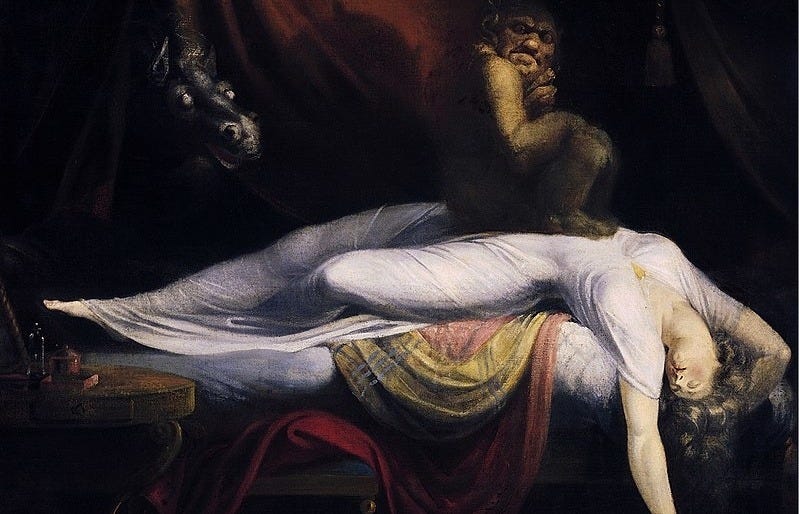
“The dream is the small hidden door in the deepest and most intimate sanctum of the soul, which opens to that primeval cosmic night that was soul long before there was conscious ego and will be soul far beyond what a conscious ego could ever reach.”
- Carl Gustav Jung
We return, as all analyses of Inception must, to the spinning top. Is it still spinning? Does it fall? These questions have generated more discourse than the remainder of the film combined, and yet the discourse has largely missed the film’s actual teaching. The top’s fate is not a puzzle to be solved by attentive viewing or director’s commentary; it is a koan, a Zen riddle designed to break the mind’s attachment to binary answers. Does a tree falling in the forest make a sound if no one hears? Does the top fall if Cobb is not looking? The answer is: the question is wrongly posed. The point is not whether the top falls but whether Cobb cares. And he does not. He has walked away.
This essay has attempted to approach Inception with the same curiosity and rigor that the film brings to its own questions, enriched by the insights of Jung and Eliade. We have traced the dream architecture across cosmological traditions, from Hindu yugas to Neoplatonic emanations, finding in each a reflection of the film’s layered ontology. We have followed Cobb and Mal through the underworld of Orpheus and the Gnostic kenoma, recognizing in their tragedy the pattern of the anima and the perils of projection. We have watched the spinning top become a totem for the skeptical tradition from Descartes to Putnam, and we have seen the film refuse that tradition’s demand for certainty. We have mapped the heist onto alchemical ritual and the character roles onto Jungian functions, revealing the initiatory structure beneath the genre surface. We have heard the echoes of Borges and Paprika, of Stanley Kubrick and M.C. Escher, of Piaf and Zimmer. And we have arrived, finally, at the children’s faces.
What Inception offers is not a solution to the problem of reality but a way of dissolving that problem through attention to what matters. The philosophers have debated for millennia whether we can know the external world, and the debate continues because the question is unanswerable on its own terms. Nolan’s achievement is to show that the question is also unnecessary, that we can live meaningful lives without answering it, that love and work and mourning and play are possible even in the absence of Cartesian certainty. The dreamer who knows she is dreaming is not freer than the dreamer who does not; she is merely a different kind of prisoner, trapped in the meta-position, unable to commit because commitment requires the suspension of doubt.
Jung’s final question is our own: “The decisive question for man is: Is he related to something infinite or not? Only if we know that the thing which truly matters is infinite can we avoid fixing our interest upon futilities.” Cobb, in turning away from the top, turns toward the infinite: the face of his child, the love that cannot be measured or proved, the relation that transcends all epistemological doubt. He has found his link with the infinite, and in that finding, the question of reality loses its sting.
The film’s final shot - the top spinning, the children laughing, the frame cutting to black - is not a refusal to answer but an invitation to stop asking the wrong questions. The right question is not “Is this real?” but “What shall I do with this moment?” Cobb’s answer is to embrace his children. The film’s answer is to trust that the embrace is real enough. Our answer, as viewers, is to carry the film’s questions into our own lives, to let its labyrinths teach us that the way out is always through, and that the top’s fate matters less than the choice to turn away from it toward the faces we love.
In the Upanishads, the sage Yajnavalkya teaches his wife Maitreyi about the nature of the self: “It is not for the sake of the husband that the husband is loved, but for the sake of the self; it is not for the sake of the wife that the wife is loved, but for the sake of the self.” The self, the Atman, is the ground of all love, the presence that makes relationships possible. But the Upanishads also teach that the self is not a thing to be grasped; it is the grasper, not the grasped. Inception inverts this teaching: the self is not the ground but the projection, not the source but the product, not the dreamer but the dream. And yet - and this is the film’s final wisdom - the dreamer’s longing for the children’s faces is real. The longing itself is the self. The decision to turn toward the children is the decision to inhabit the self authentically, to accept that the dream is all we have, and to love it anyway.
The top, in the end, is not a test of reality but a test of faith. And faith, as the apostle Paul wrote, is “the substance of things hoped for, the evidence of things not seen.” The top may or may not fall; the camera cuts before we know. But Cobb has already seen his children’s faces. That seeing is his faith, and it is enough. It must be enough. It is, the film suggests, all any of us ever has. And it is, also, everything. As Eliade wrote of the archaic homo religiosus, “the world becomes transparent through symbols.” For Cobb, the children’s faces are the final symbol, the point where the endless regress of dreams and interpretations terminates in an image of irreducible presence. He does not need to know if the world is real. He only needs to see them. And he does. The top spins on, forgotten. And we, the viewers, are left with the question - not of the top’s fate, but of our own. Where will we turn when our own top spins?