
The Neverending Story
Imagination, Memory, and the Architecture of Reality

Author’s Note On The Content
This essay is based exclusively on the cinematic trilogy of The Neverending Story (1980, 1990, 1994). The first two films are adaptations of Michael Ende’s 1979 novel’s first and second parts respectively, while the third film features an original storyline not derived from the novel. The differences between the novel and the first two film adaptations are primarily limited to character names and minor plot details, with the philosophical and mythological core remaining largely intact. This essay draws heavily upon the work of Joseph Campbell, particularly The Power of Myth (1988), but uses many other authors too, and is also deeply indebted to the original ideas presented in the video essay Gnostic FANTASY changed my way of thinking… by Russian YouTuber Kirstein (https://www.youtube.com/@Кирштейн), whose insights into the relationship between fantasy, philosophy, and reality provided the conceptual foundation for much of what follows. All character names are presented in their English-language variants as they appear in the films. I may potentially write additional DLC articles exploring the television series based on the original novel, though this is not certain, and any such future DLC content would most likely be paid.
Introduction: The Book as Portal and the Reader as Creator
“We are such stuff as dreams are made on, and our little life is rounded with a sleep.”
- William Shakespeare, The Tempest
The Neverending Story trilogy (1980–1994) is far more than children’s fantasy; it is a cinematic meditation on reality, imagination, and consciousness, grappling with questions that haunt philosophy itself - where perception ends and dreaming begins, and what becomes of the soul when it stops dreaming. The trilogy’s three films diagnose the three great modern threats to the human spirit: nihilism (The Nothing), the conviction that existence is meaningless; rationalization (The Emptiness), Weber’s “disenchantment of the world” that strips life of mystery; and cynicism (The Nasty), the loss of wonder that the Frankfurt School traced to instrumental reason. Together, these are the horsemen of imagination’s apocalypse - despair, control, and indifference - and Fantasia’s survival hinges on those who refuse their seduction.
Protagonist Bastian Balthazar Bux embodies the archetypal seeker, his name evoking the Magi in pursuit of transcendent truth, while his journey mirrors shamanic initiations, Dante’s guided descent, and Neo’s awakening - all movements through layers of reality toward deeper awareness. As Campbell insists, mythic images evoke spiritual potential, and Bastian’s attic reading-space becomes that sacred “creative incubation” where the boundary between imagination and the real grows porous. The trilogy insists that fantasy is not escape but a more profound engagement with existence, aligning personal harmony with the world’s grand symphony, and elevating wonder from luxury to existential necessity.
Philosophically, the films traverse German Idealism’s self-constituting reality, Phenomenology’s being-in-the-world, and post-structuralism’s fluid, unstable meaning - even Sartre’s Nothing as the negation at consciousness’s heart. The sublime landscapes of Fantasia recall Kant’s overwhelming magnitude, exposing the limits of comprehension while hinting at a supersensible ground of being. Ultimately, The Neverending Story teaches that imagination is resistance: against nihilism, reductive control, and deadening cynicism, it preserves the capacity for wonder as humanity’s most precious possession, reminding us that the boundary between dreamer and dream is where authentic life begins.
Section One: The Theft of the Book and the Crisis of Modernity
“The world is everything that is the case.”
- Ludwig Wittgenstein, Tractatus Logico-Philosophicus
The opening scenes of The Neverending Story establish a world in crisis - not the crisis of Fantasia, with its ominous encroachment of The Nothing, but the crisis of the human world, specifically the soul-crushing reality of De Forest, Washington, a town whose very name suggests a place where the primal wilderness has been reduced to mere memory, a “forest” that has been “def” or deaf to the calls of imagination. Bastian’s life is defined by absence: the absence of his mother, whose death has left a void that his father, Barney Bux, cannot fill with his stern rationality and workaholic compulsions. The breakfast scene, in which Barney confronts his son about his daydreaming, his failing grades, and his fears - both of heights and of real horses, despite his fantasies of riding them - establishes the fundamental tension that will drive the entire narrative.
This conflict between the imaginative and the empirical, between the world of dreams and the world of facts, echoes the great epistemological debates that have shaped Western philosophy. Plato’s allegory of the cave, in which prisoners mistake shadows on a wall for reality, finds its inverse in Bastian’s situation: he is a prisoner of the “real” world, forced to accept its limitations and demands, while his soul strains toward the brighter light of imagination. The philosophers of the Enlightenment, particularly Immanuel Kant, would recognize in this conflict the distinction between the phenomenal world - the world as it appears to us, structured by the categories of our understanding - and the noumenal world, the world as it is in itself, which we can never directly know. Bastian, like the Romantic poets who rebelled against Enlightenment rationalism, insists on the reality of the noumenal, on the existence of a realm beyond the merely empirical.
The bullies who chase Bastian - Ethan, Todd, and Lucas - represent the brutal triumph of the empirical over the imaginative. They are the enforcers of a reality that admits no exceptions, no flights of fancy, no escape from the material conditions of existence. Their names suggest the ordinariness of cruelty: Ethan and Todd and Lucas could be any boys in any town, their violence a casual manifestation of the herd instinct that Nietzsche diagnosed as the source of moral mediocrity. When they throw Bastian into a dumpster - a symbol of the way the modern world treats imagination as refuse, as something to be discarded and forgotten - they are performing a ritual of humiliation that is also a ritual of exorcism. They are trying to expel from Bastian the very quality that makes him different, that threatens their comfortable materialism.
Campbell’s diagnosis of contemporary spiritual poverty zeroes in on the university’s transformation from a hermetically sealed-off area dedicated to inner life and the magnificent human heritage of Plato, Confucius, the Buddha, and Goethe into an institution consumed by the news of the day and the problems of the hour. This same transformation has occurred in the wider culture, where the imagination is no longer valued as a source of meaning but dismissed as a luxury or a pathology. Bastian’s teachers complain about his daydreaming not because it is harmful but because it disrupts the smooth functioning of the educational machine, which is designed to produce compliant workers rather than creative thinkers.
The school itself serves as a microcosm of the larger society’s hostility to imagination. The math test that Bastian avoids is not merely a test of arithmetic but a test of conformity, a demand that he submit to the measurable, quantifiable order that the adult world has established. His decision to hide in the attic rather than take the test is an act of resistance, a refusal to be reduced to a set of numbers and grades. The attic, with its accumulation of discarded objects - old desks, broken mannequins, tattered costumes, ancient maps - is a museum of forgotten possibilities, a repository of the imaginative energy that the institution has tried to suppress.
The French philosopher Gaston Bachelard, in The Poetics of Space, explored the psychological significance of domestic spaces, arguing that attics are places of intimacy and solitude, where the dreamer can retreat from the world and commune with the self. Bastian’s attic is precisely such a space, a refuge from the demands of the world where he can enter into the imaginative life that the world has denied him. Bachelard’s concept of “topophilia” - the love of place - illuminates the deep connection that Bastian develops with his attic sanctuary, a connection that enables his transformation.
Bastian’s flight into the antique bookstore is a flight into the past, into a world where books are still valued, where the printed word carries the weight of tradition and the promise of transcendence. The shop, K. Koreander’s, is a sanctuary of memory in a world that has forgotten how to remember. Its owner, Carl Conrad Coreander, is a figure of profound ambiguity - a curmudgeon who claims to dislike children but who has devoted his life to the preservation of stories. His name suggests a connection to the Greek kore, meaning maiden, perhaps referencing Persephone, the maiden who was abducted into the underworld and who returns each spring to bring life to the world above. Coreander is a guardian of the threshold, a figure who stands between the world of everyday reality and the world of imagination.
The book itself - The Neverending Story - is a physical object of remarkable power. Its cover is copper-colored, suggesting the alchemical transformation of base metal into gold, and its symbol, the AURYN, depicts two snakes intertwined in an ouroboros, the ancient symbol of eternity and cyclical time. The ouroboros appears in Egyptian mythology, in the Gnostic traditions of the early Christian era, and in the alchemical treatises of the Renaissance, always signifying the eternal return of all things, the endless cycle of creation and destruction that underlies all existence. As Campbell notes, the serpent “is the symbol of life throwing off the past, shedding its skin to be born again like the moon shedding its shadow, a circle eating its own tail, representing immortal energy and consciousness engaged in the field of time.”
The ouroboros has been interpreted by the psychologist Carl Jung as a symbol of the Self, the totality of the psyche that transcends the ego and its conscious limitations. In Jung’s framework, the serpent that eats its own tail represents the process of individuation - the lifelong journey toward wholeness that involves integrating the conscious and unconscious aspects of the personality. The AURYN, as a symbol of this process, represents the goal of Bastian’s journey: the integration of his imaginative and empirical selves into a unified whole.
When Bastian steals the book, he is not merely stealing a story; he is stealing access to a mode of being that the modern world has denied him. The act of theft is itself significant - it is a transgression against the order of the adult world, a refusal to accept the limitations imposed upon him. In this, Bastian echoes the figures of Prometheus, who stole fire from the gods, and Eve, who ate the forbidden fruit. Both acts of theft, like Bastian’s, are acts of initiation, moments when the individual breaks free from the constraints of the established order to claim something that rightfully belongs to human potential.
The French philosopher Georges Bataille, in his writings on transgression, argued that the violation of taboos is a necessary condition for the experience of the sacred. The sacred, for Bataille, is that which exceeds the boundaries of everyday life, that which is both terrifying and fascinating in its excess. Bastian’s theft of the book is a transgressive act that opens him to the sacred dimension of Fantasia, a realm where the ordinary rules of reality do not apply.
Section Two: The Swamps of Sadness and the Death of Artax
“To live is to suffer; to survive is to find some meaning in the suffering.”
- Friedrich Nietzsche
Perhaps the most devastating sequence in the entire The Neverending Story trilogy is the journey through the Swamps of Sadness and the death of Atreyu’s horse, Artax. This is a moment of such profound emotional power that it has become embedded in the cultural memory of an entire generation - a scene that children watched with tear-filled eyes and that adults recall with a shudder of recognition. It is also a sequence of remarkable philosophical depth, an exploration of the nature of grief, the limits of hope, and the relationship between suffering and meaning.
The Swamps of Sadness are, as their name suggests, a place where sadness accumulates and becomes a physical force, a treacherous terrain that drags the hopeless down into the mud. The warning about the swamp is explicit: anyone who allows sadness to enter their heart will sink and drown. This is a metaphor of devastating clarity, a representation of the way that grief can become all-consuming, can swallow us whole and leave us gasping for air. The swamp is the realm of clinical depression, of the kind of despair that makes movement impossible, that turns every step into a struggle against an invisible weight.
Atreyu, protected by the AURYN, can traverse the swamp without succumbing to its power. But Artax, his horse, does not share this protection. The AURYN is the symbol of hope, of belief, of the conviction that there is meaning to be found even in the midst of suffering. Without it, without the protective talisman of faith in something beyond the immediate experience of pain, the swamp is overwhelming. Artax begins to slow, to struggle, to sink. Atreyu’s desperate attempts to save him - pulling on the reins, screaming encouragement, refusing to let go - are the attempts of a person who refuses to accept the reality of loss, who insists that love can conquer the darkest forces of despair.
The death of Artax is a moment of profound rupture. It is not a heroic death, not a sacrifice in battle or a noble giving of life for a greater cause. It is a death by despair, a surrender to the weight of grief. Artax does not die fighting; he dies giving up. “The sadness is too much,” he tells Atreyu. “I want to give up.” These words are devastating because they are so recognizable, so intimately familiar to anyone who has ever struggled with depression or grief. The swamp does not kill Artax through violence; it kills him by convincing him that life is not worth living, that the effort of continued existence is too great a burden to bear.
In this moment, the film confronts us with one of the most difficult questions in human existence: What is the point of struggling when struggle seems futile? This is the question that Albert Camus posed in his essay The Myth of Sisyphus, in which he asks whether, in a universe devoid of ultimate meaning, the only appropriate response is suicide. Camus’s answer is that we must imagine Sisyphus happy, that the struggle itself, the act of pushing the rock up the hill even though it will always roll back down, is a form of defiance that gives meaning to existence. Atreyu, in the moment of Artax’s death, faces this same choice: to give up, to sink into the mud alongside his friend, or to continue the struggle, to push forward even though hope seems lost.
The Swiss psychiatrist Elisabeth Kübler-Ross, in her pioneering work on grief and dying, identified five stages of grief: denial, anger, bargaining, depression, and acceptance. The Swamps of Sadness represent the stage of depression, the moment when the weight of loss becomes overwhelming and the sufferer is tempted to surrender. Atreyu’s refusal to surrender represents the movement toward acceptance, the recognition that grief is a necessary part of life and that the only way through it is to continue living despite the pain.
Campbell addresses this question directly in his discussion of suffering and affirmation: “The affirmation that is difficult is affirming the world without conditions, not ‘I affirm the world on condition that it gets to be the way Santa Claus told me it ought to be,’ but affirming it the way it is.” The swamp represents the condition of the world as it actually is - a place of pain, loss, and inevitable death. To affirm this world, to say yes to it despite everything, is the great challenge that mythology teaches us to face. Atreyu, by continuing his journey after Artax’s death, performs exactly such an affirmation: he accepts the pain of loss without allowing it to destroy his purpose.
The swamp is also a place of memory, a landscape formed by the accumulated sadness of all who have passed through it. It is the realm of the Mothers, the underworld of grief that Virgil describes in the Aeneid, where Aeneas descends to speak with the spirit of his father. It is the realm of the ancestors, the place where the dead reside and where the living must go to find wisdom. Atreyu’s journey through the swamp is a descent into the underworld, a katabasis like that of Odysseus or Orpheus, a confrontation with the reality of death that must be undertaken if he is to achieve his goal.
The death of Artax has profound implications for the relationship between Atreyu and Bastian. As Atreyu grieves, Bastian grieves with him, feeling the weight of loss as if it were his own. The tears that Bastian sheds in the attic are not mere sentimental response; they are an act of communion, a sharing of suffering that transcends the boundary between reader and text. This is the power of storytelling at its most profound: to allow us to feel the pain of others as if it were our own, to expand our capacity for empathy and compassion.
Artax, as a horse, carries symbolic weight across multiple traditions. In many mythologies, the horse is a creature of power and nobility, a being that can carry the hero across vast distances and through dangerous territories. The horse is the vehicle of the soul, the beast that bears the shaman through the spirit world. In the Rigveda, the horse is associated with the sun, with the life-giving force that makes all growth possible. In Greek mythology, the horses of the sun god Helios draw the chariot of the sun across the sky. Artax is all of these things: he is Atreyu’s companion, his guide, his connection to the life force that sustains him.
When Artax dies, Atreyu loses more than a friend; he loses a part of himself. The bond between rider and horse is a bond of trust, of mutual dependency, of love that transcends the merely utilitarian. Atreyu’s grief is the grief of someone who has lost not just a companion but a soul-mate, a being who understood him without words and who shared his quest from the very beginning. The loss of Artax makes Atreyu’s journey harder, more solitary, more fraught with danger. But it also makes him more determined, more focused on the goal that now seems to demand everything of him.
The Swamps of Sadness also serve to illustrate a central theme of the The Neverending Story: that the pursuit of meaning requires us to confront the reality of suffering. Fantasia, for all its beauty and wonder, is not a place of easy happiness. It is a world of danger, of loss, of pain that must be faced and endured. This is a crucial corrective to the escapist fantasy that the book might seem to offer. Bastian does not enter Fantasia to avoid suffering; he enters Fantasia to learn how to bear suffering, how to find meaning in the midst of pain.
As Campbell notes, “The experience of the eternal is the experience of what you are, and whatever eternity is, it is here right now and nowhere else, and if you don’t experience it here and now, you’re not going to get it in heaven.” The Swamps of Sadness are a place where eternity and time meet - where the eternal fact of loss, of grief, of the pain of being alive, is confronted in the temporal experience of a single moment. Atreyu’s loss of Artax is a loss that echoes through all time, a recognition that all love ends in loss, that all life ends in death, and that the only way to live is to accept this fact without allowing it to destroy us.
Section Three: The Two Oracles and the Mirror of the Self
“Know thyself.”
- Inscription at the Temple of Apollo at Delphi
The journey to the Southern Oracle is the spiritual heart of the first film, the sequence in which Atreyu (and, by extension, Bastian) must confront the deepest truths about himself and about the nature of reality. The two gates that guard the Oracle - the Sphinx Gate and the Magic Mirror Gate - represent two forms of knowledge, two modes of understanding that must be mastered if the seeker is to achieve wisdom.
The Sphinx Gate is a test of faith, of belief in oneself and in the righteousness of one’s quest. The guardians of the gate, two immense blue sphinxes, possess the power to judge the worth of anyone who attempts to pass. If a person feels even a single shred of doubt in their heart, the sphinxes will open their eyes and incinerate the doubter with beams of light. This is the test of the initiate, the moment when the seeker must prove that they are worthy to receive the knowledge that lies beyond the gate.
The sphinx is a figure of immense symbolic power across multiple traditions. In Greek mythology, the sphinx is the guardian of the city of Thebes, posing a riddle to all who would enter and devouring those who cannot solve it. The riddle of the sphinx - what walks on four legs in the morning, two in the afternoon, and three in the evening? - is a riddle about human existence, about the cycle of life from infancy to old age. The sphinx at the Southern Oracle poses a different kind of riddle: not a question to be answered, but a demand to be met. The seeker must prove that they have no doubt, that they are absolutely certain of their purpose and their worth.
Campbell’s discussion of the hero’s adventure illuminates this test: “The hero is someone who has given his or her life to something bigger than oneself.” The knight who is destroyed by the sphinxes has not given his life to anything - he is merely seeking glory, personal advancement, the satisfaction of his own ego. Atreyu, by contrast, has already demonstrated his commitment to something beyond himself: he has accepted the quest, survived the Swamps of Sadness, and continued despite the loss of his dearest companion. His passage through the Sphinx Gate is not a matter of luck but of the integrity that his suffering has forged.
The Magic Mirror Gate is an even more profound test. It forces anyone who passes through it to confront their true inner self, their most fundamental nature, stripped of all pretense and illusion. This is the test of the anima, the encounter with the deepest truths of the psyche. The gate reveals to kind people their hidden cruelty, to brave people their secret cowardice, to the proud their underlying shame. Most people cannot bear to see themselves as they truly are, and they run away screaming, their minds shattered.
The Magic Mirror Gate is the moment of self-knowledge, the confrontation with the shadow that Carl Jung identified as the dark side of the personality. The shadow is everything we do not want to see about ourselves, everything we have repressed or denied. The gate forces the seeker to look directly at the shadow and to accept it as part of the self. This is the process that the alchemists called the nigredo, the blackening, the descent into the darkness that must precede any true transformation.
Jung’s concept of the shadow is rooted in his broader theory of the psyche as a self-regulating system striving toward wholeness. The shadow, for Jung, is not merely evil but also contains unrecognized potential, unacknowledged strengths, and undeveloped capacities. To confront the shadow is not to destroy it but to integrate it, to recognize that the darkness within is also a source of vitality and creativity. The Magic Mirror Gate forces this recognition, demanding that the seeker acknowledge the full complexity of their being.
When Atreyu looks into the mirror, he does not see his own reflection. Instead, he sees Bastian, sitting in the dusty school attic, reading the book. This is a revelation of extraordinary ontological significance. Atreyu and Bastian are not separate beings; they are two aspects of the same consciousness, two modes of the same existence. The boundary between reader and text, between observer and observed, is not merely blurred; it is dissolved completely. Atreyu is Bastian, and Bastian is Atreyu. The quest of one is the quest of the other.
This is the insight that the Gnostics called gnosis, the knowledge that the soul is not merely a part of the divine but is, in fact, divine. The self that Atreyu sees in the mirror is not a separate self but the self that is also Bastian, the self that is reading the story and living the story simultaneously. This is the truth that the Zen masters call non-duality, the realization that the apparent division between self and world, between subject and object, is an illusion.
Campbell articulates this realization through his discussion of the Upanishadic teaching: “The creative principle is within oneself.” The mirror reveals that Atreyu and Bastian are both manifestations of the same creative principle, the same power of imagination that brings Fantasia into being and that, through Bastian’s act of reading, sustains it. This is the ultimate lesson of the hero’s journey: the hero discovers that the quest was not for something external but for a deeper understanding of the self.
The Southern Oracle, when Atreyu finally reaches it, offers the final piece of knowledge: the Childlike Empress needs a new name, and only a human child can give it. This is the ultimate secret of Fantasia: it is a world built entirely on human imagination, and its survival depends on the continued willingness of humans to imagine it. The Oracle’s words are a call to creativity, a demand that the human child (Bastian) participate actively in the creation of meaning rather than merely observing it.
The name that Bastian gives the Empress - Moonchild - is a name of profound resonance. In the astrological tradition, the Moonchild is a being of pure receptivity, a creature of the imagination who can bring new life into the world through the power of wish. The Moonchild is also a figure of Christian significance, associated with the Virgin Mary, who gave birth to the Word made flesh. Bastian’s naming of the Empress is an act of creation, a moment when the imagination becomes reality and the realm of dreams becomes the realm of being.
Section Four: The Nothing, The Emptiness, and The Nasty
“Nothingness carries being in its heart.”
- Jean-Paul Sartre, Being and Nothingness
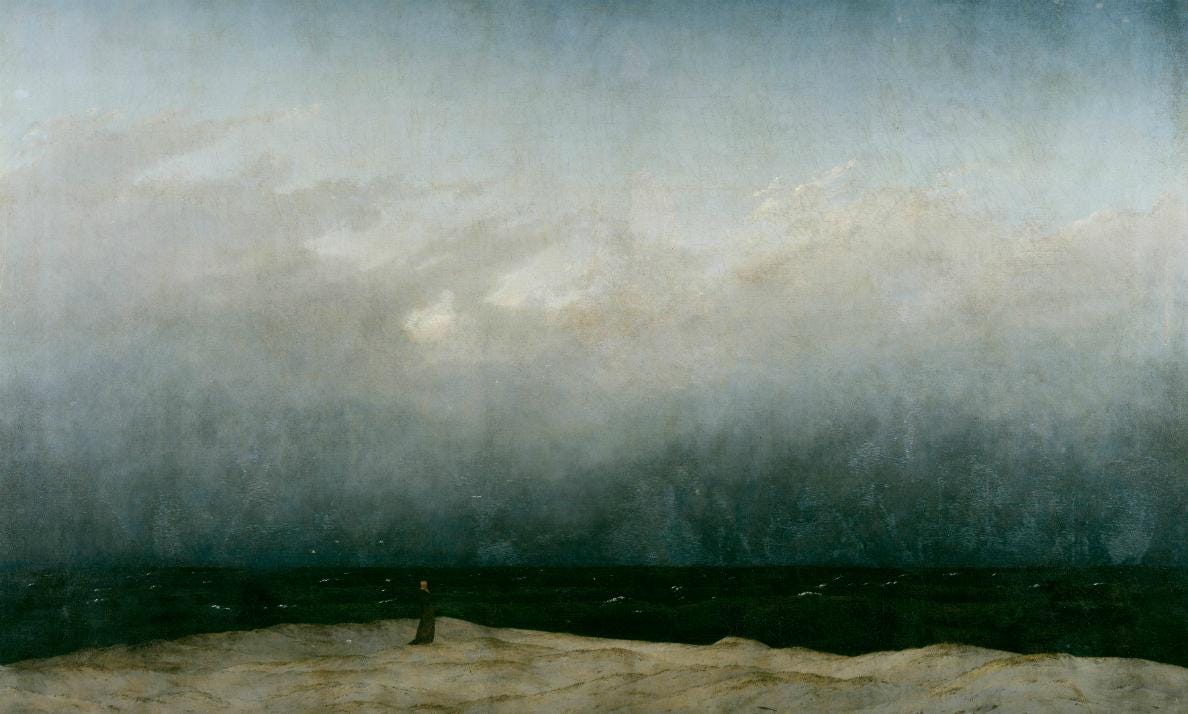
Across the three films of The Neverending Story, the threat to Fantasia takes three different forms: The Nothing in the first film, The Emptiness in the second, and The Nasty in the third. Each of these threats represents a different aspect of the human condition, a different dimension of the crisis that imagination must confront if it is to survive.
The Nothing, as we have seen, is a force of pure negation, a void that consumes everything it touches and leaves behind only blank emptiness. The Nothing is nihilism made manifest, the conviction that existence has no meaning and that all stories are merely fictions. It is the philosophical position that Nietzsche diagnosed as the greatest threat to the human spirit, the loss of belief in any transcendent value that could give life purpose. The Nothing is the feeling that everything we do is pointless, that the universe is indifferent to our suffering, that our dreams are merely private delusions.
The Nothing is also a force that is created by human beings themselves. The film makes this explicit: Fantasia is a world built on human dreams, and when humans stop dreaming, Fantasia begins to disappear. The Nothing is not an external enemy; it is a consequence of our own choices, our own failure to maintain the imaginative connection that gives meaning to existence. This is a diagnosis of modernity, of a world that has become increasingly rational, increasingly scientific, increasingly disenchanted. The Nothing is what happens when we forget how to wonder.
The French philosopher Jean-François Lyotard, in The Postmodern Condition, argued that the grand narratives of the past - the stories that gave meaning to human existence - have collapsed, leaving us in a state of “incredulity toward metanarratives.” The Nothing of Fantasia represents the collapse of these narratives, the disappearance of the stories that once organized human experience. Without the stories, there is only the void, the blank emptiness that awaits those who have lost their capacity for meaning.
In the second film, the threat is The Emptiness, a creeping grey void that drains all color and life from Fantasia. The Emptiness is controlled by Xayide, a sorceress who seeks to impose cold, logical order upon the chaos of imagination. Xayide is a figure of rationality gone mad, a being who despises the unpredictability of dreams and seeks to replace them with a sterile, mechanical order. She represents the bureaucratic impulse, the desire to quantify and control that is the dark side of the Enlightenment.
Xayide’s fortress, Horok, is shaped like a giant open hand, a symbol of grasping, of the desire to hold and control. The Memory Ball Machine that she uses to steal Bastian’s memories is a nightmare of efficiency, a device that turns the most precious aspects of human experience into collectible objects. The Machine is the culmination of the project of rationalization that Max Weber identified as the defining characteristic of modernity - the process by which everything becomes calculable, manageable, and ultimately meaningless.
The Emptiness is the consequence of a world that has lost its capacity for spontaneity, for surprise, for the unpredictable beauty of the imagination. It is the greyness of a life lived entirely according to rules, of a consciousness that has been reduced to a logical machine. Xayide’s tragedy is that she has so completely suppressed her own emotions that she can no longer feel anything at all, and she seeks to impose this emotional death on the entire world.
Campbell’s discussion of the wasteland speaks directly to this condition: “The Grail is that which is attained and realized by people who have lived their own lives, the fulfillment of the highest spiritual potentialities of human consciousness.” The wasteland of the second film is a world where people have stopped living their own lives, where they have surrendered their individuality to the machine of social control. Xayide represents the ultimate expression of this surrender: she has become the machine herself, a being of pure rationality with no heart, no compassion, no capacity for love.
In the third film, the threat is The Nasty, a plague that takes hold of young humans when they turn away from reading and embrace cruelty and indifference. The Nasty is the threat of adolescent cynicism, of the moment when the imagination hardens into a shell of defensive irony, when the capacity for wonder is replaced by the pose of worldly knowledge. The Nasties - Slip, Dog, Coil, Mookie, and Rage - are characters who have given up on imagination, who have chosen cruelty as a substitute for creativity.
The Nasty is a force of social contagion, a disease that spreads through institutions and turns communities against themselves. The school that Bastian attends in the third film is a place where the imagination is systematically suppressed, where the library is neglected and the bullies rule the hallways. The Nasty is the spirit of the institution, the tendency of all systems to crush the creativity that threatens their stability.
The name “The Nasty” carries a double meaning. On one level, it is simple cruelty, the meanness of children who have learned to be cruel as a defense against their own vulnerability. On another level, it is the nastiness of existence itself, the reality of suffering and death that cannot be escaped through imagination. The film suggests that the only response to this nastiness is not to deny it but to confront it, to find meaning in the struggle against it.
These three threats - The Nothing, The Emptiness, and The Nasty - represent three aspects of the crisis of meaning that defines the modern condition. The Nothing is the threat of nihilism, the conviction that existence is meaningless. The Emptiness is the threat of rationalization, the reduction of all experience to cold calculation. The Nasty is the threat of cynicism, the loss of the capacity for wonder that is the foundation of all meaningful life.
Campbell’s analysis of the four functions of myth provides a framework for understanding what these threats attack. The mystical function of myth “realizes what a wonder the universe is and experiences awe before mystery.” The cosmological function “shows what the shape of the universe is while letting mystery come through.” The sociological function “supports and validates a social order” by connecting it to cosmic principles. The pedagogical function “teaches how to live a human lifetime under any circumstances.” The Nothing attacks the mystical function, the Emptiness attacks the cosmological function, and the Nasty attacks the sociological and pedagogical functions. Together, they represent a comprehensive assault on the human capacity for meaning.
Section Five: Wishes, Memory, and the Price of Creation
“Memory is the scribe of the soul.”
- Aristotle
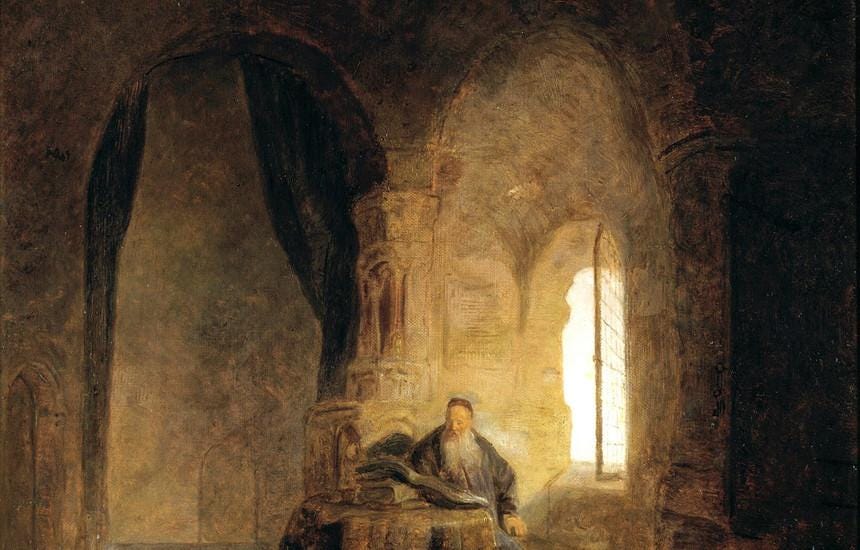
The second film introduces a powerful and disturbing mechanism: the Memory Ball Machine, which steals Bastian’s memories every time he uses the AURYN to make a wish. Each wish costs a memory - his mother’s face, his childhood home, his first meeting with Atreyu - and as the memories accumulate in the machine, Bastian’s identity slowly erodes. This is a vision of creation that is also a vision of loss, a recognition that the act of imagination always comes at a price.
The Memory Ball Machine is a literalization of a truth about the creative process: every act of creation involves sacrifice, a giving up of something that cannot be recovered. The memories that Bastian loses are not just random data; they are the building blocks of his identity, the experiences that have made him who he is. As he loses them, he loses himself, becoming increasingly arrogant, dismissive, and cruel. The wishes that he makes with the AURYN are not truly creative; they are destructive, because they consume the very thing that makes creation possible.
This is a commentary on the nature of desire and its relationship to identity. When we wish for something, we are expressing a lack, a desire for something we do not have. But the act of wishing can become addictive, can become a substitute for the effort of actually living. Bastian, flush with the power of the AURYN, becomes a compulsive wisher, using the amulet to solve every problem, to overcome every obstacle. He does not realize that each wish diminishes him, that the power he is using is actually consuming the self that wields it.
The Memory Ball Machine is also a representation of the way that memory is commodified in the modern world. In a culture obsessed with recording and preserving every moment, memories become objects that can be collected, stored, and displayed. But true memory is not a collection of objects; it is a living process, an active engagement with the past that shapes the present and the future. The machine turns memories into dead things, reducing the dynamic flow of experience to static data points.
The French philosopher Henri Bergson, in Matter and Memory, distinguished between habit memory - the mechanical repetition of learned behaviors - and pure memory - the vital, living recollection of past experience. The Memory Ball Machine operates on the level of habit memory, reducing the richness of lived experience to mechanical repetition. Bastian’s loss of his memories is a loss of pure memory, a loss of the vital connection to his own past that makes him who he is.
Campbell’s discussion of the importance of memory in mythology illuminates this theme. He notes that “the main motifs of myths are the same and have always been the same” because they are grounded in the universal experiences of human life - childhood, maturity, aging, death. These experiences are the raw material of memory, the stuff that myths are made of. When Bastian loses his memories, he loses his connection to these universal experiences, and he becomes a creature of pure present, without past and without future.
The Memory Ball Machine also serves as a metaphor for the way that technology mediates and distorts our relationship to experience. The glowing glass orbs that contain Bastian’s memories are beautiful but empty - they capture the form of experience without its substance. They are like the images on a screen, vivid but insubstantial, unable to convey the full richness of what they represent. When Bastian watches his memories being stored in the machine, he is watching himself become a ghost, a collection of images with no living connection to the experiences that produced them.
The climax of the second film comes when Bastian, having lost nearly all his memories, must make a choice. He has only two memories left: one of his mother, and one of his father. He uses his memory of his mother to wish Atreyu back to life, sacrificing the memory of her face to save his friend. This is an act of true love, a giving up of something precious for the sake of another. It is also an act of redemption, a recognition that the greatest use of power is not to accumulate but to give away.
Bastian’s final wish - that Xayide “have a heart” - is the ultimate act of creativity. He does not wish for power, or for victory, or for return to his own world. He wishes for the enemy to become human, to experience the emotions that she has denied herself. This is a wish that creates rather than destroys, that expands the circle of compassion rather than reinforcing the boundaries of self. It is a wish that expresses the deepest truth of The Neverending Story: that the only thing that can truly save us is love.
As Campbell observes, “Compassion is the fundamental religious experience, and unless that is there, you have nothing.” Bastian’s final wish is an act of compassion, a recognition that even Xayide, the embodiment of emptiness, is worthy of love. This is the same insight that drives the Grail quest, where the wounded king is healed not by power but by compassion, not by force but by the simple question “What ails you?”
The cost of Bastian’s final wish is profound: he loses his memory of his mother forever. This loss is not a punishment but a sacrifice, an offering of the most precious thing he possesses for the sake of something even more precious - the salvation of Fantasia and the redemption of his friend. This is the pattern of sacrifice that Campbell identifies as central to mythology: “The hero is one who has given his physical life to some order of realization of that truth.”
Section Six: The Return to the Ordinary World
“The way is the goal.”
- attributed to Confucius
The three films of The Neverending Story each end with a return to the ordinary world, but each return is different, reflecting the development of Bastian’s character and the deepening of his understanding of the relationship between imagination and reality.
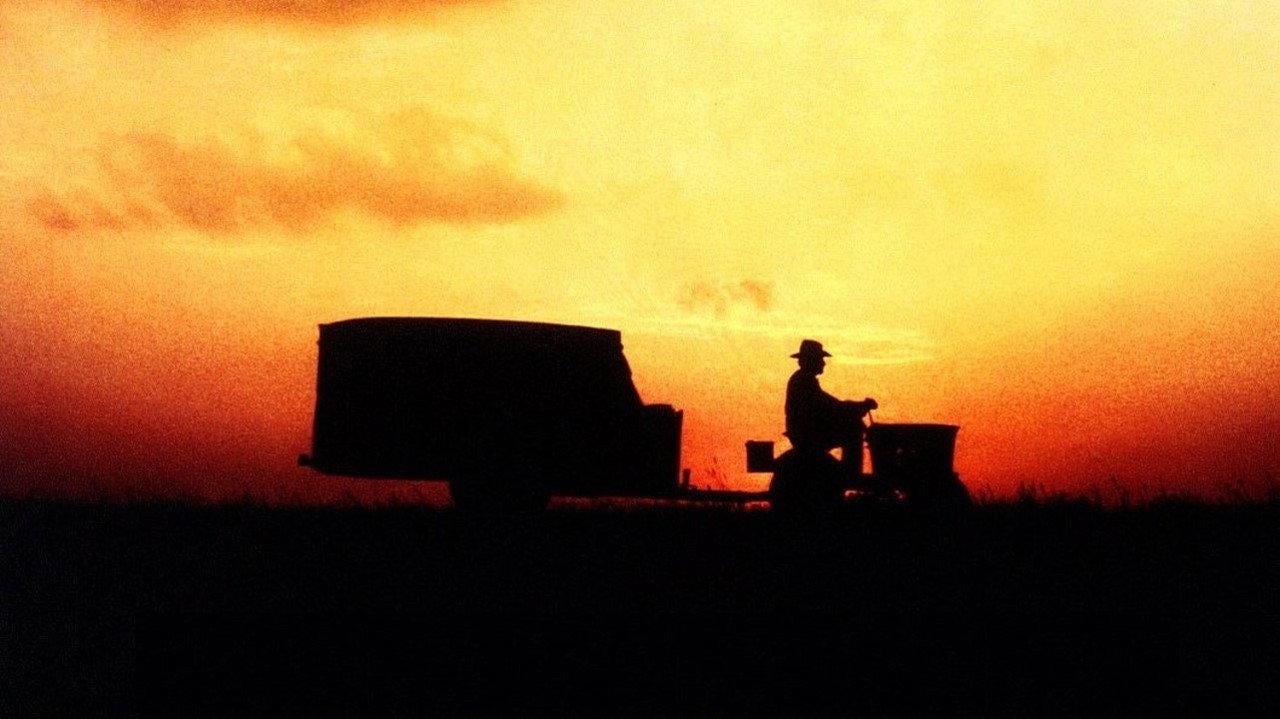
In the first film, Bastian’s return is triumphant. He has given the Empress a new name, saved Fantasia from The Nothing, and, in the process, learned something about his own capacity for courage and compassion. The final scene, in which he flies through the sky on Falkor’s back, chasing the bullies who tormented him, is a moment of pure wish fulfillment, a fantasy of power and vengeance that allows him to reclaim the dignity that was stolen from him. But it is also a scene of recognition: the bullies are terrified not because Bastian is powerful but because he has become something they cannot understand, something beyond their limited worldview.
This ending is a classic return of the hero, the moment when the protagonist, having completed his journey, brings back the elixir of wisdom to transform his own community. Bastian has not just saved Fantasia; he has saved himself, and in saving himself, he has opened up possibilities for his own life that were previously closed. The narrator’s final words - that Bastian had many more adventures and made many more wishes in Fantasia before he finally returned to the ordinary world - suggest that the journey is never truly over, that the imagination is a permanent resource that can be drawn upon whenever it is needed.
In the second film, the return is more complex. Bastian must jump from a high cliff into a waterfall, facing his fear of heights without any magical assistance. This is a moment of true heroism, a confrontation with the deepest fear that does not rely on the power of imagination to provide a solution. The waterfall is a symbol of the boundary between worlds, a threshold that must be crossed with nothing but one’s own courage. When Bastian leaps, he is not just returning to the ordinary world; he is choosing to live in it, to face its challenges without the crutch of fantasy.
The reunion with his father is the emotional climax of this return. Barney Bux, who has been reading the story, has become a believer, a participant in the imaginative world that he once dismissed as mere escapism. The embrace between father and son is a moment of reconciliation, a bridging of the gap that has separated them. It is also a recognition that imagination is not a retreat from reality but a way of engaging with it more deeply, of finding meaning in the ordinary world.
In the third film, the return involves not just Bastian but also his step-sister Nicole, who has been transformed by her experience of Fantasia. The final scene, in which Bastian and Nicole walk together, high-fiving each other, is a moment of sibling bonding, a recognition of the family that has been created through love rather than blood. The Nasties, transformed into friendly bookworms, are a testament to the power of imagination to change even the most hardened hearts.
The third film’s ending is also a meditation on the nature of storytelling itself. Mr. Coreander, the guardian of the book, tells Bastian that “the story’s not over yet,” suggesting that The Neverending Story is a cycle that will continue as long as there are readers to read it. The book, with its AURYN cover, waits on the shelf for the next person to open it, to enter Fantasia, to become part of the story. This is the ultimate message of the trilogy: stories are not just entertainment; they are the very fabric of reality, the way we make sense of our lives and connect with each other.
As Campbell says, “The only way to bring life to it is to find in your own case where the life is and become alive yourself.” Each return to the ordinary world is a return to the task of living, of finding the life within oneself and bringing it to the world. Bastian’s journey is not complete when he returns; it is only beginning, because the real work of living must be done in the ordinary world, with all its challenges and limitations.
The returns also illustrate what Campbell calls the “refusal of the return,” the hero’s reluctance to bring the boon back to the world. In the first film, Bastian nearly loses himself in the wonder of Fantasia; only the Empress’s direct appeal brings him back. In the second film, he is tempted to stay in Fantasia by the promise of unlimited wishes; only his recognition of the cost of those wishes sends him home. In the third film, he must deliberately choose to return, to give up the power of the AURYN and return to a world that has been cruel to him. Each return requires a sacrifice, a letting go of the power and wonder of Fantasia for the sake of living fully in the human world.
Section Seven: The Ontology of Imagination
“The limits of my language mean the limits of my world.”
- Ludwig Wittgenstein, Tractatus Logico-Philosophicus
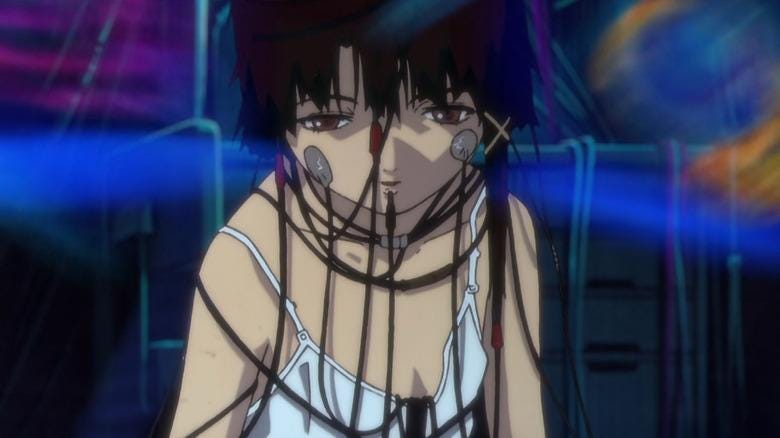
The Neverending Story offers a vision of reality that is both ancient and radically modern. It is a vision that resonates with the idealism of Plato, who argued that the world we perceive with our senses is merely a shadow of a higher reality. It also resonates with the constructivism of contemporary philosophy, which argues that reality is not something we discover but something we create.
The relationship between Fantasia and the human world is the key to understanding this ontology. Fantasia is a world built entirely on human imagination, and its existence depends on the continued willingness of humans to imagine it. This is not a purely idealist position - the human world, with its schools and its bullies and its grieving fathers, is shown to be real in its own way. But it is a position that privileges imagination, that sees it as the source of all meaning and the foundation of any meaningful existence.
This is the insight that the German Romantics, particularly Novalis and Friedrich Schlegel, championed in their reaction against the Enlightenment. For the Romantics, the imagination was not a faculty of the mind but a power that could transform the world, that could make the invisible visible and the impossible possible. Fantasia is a Romantic world, a realm where the boundaries between the real and the imaginary are porous, where dreams have consequences and wishes can come true.
The AURYN, the talisman that protects and guides the hero, is a symbol of this ontology. Its ouroboros design suggests the eternal cycle of creation and destruction, the endless process by which the imagination generates new worlds and new possibilities. The AURYN is also a symbol of balance, of the harmonious relationship between the human world and the world of imagination. When Bastian uses the AURYN for selfish purposes, he disrupts this balance, and Fantasia begins to suffer.
The act of reading is central to this ontology. Bastian does not just read the book; he enters it, becomes part of it, changes it through his participation. This is a vision of reading as an active, creative act, not a passive consumption of text. It is also a vision of reading as a form of communion, a way of connecting with the mind of the author and with the community of readers that stretches across time and space.
In this, The Neverending Story participates in a tradition that includes the One Thousand and One Nights, with its stories within stories, and Dante’s Divine Comedy, with its elaborate allegorical structures. It is a tradition that emphasizes the power of narrative to shape reality, to create worlds that are as real and as meaningful as the one we inhabit.
The French philosopher Paul Ricoeur, in his work on narrative identity, argued that we understand ourselves through the stories we tell about ourselves. Our identity is not a fixed essence but a narrative construction, a story that we are constantly revising and retelling. Bastian’s journey through Fantasia is a journey of narrative self-construction, a process of becoming who he is through the stories he tells and the stories he lives.
Campbell’s discussion of myth as a source of meaning illuminates this ontology: “Mythology tells you where you are, how to respond to certain crises of disappointment or delight or failure or success.” The Neverending Story is a mythology for the modern world, a story that tells us where we are in the cosmos and how to respond to the crises of our time. It tells us that we are not alone, that our dreams are connected to a larger reality, that the imagination is the source of all meaning and the foundation of all hope.
The ultimate lesson of The Neverending Story is that reality is not a fixed thing but a process, a continuous creation that depends on our participation. Fantasia is not a place we visit; it is a place we create, moment by moment, through the act of imagination. And the human world is the same: it is a place we create through our actions, our choices, our dreams. The story is never ending because the act of creation is never ending, and we are all, always, part of the story.
Section Eight: The Gift of the Goddess and the Return of the Feminine
“The earth does not belong to man; man belongs to the earth.”
- Chief Seattle
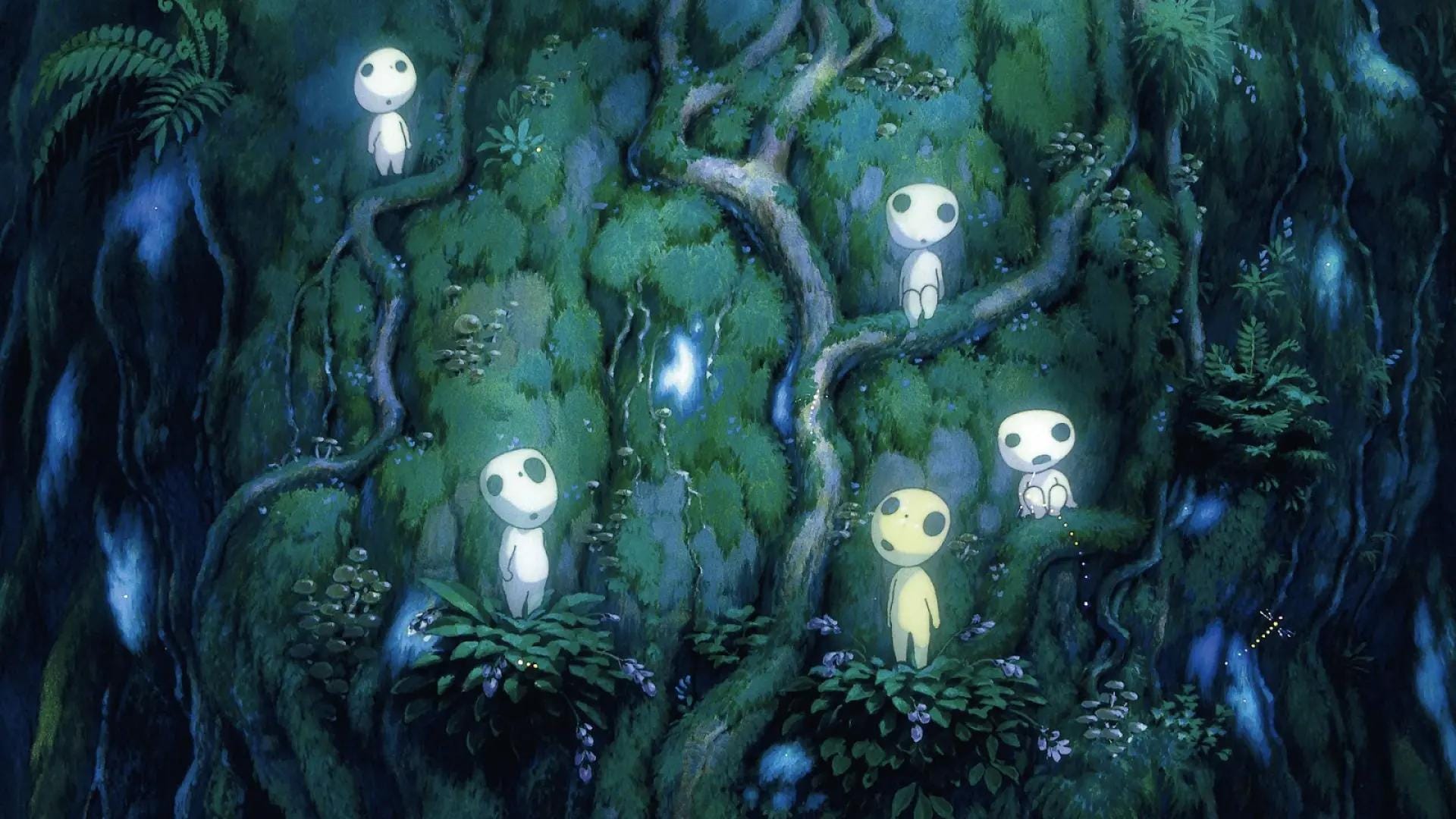
The figure of the Childlike Empress embodies what Campbell calls “the gift of the Goddess” - the recognition of the sacredness of the earth and the sanctity of all life. In the first film, the Empress is ill, wasting away as Fantasia is consumed by The Nothing. Her illness is not just a personal affliction but a cosmic one; it represents the illness of meaning itself, the sickness that comes when the feminine principle of creation and connection is suppressed.
The Empress’s role in the narrative is fundamentally different from that of the traditional hero. She does not go on a quest; she waits. She does not fight; she asks. She does not impose her will; she invites participation. This is the way of the Goddess, the way of receptivity rather than aggression, of invitation rather than command. The Empress’s power is not the power of force but the power of presence, of being the center around which the world revolves.
Campbell identifies the historical shift from Goddess-centered to God-centered mythology as a key turning point in human consciousness. The suppression of the feminine principle, he argues, has led to a world of domination and exploitation, a world where the earth is treated as a resource to be extracted rather than a body to be honored. The Neverending Story, with its emphasis on the Empress and her connection to the life of Fantasia, offers a corrective to this imbalance.
The Empress’s name - Moonchild - is significant in this context. The moon is the symbol of the feminine, of cyclical time, of the rhythms of nature that the sun-dominated culture of patriarchy has tried to suppress. The moonchild is a being of pure receptivity, open to the influences of the cosmos, in harmony with the cycles of life and death. When Bastian gives the Empress this name, he is restoring the feminine principle to its proper place.
The Shinto tradition that Campbell discusses in The Power of Myth offers a model for the relationship between the human and the natural that the Empress embodies. In Shinto, “the processes of nature cannot be evil and every natural impulse is not to be corrected but sublimated and beautified.” The Empress’s rule over Fantasia is of this kind - she does not impose order but allows it to emerge, she does not control but guides, she does not dominate but nurtures.
The third film, with its depiction of the family reunion and the transformation of the Nasties into friendly bookworms, extends this theme to the social realm. The family, like Fantasia, is a realm of imagination and connection that must be nurtured and protected. Nicole’s transformation from hostile stepsister to loving sibling mirrors the transformation of Fantasia from wasteland to garden. The feminine principle of compassion and connection is what makes both transformations possible.
The death of Artax in the Swamps of Sadness can also be read in this context. Artax, as a horse, is a creature of the natural world, a being in touch with the earth and its rhythms. His death by despair represents the death of nature itself, the suffocation of the natural world by the weight of human sadness. Atreyu’s grief is not just personal; it is cosmic, a mourning for the loss of connection to the earth.
The Empress’s final appearance in the first film, where she offers Bastian the grain of sand that contains all of Fantasia, is a moment of profound significance. The grain of sand is a symbol of the world in miniature, the microcosm that contains the macrocosm. It is also a symbol of the potential for creation that exists in every moment, every gesture, every act of imagination. When Bastian takes the grain of sand and wishes Fantasia back into being, he is performing the act of creation that the Empress has invited him to perform. He is becoming a co-creator, a participant in the ongoing work of making the world.
Section Nine: The Architecture of Fantasia and the Sacred Landscape
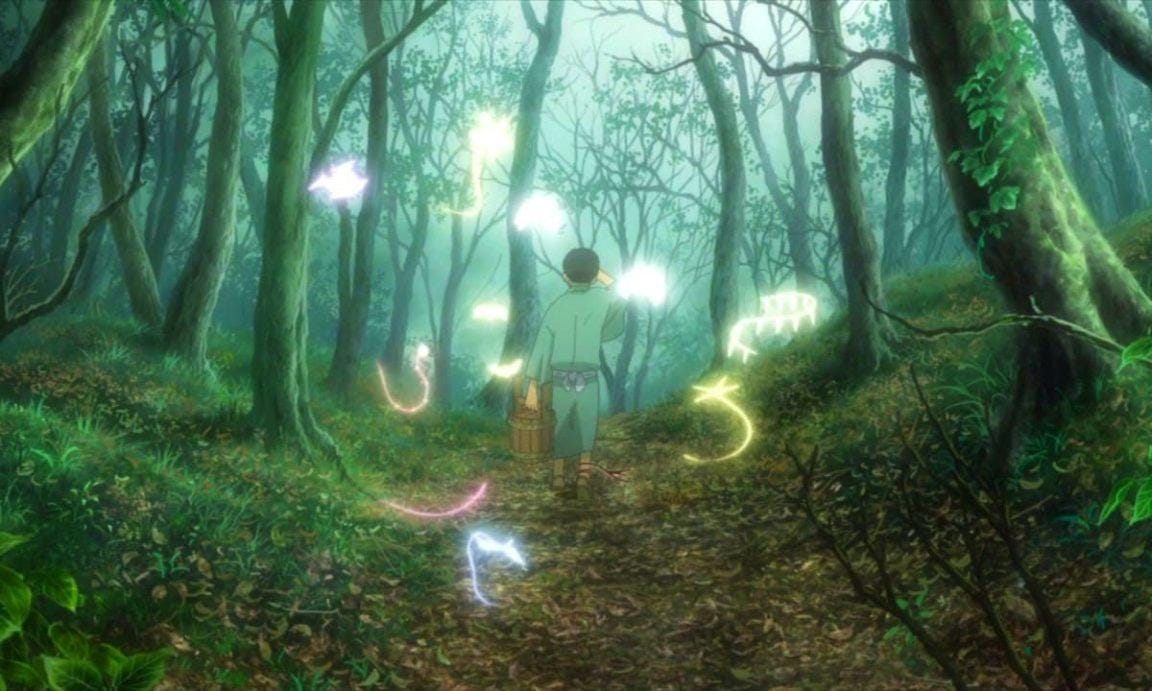
“But every land should be a holy land. One should find the symbol in the landscape itself of the energies of life there. That’s what all early traditions do. They sanctify their own landscape.”
- Joseph Campbell, The Power of Myth
The landscapes of Fantasia are not mere backdrops for the action but characters in their own right, embodiments of spiritual and psychological states that the heroes must navigate. The Silver Mountains, the Desert of Shattered Hopes, the Crystal Towers, the Swamps of Sadness, the Sea of Possibilities - each location is a symbolic terrain that represents a dimension of human experience.
The Silver Mountains are a place of beauty and danger, a landscape of shimmering possibility that is also a place of testing. They evoke the sacred mountains that appear in mythologies around the world - Mount Olympus, Mount Sinai, Mount Meru - as places where heaven and earth meet, where the divine can be encountered. Atreyu’s journey through the Silver Mountains is a journey through the territory of the gods, a passage that tests his worthiness for the quest.
The Desert of Shattered Hopes is a landscape of loss, a place where dreams go to die. It evokes the wilderness of the soul, the experience of desolation that comes when all hope seems lost. The desert is also a place of purification, as the biblical tradition teaches, a place where the self is stripped of its illusions and forced to confront its deepest truths. Atreyu’s passage through the desert is a passage through his own despair, a confrontation with the possibility that the quest is hopeless.
The Crystal Towers are a landscape of clarity and illumination, a place where the structure of reality is visible in its pure form. They evoke the crystal palaces of fairy tales, the shimmering cities of the gods, the places of ultimate knowledge. Atreyu’s glimpse of the towers is a glimpse of the goal, a taste of the fulfillment that awaits if he can complete his quest.
The Swamps of Sadness, as we have seen, are a landscape of grief, a place where sadness accumulates and becomes a physical force. They evoke the underworlds of mythology, the places where the dead reside and the living must go to find wisdom. Atreyu’s journey through the swamp is a descent into the underworld, a confrontation with death and loss that is necessary for his growth.
The Sea of Possibilities is a landscape of potential, a place where all futures exist simultaneously. It evokes the realm of the imagination itself, the infinite space of what might be. Atreyu’s flight over the sea is a flight through possibility, a journey through the futures that Fantasia might have if it can be saved.
Campbell’s discussion of sacred landscape illuminates the function of these locations: “The purpose of mythologizing is to turn the land where people live into a place of spiritual relevance.” Fantasia is a world made entirely of spiritual relevance, a landscape where every location carries meaning, where every journey is a pilgrimage.
The architecture of Fantasia also reflects the architecture of the soul. The Ivory Tower, where the Empress resides, is a symbol of the center of consciousness, the place where awareness is focused and meaning is created. The tower evokes the axis mundi, the center of the world, the point where heaven and earth meet. The Empress’s presence in the tower is the presence of meaning at the center of existence.
The Wandering Mountain of the third film is a mobile sacred center, a place of wisdom that moves through the landscape. It evokes the nomadic spirituality of the hunter-gatherers, the sense that the sacred is not fixed in one place but moves with the people. The Old Man of Wandering Mountain, who records The Neverending Story in his enormous book, is a figure of the storyteller, the keeper of the collective memory, the one who preserves the myths that give meaning to existence.
The Crystal Cave, where the Old Man resides, is a place of ultimate illumination, a space where the structure of reality is visible in its purest form. It evokes the cave of the Platonic philosopher, the place where the shadows on the wall can be seen for what they are. The Old Man’s book is the book of all stories, the record of all that has been imagined, the source from which all myths flow.
The destruction and restoration of these landscapes across the three films mirrors the cycle of creation and destruction that the ouroboros symbolizes. Fantasia is destroyed by The Nothing, by The Emptiness, by The Nasty, and it is restored by Bastian’s acts of imagination. The landscape is not a passive backdrop but an active participant in the drama, a living organism that responds to the choices of its inhabitants.
Section Ten: The Hero’s Adventure as Spiritual Initiation
“Follow your bliss.
If you do follow your bliss,
you put yourself on a kind of track
that has been there all the while waiting for you,
and the life you ought to be living
is the one you are living.
When you can see that,
you begin to meet people
who are in the field of your bliss,
and they open the doors to you.
I say, follow your bliss and don’t be afraid,
and doors will open
where you didn’t know they were going to be.
If you follow your bliss,
doors will open for you that wouldn’t have opened for anyone else.”
- Joseph Campbell
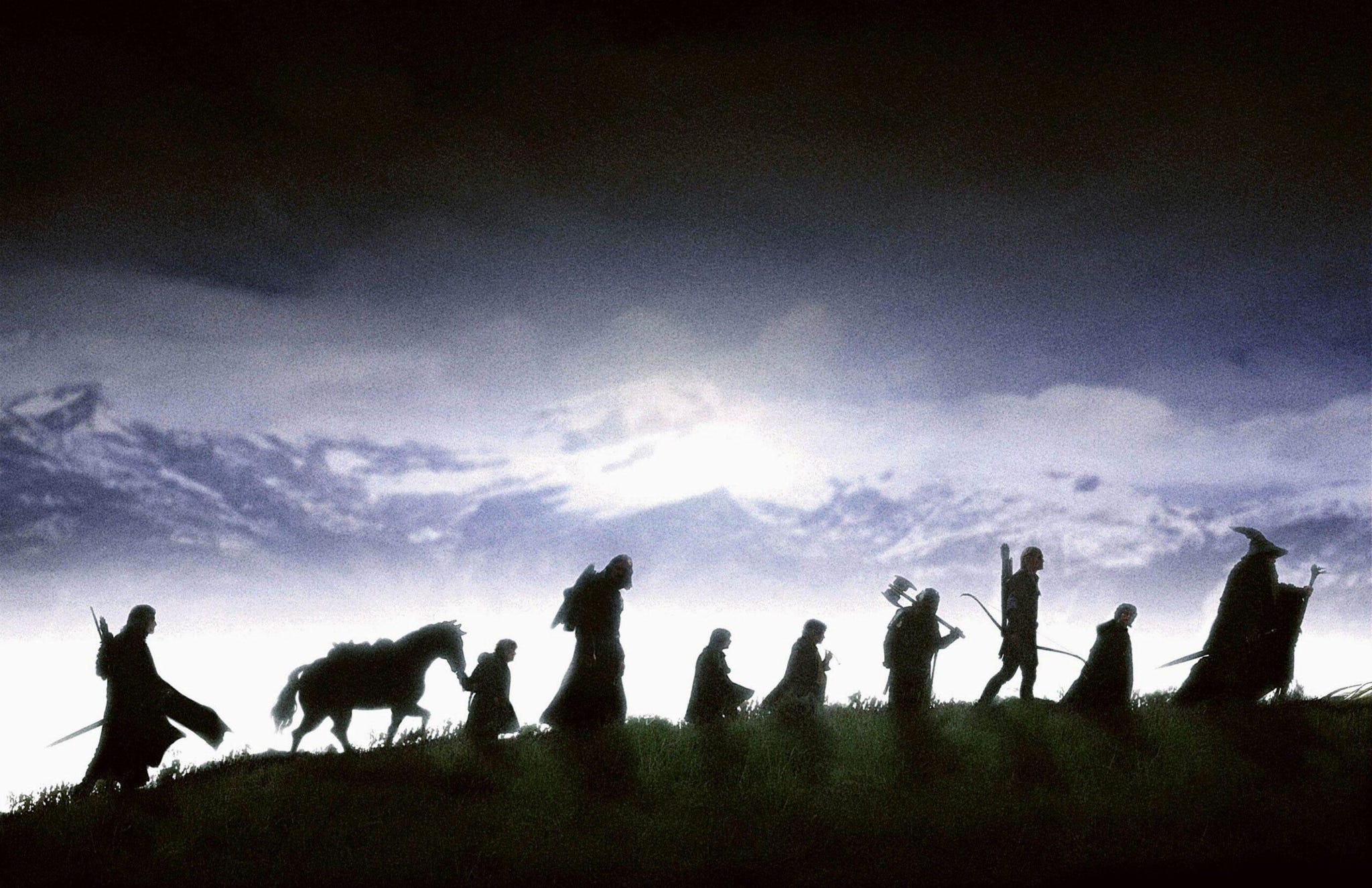
The hero’s adventure, as Campbell describes it, follows a pattern that is universal across cultures: departure, initiation, and return. The Neverending Story follows this pattern with remarkable fidelity, but it also complicates it in ways that reveal the pattern’s deeper meaning.
Bastian’s departure from the ordinary world is a physical act - he steals the book and hides in the attic - but it is also a psychological act, a withdrawal from the demands of the mundane into the space of imagination. His departure is not a heroic choice but a desperate flight, a retreat from a world that has rejected him. This makes his journey more poignant than the traditional hero’s departure, which is usually a conscious choice to seek adventure.
Atreyu’s departure is more conventional: he is chosen for the quest and accepts it willingly. But Atreyu is a child, and his departure is also a departure from childhood into the responsibilities of adulthood. The quest is an initiation, a passage from innocence to experience that will test him to his limits.
The initiation phase of the hero’s journey is the most extended part of the narrative. Atreyu’s journey through the Swamps of Sadness, his encounter with Morla, his passage through the Sphinx Gate and the Magic Mirror Gate - all of these are tests that reveal his character and forge his identity. Bastian’s initiation is different: it is the act of reading itself, the immersion in the story that transforms him from passive observer to active participant.
The return phase is where the two heroes’ journeys converge. Atreyu returns to the Empress with the knowledge that only a human child can save her; Bastian returns to the ordinary world with the knowledge that he is the child who can save Fantasia. The return is not a return to the same place but a return to a transformed place, a place that has been changed by the journey.
Campbell’s advice to “follow your bliss” is the key to understanding the hero’s journey. Bliss, for Campbell, is not mere pleasure but a deep sense of rightness, of being in the right place at the right time, of doing what one was meant to do. Bastian’s bliss is reading, imagining, creating stories. Atreyu’s bliss is the quest itself, the sense of purpose that drives him forward despite all obstacles.
The hero’s journey is also a journey of individuation, a process of becoming who one truly is. Bastian begins the story as a shy, lonely boy who is defined by his losses - his mother’s death, his father’s distance, the bullies’ cruelty. By the end of the third film, he has become a young man who knows who he is and what he wants, who has found his place in the world and his connection to others.
The hero’s journey is never truly complete, because the hero continues to grow and change. The “neverending” in the title refers not just to the story but to the process of becoming, the endless journey of self-discovery that is life itself. As Campbell says, “The adventure is its own reward,” and the reward is not the destination but the journey, not the goal but the experience of striving toward it.
The philosopher Søren Kierkegaard, in his exploration of the stages of existence, identified three levels of human life: the aesthetic, the ethical, and the religious. The aesthetic stage is characterized by the pursuit of pleasure and novelty, the ethical by the acceptance of responsibility and moral obligation, and the religious by the surrender to the transcendent. Bastian’s journey through the three films can be read as a passage through these stages: the first film represents the aesthetic stage, with its emphasis on wonder and possibility; the second represents the ethical stage, with its emphasis on responsibility and sacrifice; the third represents the religious stage, with its emphasis on compassion and connection.
Conclusion: The Endless Story
“It is only with the heart that one can see rightly; what is essential is invisible to the eye.”
- Antoine de Saint-Exupéry, The Little Prince
The Neverending Story trilogy presents a vision both urgent and hopeful: urgent in its diagnosis of modern threats to imagination - nihilism, cold rationalism, and corrosive cynicism - yet hopeful in its insistence that these forces can be overcome, that imagination is an inexhaustible resource, and that the story never truly ends. Bastian Balthazar Bux becomes a hero for our time, embodying the struggle to sustain hope in a world bent on extinguishing it; his journey from attic to Ivory Tower, through swamps and mountains, mirrors the inner odyssey each of us must undertake. The films remind us that we are all authors of our own existence, that the reality we inhabit is a story we collectively tell, and that the boundary between dreamer and dream is where authentic life begins.
Across their tonal differences, the three films converge on a single insight: imagination is not luxury but necessity, not escape but deeper engagement with the real. They teach that wonder is our most precious possession and must never be abandoned, while the story itself becomes a meta-narrative about the transformative power of storytelling - to connect, to redeem, to give meaning. It acknowledges darkness yet insists on light, inviting us to add our own wishes and creations to the great tapestry of human imagination, because as long as there are readers, there will be stories, and as long as there are stories, there will be meaning.
And so we return to the attic, the dusty chair, the copper-bound book with AURYN on its cover - opening it to read again, because the story is never over. As Campbell writes, following your bliss places you on a track that has always been waiting, leading not to some distant goal but to the very heart of your own existence. Bastian’s tale is our tale: the struggle to keep imagination alive, to bring its gifts back to ordinary life, and to transform the wasteland into a place of wonder. The Neverending Story teaches that we are all heroes on an endless journey, that saving the world begins with saving ourselves, and that the story continues in our dreams, our acts of creation, and our lived moments - because, as Campbell said, “This is it.” Not some future paradise, but this life, this moment, fully seen and felt, and it is more than enough if we dare to live it with open eyes and a willing heart.