
The Quiet Dan
Dismemberment, Ritual Purification, and the Birth of the Quiet Monster

Disclaimer and Author’s Note
The following analysis examines an improvised audio drama that contains explicit depictions of murder, dismemberment, psychological deterioration, and sexual coercion. The source material also includes scenes of alcohol abuse, financial fraud, and casual misogyny as part of its character portrayal. Readers sensitive to graphic violence or themes of retributive justice should exercise discretion. The essay treats these elements as integral to a literary and philosophical inquiry; it neither endorses nor sensationalizes the acts described, but rather seeks to understand their symbolic and structural functions within the narrative. And please, no politics.
The Quiet Dan is the creation of Ozon671games - a Russian internet persona whose real identity is cited as Roman Maltsev (also known as Andrey Tarenkov, Roman Levshov, and many other names) (born May 19, 1984). In 2021, during a period marked by intense self-hatred and personal turmoil, Ozon began producing improvised audiobooks as a new creative outlet, speaking for hours without a script and inventing characters, dialogue, and plot turns in real time. This method, often conducted while intoxicated, gave his early works a raw, unfiltered quality that documented his psychological state as much as it told a story. Around 2022, Ozon made a conscious effort to change his life: he started going to the gym, reduced his alcohol and cigarette consumption significantly (though not entirely), and achieved a more stable personal equilibrium. This transformation coincided with a second wave of popularity: his audiobooks, particularly The Quiet Dan, gained cult status within the Higher Internet - the main sphere of online communities and content creators that extends beyond the raw trenches of imageboards and trash streams. Notably, this was not his first moment of viral fame; back in 2016, Ozon had already become an entrenched meme figure, most famously as part of the “Press F to pay respect” collage - a celebrated image featuring a crying, saluting Ozon alongside the cat Kus, Big Boss from Metal Gear Solid, and blogger Ilya Maddyson (by the way, Ozon’s friend) - pic related lower. More recently, Ozon has relocated to Vietnam, where he has been living for about a year, continuing to produce content while keeping his work rigorously apolitical. The following essay reads The Quiet Dan as a serious philosophical and mythological object, while remaining fully aware of its messy, compromised, and ironically self-aware origins.

Introduction: The Threshold of the Unremarkable

“The secret of being a bore is to tell everything.”
- Voltaire, Discours sur l’homme
There exists a particular horror native to the twenty-first century that no Gothic novelist could have anticipated: the horror of the ordinary becoming void. Not the sublime terror of mountains crumbling or oceans rising, but the quiet, suffocating realization that one’s life has been rendered obsolete not by tragedy, but by spreadsheet. The Quiet Dan - an improvised Russian-language audio drama following thirty-year-old Dan, a floor washer in a New York suburb, through his unraveling after a corporate layoff - begins in this distinctly modern register of despair. Yet what unfolds across two hours and twenty-one minutes is not merely a social realist portrait of post-employment anomie. It is a decent narrative in the most ancient sense: a katabasis, a journey into the underworld of the self, conducted through the idiom of American nihilism, slacker cinema, and Eastern European fatalism. Dan, whose name echoes the Hebrew דָּן (judgment) and the Slavic den (day), becomes a figure caught between temporalities - between the workday that no longer structures his hours and the mythological time of ritual purification through violence.
This essay reads The Quiet Dan as a palimpsest of mythological, philosophical, and cinematic traditions, arguing that the protagonist’s trajectory - from passive victim to methodical avenger to, finally, a serial collector of severed heads in a tailoring shop - constitutes a perverse soteriology. Dan does not ascend to enlightenment; he descends into a private cosmology where murder becomes liturgy, where stolen silver spoons carry more weight than stolen money, and where the final image of heads preserved in jars transforms the mundane space of an atelier into a reliquary of the damned. The narrative operates through what the philosopher Gaston Bachelard called “the poetics of space,” but here inverted: every domestic space - the apartment, the bar, the office, the motel - becomes a site of ontological crisis, a stage for the repetition of cosmic patterns from Gilgamesh to Crime and Punishment, from the Orphic hymns to the films of the Coen brothers. In what follows, we will move through Dan’s world section by section, allowing each event to crystallize into its symbolic overdeterminations, treating the transcript as a dream-text awaiting exegesis.
Section One: The Annunciation of Abandonment
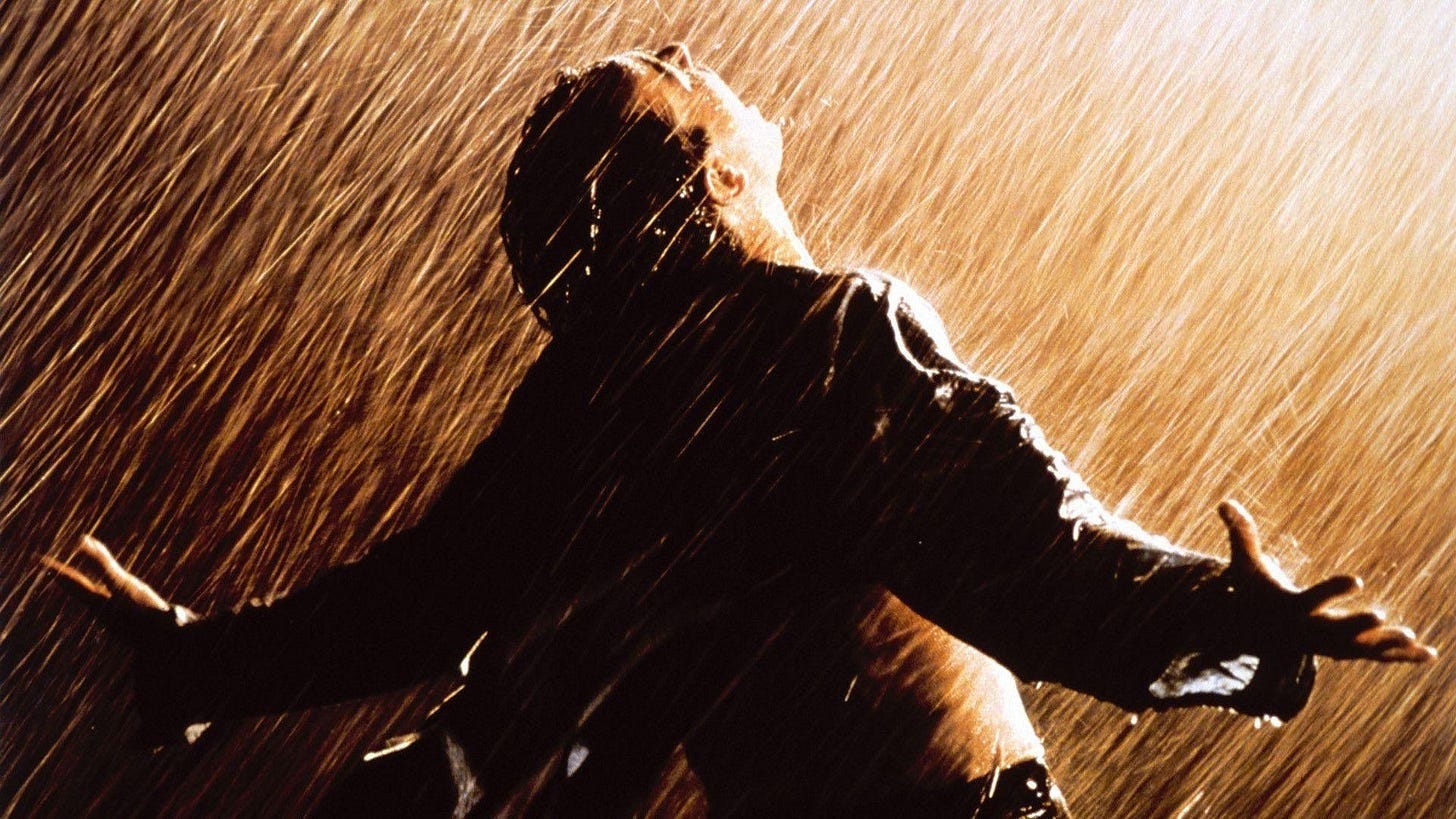
“Man is condemned to be free; because once thrown into the world, he is responsible for everything he does. It is up to you to give [life] a meaning.”
- Jean-Paul Sartre
The opening scene establishes Dan in a posture of radical passivity that borders on the mystical. He sits in his apartment near New York, watching a television that is not merely off but unplugged from meaning - a cathode-ray mandala, a black mirror reflecting nothing. The friend’s call brings news of layoffs, but Dan registers this not as catastrophe but as distant weather: “I don’t really give a shit anymore.” This is not stoic resignation in the Senecan sense, which requires disciplined indifference to externals. This is something closer to what the early Christian desert fathers called apatheia - but without the theological infrastructure, without the hope of resurrection. Dan’s apathy is the zero-degree of affect, the exhausted ground from which either nihilism or radical transformation might spring.
The mythological resonance here is unmistakable: Dan receives the announcement of his professional death as the angel Gabriel announced the Incarnation to Mary - except where Mary said “let it be done to me according to your word,” Dan says nothing at all. He is an anti-Annunciation, a secular annunciation of abandonment. The figure of the floor washer carries its own symbolic weight. In Hindu cosmology, the lowest castes perform the work of purification, handling the waste of the higher orders. Dan is the śvapaca (dog-cooker) of the corporate mandala, the one whose labor makes the office habitable for the “office plankton” who will soon be laid off alongside him. His redundancy signals not merely corporate downsizing but the revelation that purification itself has become obsolete - the temple no longer requires its sweeper because the temple is closing. This echoes the Nietzschean announcement of the death of God, but flattened into economic prose: the firm no longer believes in cleanliness as a value worth paying for.
Yet Dan’s response contains the seed of his transformation. When his friend Kol offers sympathy, Dan deflects. When the official termination letter arrives - addressed with the bizarre formality of Company Jack - Dan fixates not on the injustice but on the grammar: “idiots, even they can fire people like that.” The insult is not directed at the economic system, the boss, or the abstract forces of capital. It is directed at the style of the firing - the incompetence, the lack of ritual propriety. In Confucian thought, the li (ritual propriety) structures all social relations; without it, society reverts to chaos. Dan experiences his firing as a ritual violation, a failure of the employer to perform the rites of separation properly. The letter-writers do not even maintain the fiction of respect. They apologize for the inconvenience of his continued existence. This resonates with the anthropologist Arnold van Gennep’s concept of rites de passage: Dan has been denied a proper separation ritual, and thus his transition to a new state is abortive, leaving him suspended in a liminal void - the very space where monsters are born.
The television, that black rectangle of unrealized possibility, becomes the central symbol of this first movement. Throughout the narrative, Dan will return to the television as an oracular device - expecting news, expecting meaning, receiving only “one pile of shit.” The television is the modern substitute for the Pythia’s tripod, the scrying mirror, the crystal ball. But the oracles have gone silent, or worse, they babble nonsense about rice prices and distant explosions. This is the world of Samuel Beckett’s Endgame - Hamm staring at the window, expecting nothing. Dan sits before the dead screen not because he expects revelation but because the ritual of sitting has become its own content. He is performing the posture of waiting without an eschatology. In Buddhist terms, he has achieved a kind of dukkha-saturated equanimity, but without the Eightfold Path, this equanimity curdles into despair.
The silver spoons that will later become totemic objects are introduced here only through their absence - Dan’s mother (or rather, his father, who appears later) is mentioned in passing, but the maternal legacy is already associated with silver, with inheritance, with the material transmission of value across generations. Dan’s father, when he arrives, will offer cash. But the spoons came from an aunt, from the female line, from a different economy - not the economy of wage labor but the economy of heirloom, of ritual object. Dan’s rage at the theft of the spoons will far exceed his rage at the theft of money. This is because money is abstract, substitutable, cyborg - the spoons are singular, marked by touch and time. In Aristotelian terms, the spoons possess use value (as objects that serve a function) but also ceremonial value (as objects that carry memory). The dollars are mere exchange value, and when they are stolen, Dan is angry. But when the spoons vanish, he becomes a murderer. The spoons are his anchoring object in the Lacanian Real - the thing that ties him to a pre-symbolic maternal bond. Their theft is a second castration, a deeper wound than the firing.
Section Two: The Bar as Liminal Zone
“Wine is bottled poetry.” - Robert Louis Stevenson
Dan’s journey after the firing follows a predictable arc: the bar. But the bars he enters are not mere taverns; they are liminal spaces - thresholds between social orders, between sobriety and intoxication, between the citizen-self and the shadow-self. The first bartender, Mans (age sixty-nine, wife ill), is a figure of failed reciprocity who offers free bourbon “for the fact that you were fired.” This is hospitality in the ancient Greek sense of xenia - the sacred bond between host and guest, stranger and stranger. But Mans’s gift comes with a confession: he sometimes wants to kill his own wife. The free drink is contaminated by the admission of homicidal ideation. Dan is receiving not just alcohol but the transmission of a dark impulse, a viral thought that will gestate over the following hours. Mans is a failed pharmakos - the scapegoat figure who should absorb the community’s pollution but instead merely redirects it.
Mans’s age (69, approaching 70) aligns him with the archetype of the wise elder - except this elder offers no wisdom, only resignation. He is the senex without the puer, the old man who has not integrated the youthful capacity for transformation. When Dan says he wants to kill someone, Mans responds not with horror but with identification: “Sometimes I also want to kill my wife.” This is the confederacy of the thwarted, the secret society of those who have imagined violence as the solution to domestic irritation. The bar becomes a confessional without absolution. In Dante’s Inferno, the vestibule of Hell houses the opportunists who chose neither good nor evil; Dan’s bars are vestibules of the intoxicated, where moral categories blur into a gray sludge of shared misery.
The second bartender - the unnamed Black man in the bar called Lower Express - functions differently. He is large, strong, serious, and immediately suspicious of Dan’s daytime drinking. Their exchange carries undertones of racial and economic tension that the transcript does not fully develop but which linger like smoke: the Black bartender has worked twenty-three years in a bar that serves primarily white office workers; Dan, newly unemployed, assumes he doesn’t drink on the job because of moral superiority, but the bartender corrects him - he drinks, just not at work. This is the distinction between professional performance and authentic selfhood, between the role and the person. The bartender recommends whiskey with ice rather than bourbon - a small correction, but a correction nonetheless. He is establishing a protocol for drinking after firing, a ritual propriety that the first bar lacked. Dan is being initiated into the correct form of despair. This bartender is a psychopomp in the mode of Hermes - not a guide to the underworld’s geography, but a guide to its etiquette.
The third bar - Lunya - is the most significant. Named after a murdered gangster’s wife, run by the widow, frequented by prostitutes and thieves, this bar is the underworld proper. Dan does not find it himself; he is led there by Elon, the eighty-six-year-old taxi driver who has driven the streets for five decades and who explicitly warns Dan away from the Coyote bar because it’s full of gay men (a homophobic warning that reveals more about Elon’s cosmology than about the bar). Elon is a psychopomp - a guide of souls, like Charon or the Egyptian Anubis - who ferries Dan not across the river Styx but across the city to the place where he will meet his destruction and, paradoxically, his rebirth. Elon’s name echoes Elon Musk (the techno-capitalist) but also the Hebrew אֵלוֹן (oak tree, strength), and his age (86) places him in the realm of the ancestral. He has seen everything; he knows the city’s dark geography; he warns Dan about the Wild Coyote’s dangers even as he delivers him to Lunya’s different dangers. A psychopomp’s duty is not to protect but to guide; the destination remains the soul’s choice. In Nordic mythology, the valkyries choose which warriors die; Elon chooses which bars Dan enters. The difference is that Elon’s selection is arbitrary, not cosmic - a demotion of fate to mere cabbie knowledge.
At Lunya, Dan meets Louise, who will rob him. But before the robbery, there is flirtation, mutual recognition, the purchase of martinis. Louise’s name carries the weight of French royalty (Louise of Mecklenburg-Strelitz, Queen of Prussia) and the mundane (every Louise who has ever worked a bar). She is Persephone in the underworld - beautiful, dangerous, already married (her husband is dead, she says, but was he murdered? Was he the gangster? The narrative leaves this ambiguous). Dan’s intoxication with her is not merely chemical; it is the intoxication of the hero who has entered the realm of the dead and tasted the pomegranate seeds. By drinking with her, by accepting her invitation to go home with him, Dan has already eaten the fruit of the underworld. He will not return unchanged. In the Orphic tradition, Persephone’s pomegranate binds the eater to Hades; Louise’s martini binds Dan to a trajectory of violence. The drink price - $25 - is the fare across the Styx, paid in advance.
The robbery itself - the theft of money, watch, and silver spoons - is the hieros gamos inverted. What should have been sexual union becomes economic extraction. Louise is the femme fatale of noir cinema - Barbara Stanwyck in Double Indemnity, Jane Greer in Out of the Past - but she is also the dakini of Tibetan Buddhism, the tantric consort who consumes the practitioner’s attachments. In Vajrayana, the dakini appears as a beautiful woman who seduces the yogi into abandoning his ego; but here, the ego is not abandoned but violated. Dan’s possessions are taken, leaving him with nothing but the desire for vengeance. This is the negative alchemy: the nigredo, the blackening, the putrefaction of the old self. In alchemical texts, the nigredo is the first stage of the opus - the dissolution of the prima materia into black chaos. Dan has entered the blackening. But unlike the alchemist who seeks the philosopher’s stone, Dan seeks only restoration of what was taken - a conservative rather than transformative desire. That conservatism is what makes his violence tragic rather than liberating.
Section Three: The Father’s Failed Redemption
“The curse of the father is a heavy stone.”
- Sophocles, Oedipus Rex (paraphrased)
In the midst of Dan’s unraveling, his father arrives. This is not coincidence; it is kairotic time - the opportune moment, the point of crisis when the past erupts into the present. The father, whose name we never learn, is a successful businessman (”I have my own business”) who has been sending Dan one hundred dollars a month for three months - an amount that is simultaneously a gift and an insult. For a man with his own firm, one hundred dollars is less than pocket change; it is a token, a reminder of obligation without substance. The father arrives with a new girlfriend, Polina, aged twenty-three - the same age as Louise, the woman who robbed Dan. This parallel is not coincidental. The father’s sexual appropriation of a woman young enough to be his daughter mirrors, in grotesque form, the transactional sexuality that Louise represents. Both father and son are entangled with women who embody capital’s conversion of flesh into currency.
Dan’s confrontation with his father is the emotional core of the second act. He reveals that a year and a half earlier, he needed two thousand dollars for a leg operation after an injury. The father was unreachable - calls unanswered, texts ignored. Dan did not get the surgery. The leg healed badly, perhaps; he walks with difficulty, though the transcript never specifies the lasting damage. What matters is the moral damage: the father’s failure to respond in a moment of genuine need. The one hundred dollars per month, belatedly sent, arrives not as help but as conscience money - an attempt to purchase forgiveness after the fact. Dan has kept these dollars, untouched, in a wallet, waiting to throw them back in his father’s face. The wallet becomes a reliquary of resentment, a container for the sacred waste of paternal guilt.
This scene reenacts the primal scene of Western literature: the son’s demand for recognition from the father. In the Odyssey, Telemachus searches for his father, not his money. In the Aeneid, Aeneas carries his father on his back out of burning Troy. But here, the father carries nothing except his own guilt and his young girlfriend. Dan’s refusal of the money - “Take it the fuck away” - is a symbolic patricide. He kills the father not by violence but by rejection of his economy. The father’s money, his business, his success - all of it is refused. Dan would rather be poor and betrayed than rich and complicit. This echoes the Stoic teaching that externals (wealth, status) are indifferent; virtue alone is good. But Dan’s virtue is a negative one - the virtue of refusal, not of action. He is the Cynic Diogenes, rejecting the coins of the realm, but without Diogenes’s philosophical joy.
But the father, in a final gesture, leaves an envelope containing not just the returned three hundred dollars but an additional twenty-five hundred - two thousand five hundred dollars, the exact amount that would have paid for the surgery plus interest. This is the father’s last attempt at reparation. Dan accepts it. And with that acceptance, the patricide is incomplete. Dan remains entangled in the paternal economy, even as he insists on his autonomy. The Nietzschean command - “become who you are” - cannot be fulfilled while the father’s money is still spent. Dan will use this money to fund his revenge. In a sense, the father finances the murders that follow. The guilt of the father becomes the seed of the son’s violence. This is the logic of the Oresteia: the curse passes from generation to generation, blood for blood. Dan’s father’s money is the modern equivalent of the blood-price (wergild) - a payment that is supposed to settle the debt but instead perpetuates it.
The mythological template here is not Oedipus (who kills his father unknowingly) but Hamlet (who cannot kill his father’s ghost because the ghost is already dead). Dan’s father is not dead; he is merely absent. And absence, as psychoanalysis teaches, is harder to kill than presence. The father’s money becomes a poisoned gift - the pharmakon that is both cure and poison. With it, Dan can pursue justice; with it, he becomes unjust. The operation he could not afford now funds operations of a different kind: surgical strikes against those who have wronged him. The scalpel that should have repaired his leg now finds other flesh. In the language of the Oedipus complex, Dan has not resolved his ambivalence toward the father; he has merely displaced it onto substitute figures - the bouncer, Louise, Clark, John. Each killing is a ritual repetition of the un-acted patricide.
Section Four: The Violence as Ritual
“Violence is the midwife of every old society pregnant with a new one.”
- Karl Marx, Capital, Vol. I
Dan’s first killing - the bouncer at the Wild Coyote bar - is almost accidental. He approaches the guard with a fabricated story about a dead car battery, then stabs him in the neck and deposits the body in a dumpster. The act is described with chilling flatness: “I waited for the knife. And immediately gave it to him in the neck.” There is no moral hesitation, no internal debate, no cinematic flourish. Dan has crossed the threshold into violence the way one crosses a street - as a practical necessity. The bouncer is not a person to Dan; he is an obstacle, a piece of furniture that needs to be moved. This is the phenomenology of the sociopath, but it is also the phenomenology of the soldier - the trained killer for whom the enemy is an abstraction. Dan has received no training, yet he kills with the efficiency of a veteran. This is the horror of the ordinary man under pressure: the capacity for violence is not a specialized skill but a dormant potential that can awaken without warning. Hannah Arendt’s “banality of evil” finds its apotheosis here - not in bureaucratic paperwork, but in the domestic murder of a guard who is simply in the way.
The second killing - Louise - is more deliberate. After tracking her through her friend at the bar, after disguising himself as an older man (a costume that prefigures his final transformation), after following her to a roadside diner, Dan confronts her. He forces her to undress. He admires her body (”your peach isn’t bad”). He asks her why she robbed him. She explains the economic logic: her pimp forces her and other women to steal; she is a prostitute; she had no choice. Dan offers her a choice: have sex with him, or die. She refuses sex. He shoots her. Four or five bullets. Silenced. No one hears.
The refusal of sex is crucial. Louise could have survived - could have performed the act, dissociated, lived another day. But she chooses death. Or rather, she chooses not to choose sex as a survival strategy. This is the moment of her tragic dignity. In the ancient world, the rape of the Sabine women, the abduction of Helen - women’s bodies are the currency of male conflict. Louise refuses to be currency. She will not exchange her body for her life. Dan kills her not because she robbed him but because she denied him - denied him the sexual satisfaction that would have completed the transaction. In killing her, he enacts the logic of the spurned lover across all mythologies: from Medea (who kills her children to punish Jason) to Samson (who pulls down the temple to punish the Philistines). The difference is that Louise is not Dan’s lover; she is a stranger who slept in his bed once. The disproportion is the point. Dan’s violence is not about Louise; it is about the principle of refusal. She refused him, and in doing so, she refused the entire social order in which male desire is supposed to be satisfied. Her death is the death of that order’s legitimacy.
The third killing - Clark, Louise’s associate, who arrives at her apartment with her “salary” - is opportunistic. Clark walks into the crime scene, sees Louise’s body, and is killed immediately. But before killing him, Dan forces Clark to burn the five thousand five hundred dollars that Clark brought - Louise’s earnings from her work as a thief and prostitute. The burning of money is a sacrifice. In the ancient world, sacrifices to the gods involved burning the choicest portions of the animal - the fat, the entrails - so that the smoke might rise to Olympus. Dan burns money that is not his, money earned through exploitation, money that represents the system of exchange that reduced Louise to a body and Clark to a bagman. The smoke rises to no god, but the act purifies something - perhaps Dan’s own relation to currency. He has taken the father’s money, but he burns the pimp’s money. One economy is preserved; another is annihilated. This is the logic of the scapegoat: the violence that cannot be absorbed is externalized and destroyed. Dan is performing a ritual purification of the money itself - as if the cash were contaminated by its provenance. But the cash he keeps (his own money, the father’s money) is also contaminated. He simply does not see it.
The fourth killing - John, the gangster who runs the prostitution ring - occurs in a sauna. Dan has learned John’s location from Clark before killing him: a bathhouse on Green Lantern Street, Wednesdays at 6 PM. The sauna is a ritual space par excellence - a place of purification through heat and steam, where the body is stripped of its social armor. In Roman culture, the bathhouse was a site of social mixing and also of conspiracy. In Finnish mythology, the sauna is a sacred space, home to the saunatonttu (sauna spirit). Dan enters the sauna wearing a bathrobe, disguised as an old man, and confronts John while both are naked or nearly so. The vulnerability of nudity equalizes them. Dan demands his two thousand three hundred dollars back. John offers five thousand. Dan takes only his share - counting out the bills, two hundred, three hundred, six hundred - and throws the rest in John’s face. Then he kills him.
The counting is important. Dan does not take more than he is owed. This is not greed; it is justice - a primitive, lex talionis justice that demands exact equivalence. In the Code of Hammurabi, an eye for an eye. In Dan’s code, two thousand three hundred dollars for two thousand three hundred dollars. The extra money is contamination. By refusing it, Dan maintains his moral position, however absurd that position has become. He is Robin Hood without the redistribution, Raskolnikov without the self-justifying essay. He kills because he was wronged, and he kills only those who wronged him or stood in his way. The bouncer stood in his way. Louise robbed him. Clark was present. John ran the operation. Each death is proportional - in Dan’s mind, at least. The disproportion is that death is not proportional to theft. But Dan has entered a universe where the value of a silver spoon exceeds the value of a human life. That is the logic of the fetish, the logic of the collector, the logic that will find its fullest expression in the final image.
Section Five: The Collection
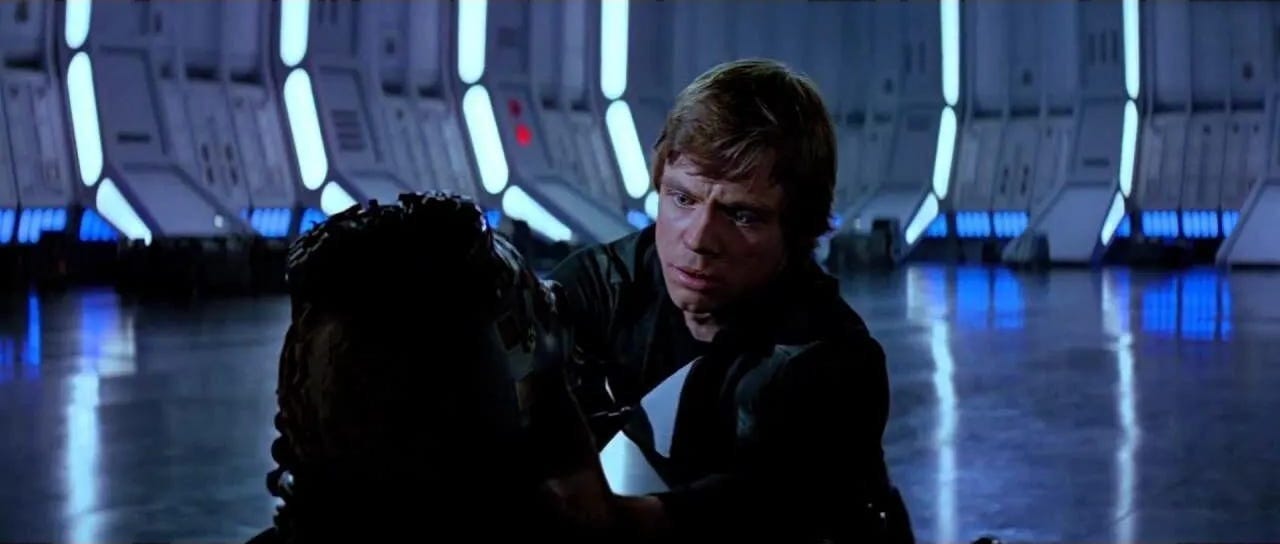
“For every action there is an equal and opposite reaction. You receive from the world what you give to the world.”
- Gary Zukav, The Seat of the Soul
One year later. Dan has opened a tailoring shop in a small town, “a hundred and fifty kilometers from New York.” The shop is called Atelier of the Quiet Dan. He has become a respected member of the community - “person of the year,” according to a local. He repairs zippers, reattaches heels, mends jackets. And in the back room, on shelves, in large glass jars filled with preserving fluid, he keeps the heads of the people he has killed. The bouncer, Louise, Clark, John - and others, new ones, whose stories we have not heard: a man who called him a liar, a policeman who started investigating, a woman who tried to deceive him. The heads are “as if alive.”
This final revelation transforms the entire narrative retroactively. What we thought was a story about revenge, about economic desperation, about the psychological effects of unemployment - was actually a story about collection. Dan is not a murderer who happens to keep trophies. He is a collector who happens to murder. The distinction is subtle but crucial. A murderer who keeps trophies is a psychopath performing a private ritual of power. But a collector is someone who organizes the world according to an aesthetic or taxonomic principle. Dan’s heads are not trophies in the sense of hunting trophies - mounted on walls, displayed for visitors. They are preserved, hidden, seen only by him. They are a cabinet of curiosities, a Wunderkammer of the damned. In the seventeenth century, European aristocrats collected anatomical specimens, preserved organs, fetuses in jars. These collections were not signs of murder but of curiosity - the desire to understand the body, to fix it in time, to possess it through the gaze. Dan’s collection is this: an attempt to understand his victims by preserving them, to hold them in a state between life and death where they can no longer harm him but also cannot disappear. This is the impulse of the taxidermist, the embalmer, the forensic scientist. Dan has become all three.
The head, in virtually every mythological system, is the locus of identity. In Greek myth, the Gorgon Medusa’s severed head retains its power to petrify. In Norse myth, Mimir’s severed head, preserved by Odin, whispers secrets from the well of knowledge. In Christian iconography, John the Baptist’s head on a platter becomes a relic of immense power. In Hindu Tantra, the kapala (skull cup) is a ritual implement used by wrathful deities. Dan’s collection of heads is therefore a collection of powers. Each head contains the essence of the person - their speech, their lies, their threats. By preserving the head, Dan preserves the threat in a neutralized form. The man who called him a liar can lie no more; his head is silent in its jar. The policeman who investigated can investigate no more; his eyes are open but they see nothing. Dan has achieved a perverse mastery over his enemies by reducing them to objects of contemplation. In this, he resembles the Buddhist practitioner who visualizes the dissolution of the body into its constituent parts - the asubha meditation on the repulsiveness of the corpse. But where the Buddhist seeks detachment, Dan seeks attachment. He wants the heads near him, not dissolved.
But there is another layer. Dan is a tailor. He works with cloth, with seams, with the surface of things. The shop is called an atelier - a word that carries connotations of artistry, of the painter’s or sculptor’s studio. Dan’s art, however, is not tailoring. His art is preservation. The heads are his sculptures, his paintings, his poems. He has transformed murder into aesthetics. This is the logic of the Marquis de Sade, who argued that cruelty is the highest form of pleasure because it asserts the absolute power of the self over the other. But Dan does not seem to take pleasure in the heads. He looks at them clinically: “I need to move them somewhere. You can’t keep them here.” The heads are a problem, a logistical challenge. They are also a companionship. In the silence of the atelier, when no customers come, Dan sits among the jars. The heads watch him. He watches them. This is the dialectic of the gaze: who is the subject, who is the object? Dan has become the object of his own collection’s gaze - a reverse Panopticon where the prisoners watch the jailer. Foucault’s Discipline and Punish describes the Panopticon as a machine for inducing self-surveillance. Dan’s atelier is a Panopticon turned inside-out: the heads are the watchtower, and Dan is the inmate who has locked himself in.
The silver spoons, we learn, have been returned to the sideboard. The money is gone - spent, probably, on the atelier, on rent, on the thousand dollars he paid the neighbors to watch the dog he then abandoned. The dog, Tom, named for no reason we can discern, has been left behind. Tom is the only innocent in the narrative - a borrowed dog, never truly Dan’s, returned to neighbors with a cash payment and a promise of temporary absence that becomes permanent. The dog is the familiar abandoned, the companion sacrificed to the new life. In Egyptian mythology, Anubis guides souls to judgment; Tom, whose name echoes the apostle Thomas (Doubting Thomas, who needed to touch the wounds), might have guided Dan. But Dan does not want guidance. He wants silence. And the heads provide that silence - the silence of the dead, who ask nothing, demand nothing, only float in their formalin forever. In this, Dan has achieved a kind of negative sainthood: he is the patron of the unspeaking, the curator of the silenced. His atelier is a church without a god, and the heads are his congregation.
Section Six: The Atelier as Microcosm
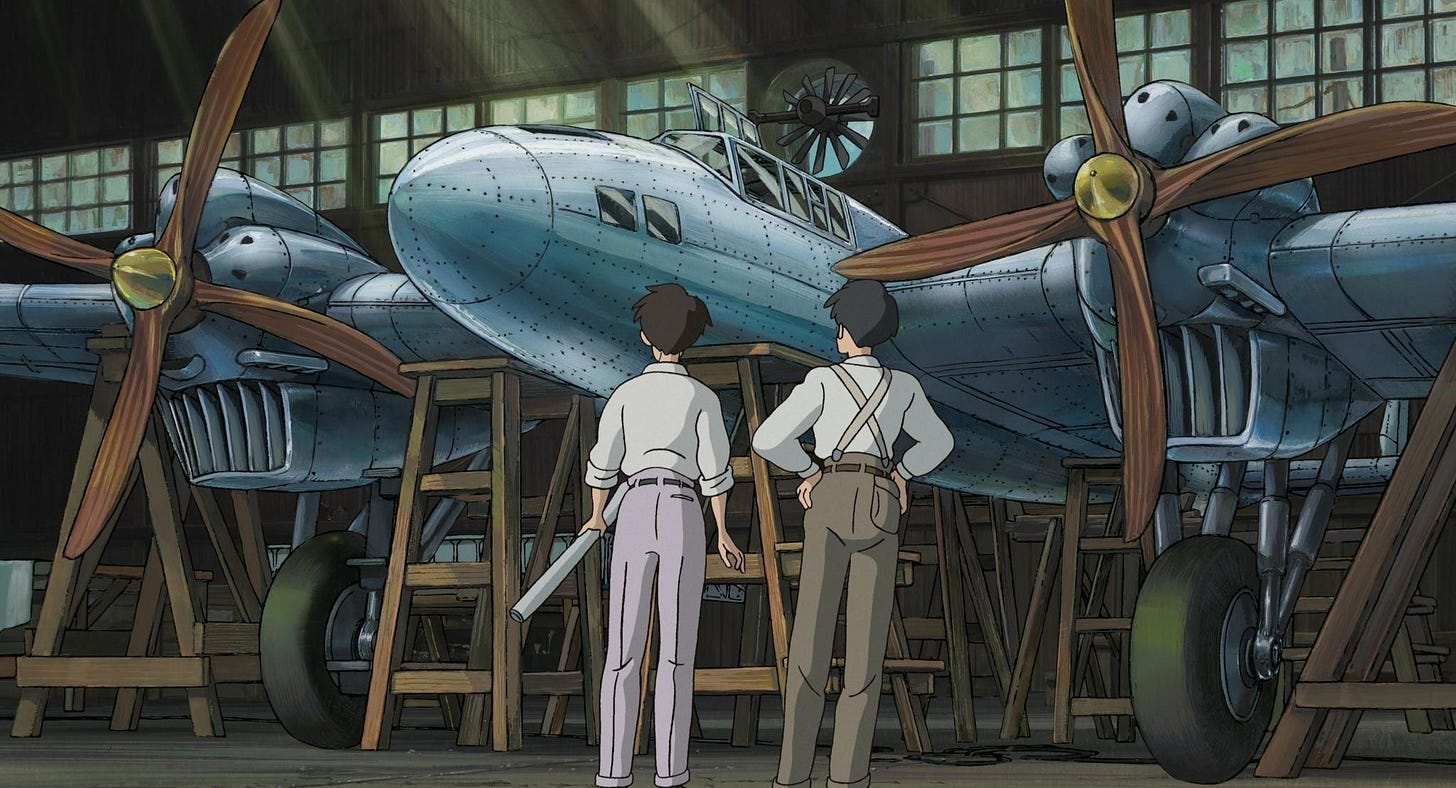
“Every man’s work, whether it be literature or music or pictures or architecture or anything else, is always a portrait of himself.”
- Samuel Butler
The choice of tailoring as Dan’s post-violence occupation is overdetermined. Tailoring is the art of suturing - of joining separate pieces of cloth into a unified garment. But the tailor also cuts - fabric cannot be joined without first being cut. Dan’s murders were acts of cutting: severing heads from bodies, lives from futures. His tailoring is an act of joining - repairing zippers, reattaching buttons, mending tears. The atelier is the place where he performs the re-membering of the social fabric. But the heads in the back room are the dis-membered - the pieces he has not reattached, cannot reattach, will never reattach. The atelier is therefore a space of failed synthesis, a microcosm of the human condition as described by the Romantics: the self is always a patchwork, always torn, always in need of mending that can never be complete. This is the condition of suture in psychoanalytic film theory - the way a film’s editing creates a seamless illusion that is always threatened by the cut. Dan’s life is the cut; his work is the illusion of seamlessness.
The town, never named, is a pastoral refuge from the suburban sprawl of New York. Thirty thousand people, six hotels, a bar named Fred’s. Dan has been accepted here because he arrived with nothing and built something - the American Dream in reverse (from city to country, from corporate employee to independent craftsman). But the acceptance is built on deception. No one knows about the heads. No one knows about the murders. Dan is “person of the year” in the same way that Ted Bundy was a law student and John Wayne Gacy was a children’s entertainer - the monster hidden within the respectable. This is not a critique of the town’s ignorance; it is a demonstration of the banality of evil, Hannah Arendt’s phrase that described Adolf Eichmann’s bureaucratic ordinariness. Dan’s evil is not banal - his crimes are too vivid, too visceral. But his integration into the town is banal. He is just another small businessman, fixing zippers, paying rent, keeping to himself. The town does not suspect because the town does not look. The gaze of the other, in Sartre’s Being and Nothingness, is what constitutes shame; Dan has arranged his life so that no one gazes at him with suspicion. He has achieved a kind of invisibility - the same invisibility he had as a floor washer, now repurposed.
The atelier’s name - The Quiet Dan - is the title of the work itself, spoken in the third person as if by a narrator separate from the character. Dan has named his business after his own moniker, his self-presentation to the world. “Quiet” is the adjective he uses to describe himself at the beginning: “I’m generally a quiet guy myself.” Quietness was his original trait, the quality that made him invisible in the office, that allowed him to wash floors without being noticed. Now quietness is his brand. The quietness of the tailor, bent over his work. The quietness of the murderer, silenced gun in hand. The quietness of the collector, contemplating his jars in solitude. Quietness is the thread that runs through all his identities - the constant that allows transformation without detection. To be quiet is to be beneath notice, and to be beneath notice is to be free. This is the lesson of the surveillance state: the subject who makes no noise, leaves no trace, attracts no camera - that subject is truly free. Dan has learned to disappear not by fleeing but by becoming unremarkable. The atelier is his camouflage.
But there is another resonance. “Quiet” in Russian can also mean peaceful - as in “Pacific Ocean” (literally “Peaceful Ocean”). Dan is the Peaceful Dan, the Pacific Dan. The irony is crushing. He is anything but peaceful; he is a container of violence, a volcano with a calm surface. The Pacific Ocean is not peaceful; it is the site of earthquakes, tsunamis, the Ring of Fire. The naming is an act of misdirection - Dan calling himself what he is not, in the hope that the name will become true through performance. This is the logic of magical thinking: if you say the name often enough, the thing named will appear. Dan says “quiet” repeatedly; perhaps one day he will be quiet. But not yet. The heads in the jars are not quiet. They are screaming, preserved in the moment of their death, their mouths open in the formalin. Dan does not hear them. That is his quietness. In the Kabbalistic tradition, the shevirat ha-kelim (breaking of the vessels) describes the shattering of the primordial containers of divine light, scattering sparks into the material world. Dan’s jars are broken vessels in reverse: they contain the shattered light of human souls, but they do not release it. He is the anti-Lurianic Kabbalist - not gathering sparks for redemption, but trapping them for eternal observation.
Section Seven: The Cinematic and Literary Genealogy

“There is no document of civilization which is not at the same time a document of barbarism.”
- Walter Benjamin
The Quiet Dan belongs to a recognizable genre: the post-Soviet American noir, told in Russian, set in a New York suburb that feels simultaneously authentic and displaced. But its influences are broader and deeper. The most immediate literary antecedent is Dostoevsky’s Crime and Punishment - the story of a poor ex-student who murders an old pawnbroker and her sister, then suffers the psychological consequences. Raskolnikov’s theory of the “extraordinary man” - the Napoleon figure who is permitted to transgress ordinary morality for the sake of a higher purpose - finds its degraded echo in Dan’s justification. Dan has no higher purpose; he has only ressentiment, the Nietzschean term for the resentment of the weak that becomes a creative force. But where Raskolnikov confesses, receives punishment, and finds redemption through Sonya’s love, Dan receives nothing, confesses to no one, and finds not redemption but a collection. The religious structure of Dostoevsky’s novel - sin, suffering, salvation - is absent. In its place is the secular structure of accumulation. Dan is not a sinner seeking grace; he is a collector seeking completeness. His collection will never be complete because the world contains infinite potential enemies. That is his hell.
The cinematic influences are multiple. The Coen brothers’ Fargo is an obvious touchstone: a seemingly ordinary man (Jerry Lundegaard) hires criminals to kidnap his wife, leading to a cascade of murders, including a notorious woodchipper scene that reduces a body to fragments. Dan’s heads in jars are the woodchipper’s opposite - not fragmentation but preservation. The Coens’ No Country for Old Men provides another parallel: Anton Chigurh, the principled killer who uses a captive bolt pistol, who gives his victims a choice (call it) and respects the outcome. Dan gives Louise a choice: sex or death. She chooses death, and he respects the choice. But Chigurh is a force of nature, an agent of cosmic determinism; Dan is just a man who was fired. The disproportion between cause and effect is the source of the dark comedy that permeates the work - comedy in the same register as Dostoevsky’s Notes from Underground, where the narrator’s spitefulness becomes a philosophical position. Chigurh kills because the coin tells him to; Dan kills because a spreadsheet told him he was redundant. Both are arbitrary systems, but one is tragic and the other is absurd.
The film American Psycho, based on Bret Easton Ellis’s novel, offers the closest parallel: Patrick Bateman, wealthy investment banker, kills homeless men, prostitutes, colleagues, and acquaintances, all while maintaining a facade of yuppie normalcy. Bateman’s victims are dismembered, stored, disposed of with clinical precision. But Bateman’s violence is driven by ennui - the boredom of unlimited wealth and zero meaning. Dan’s violence is driven by poverty - the desperation of limited resources and the sudden revelation that those resources can be taken away. Bateman kills because he feels nothing; Dan kills because he feels too much - the rage of the humiliated, the fury of the betrayed. In this sense, Dan is closer to Travis Bickle in Taxi Driver - another cab-driving psychopomp who cleans the streets of filth through violence, who becomes a hero in the eyes of the public while remaining a monster in his own private estimation. Bickle’s Mohawk, his guns, his final massacre - all are rituals of purification. Dan’s heads are the same. But Bickle’s violence is directed outward, against pimps and criminals; Dan’s violence is directed against a system that has no face. He kills proxies. The bouncer, Louise, Clark, John - they are not the ones who fired him. They are the ones who disrespected him. Disrespect is the crime that Dan cannot forgive. In a world where respect is the only currency left, its theft is capital punishment.
The anime tradition also provides echoes. Death Note features Light Yagami, a student who gains the power to kill anyone by writing their name in a supernatural notebook. Light becomes a mass murderer in the name of justice, believing he is creating a utopia. Dan has no notebook, no supernatural aid, no utopian vision. But both characters share the conviction that they are the rightful judges of human worth. Light kills criminals; Dan kills those who wronged him personally. Light’s god-complex is expansive; Dan’s is contracted, almost autistic in its narrow focus. The comparison reveals the difference between delusions of grandeur and delusions of adequacy. Dan does not think he is a god; he thinks he is a floor washer who deserves his wages. When the wages are withheld, the entire social contract collapses. That is the horror of The Quiet Dan: the monster is not exceptional. The monster is anyone who has been pushed past the point of endurance. The monster is you, if you lost your job, lost your savings, lost your silver spoons, and found a gun in the sofa. This is the lesson of the Stanford prison experiment and Milgram’s obedience studies: ordinary people become perpetrators under the right conditions. Dan’s conditions were not extreme - no war, no famine, no totalitarian state. Just a layoff, a robbery, and a father who didn’t call back. That is the true horror.
Section Eight: The Improvised Aesthetic
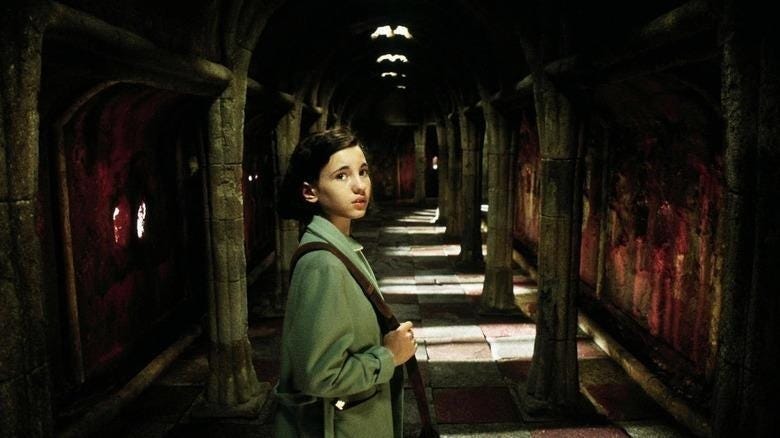
“Art is the lie that enables us to realize the truth.”
- Pablo Picasso
The metatextual dimension of The Quiet Dan cannot be ignored. The audiobook was not written in the conventional sense; it was improvised by Ozon671games, a Russian internet personality known for his trash streams, drunken rants, and combative relationships with other YouTubers. According to the Lurkmore wiki, Ozon’s technique involves speaking for two or more hours without a script, inventing plot twists, dialogue, and character names on the fly, often while intoxicated. The resulting prose is marked by grammatical eccentricities, bizarre similes (”I fell like Papa Carlo,” “I fucked like a May beetle”), and a peculiar rhythmic intensity. The transcript we have analyzed is not a polished literary artifact but a performance - a spontaneous eruption of narrative that mirrors Dan’s own spontaneous eruption into violence.
This improvisational method has profound implications for interpretation. Ozon is not a reliable author; he is a medium through which the character of Dan speaks. The slippages, repetitions, and non-sequiturs are not flaws but symptoms - traces of the unconscious processes that generated the narrative. When Dan says “I had many knives. Absolutely many!” the grammatical oddity (”absolutely many” instead of “very many”) reveals a mind struggling to quantify its own darkness. When he describes falling “like Papa Carlo” (the old man from Pinocchio), he inadvertently invokes a figure of paternal failure - Carlo, who carved a son from wood, who loved a puppet as if it were real. Dan’s father is no Carlo; he gave money instead of carving. The simile is a slip of the tongue that reveals the wound.
Ozon’s own biography - former soldier (or so he claims), former M.Video sales clerk, alcoholic, internet pariah - bleeds into Dan’s. Both are men in their late thirties or early forties (Dan is 30; Ozon was born in 1984, making him 38-39 at the time of the audiobook’s release), both are “quiet” in their self-presentation but explosive in their private moments, both have strained relationships with father figures and with money. The Lurkmore page details Ozon’s history of crowdfunding fraud: collecting money for a PS4, for children’s toys, for a microphone, and then spending the funds on alcohol or pocketing the difference. Dan’s father accuses him of something similar - not directly, but the parallel is there. Dan is Ozon’s alter ego, his doppelgänger, the version of himself who takes the resentment all the way to its logical conclusion. Where Ozon merely screams at his monitor and breaks his furniture, Dan kills. The audiobook is a fantasy of agency, a wish-fulfillment for a man who feels powerless in his own life. But the fantasy is dark, and it knows itself to be dark. That is why Dan is not celebrated; he is merely described. The narration is flat, affectless, as if the story were being read from a police report. This flatness is Ozon’s genius: he refuses the catharsis of moral judgment. Dan kills; Dan collects heads; Dan is happy. The audience is left to supply the horror.
The Lurkmore entry also notes that Ozon’s audiobooks have become a cult phenomenon, with listeners deriving pleasure from the sheer absurdity of the premises and the clumsiness of the execution. The Quiet Dan is often cited as his best work - a “noir thriller” that accidentally achieves genuine pathos. Whether accidental or intentional, the work stands as a testament to the power of outsider art - art made by someone outside the institutions of literature, someone who has never studied craft, who does not know what a plot arc is supposed to look like, who simply opens his mouth and speaks for two hours. The result is raw, unpolished, and more truthful than many carefully wrought novels. It tells us something about the American dream from the perspective of a Russian alcoholic who has never been to America. It tells us something about violence from the perspective of a man who has never hurt anyone (probably). It tells us something about storytelling from the perspective of someone who has never read a book on storytelling. In that sense, Ozon is the perfect author for Dan: both are autodidacts of destruction, learning by doing, by failing, by trying again. Both are quiet until they are not.
Conclusion: The Quiet After the Storm
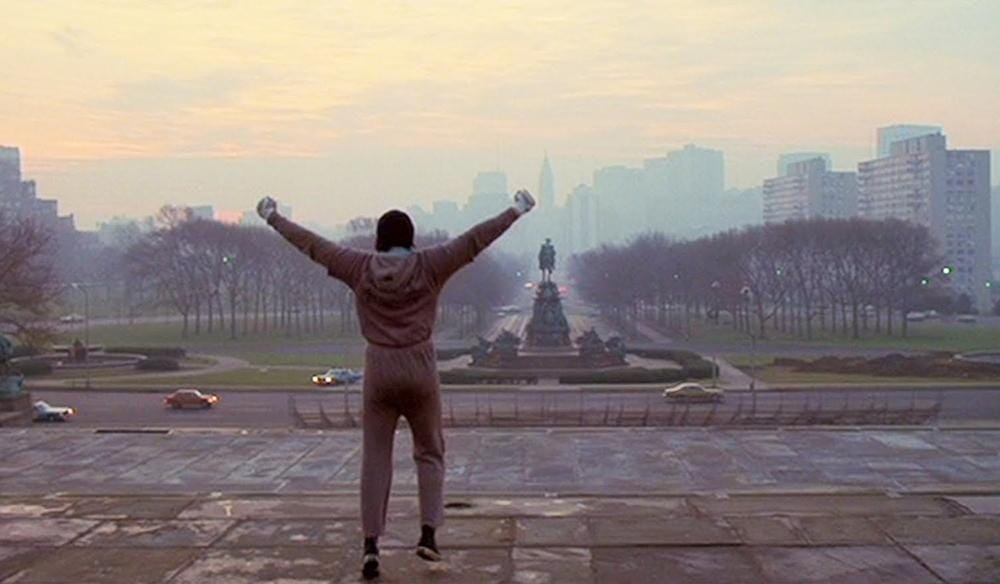
“Life is not made for happiness, but for achievement.”
- Will Durant, The Story of Philosophy: The Lives and Opinions of the World’s Greatest Philosophers
The final image of The Quiet Dan is not the heads in jars. It is the sign above the atelier: Atelier of the Quiet Dan. Dan walks away from the camera, or the camera pulls back, and we see the small town, the modest shop, the ordinary street. Dan is happy, we are told: “And now I am happy.” The happiness is incomprehensible. How can a man with severed heads in his back room be happy? How can a murderer find peace? The answer, I think, lies in the completion of the collection. Dan has not stopped killing - the heads of the liar, the policeman, the deceiver woman suggest that he has continued to kill in the intervening year. But he has found a structure that contains the violence. The atelier is the container, the jars are the containers within the container, and the heads are the contents. Dan has become a curator of his own dark deeds, and curatorship provides meaning. He is no longer a floor washer, a passive receiver of economic shocks. He is an active agent, shaping his environment, collecting his enemies, transforming murder into art. In this, he follows the logic of the serial killer as theorized by Mark Seltzer: the murderer as artist of the real, producing bodies as aesthetic objects. Dan’s medium is formalin; his gallery is a back room; his audience is himself.
But this is not a happy ending. It is a tragic ending masquerading as a happy one. Dan has not integrated his shadow, in the Jungian sense; he has externalized it into jars, where it can be observed but not felt. The shadow remains; it is merely contained. In Buddhist terms, Dan has not extinguished his attachments; he has objectified them, made them into fetishes that he can touch and see. The Buddha taught that liberation comes from letting go; Dan holds on tighter. He is Sisyphus not rolling the rock but collecting rocks, lining them up on a shelf, polishing them, labeling them. The absurd hero, in Camus’s formulation, is happy because he accepts the futility of his task. Dan accepts nothing. He believes his task has meaning - the meaning of justice, of retribution, of preservation. That belief is his delusion, and it is the source of his happiness. Whether we call him damned or saved depends on our own beliefs about the afterlife. The work offers no resolution, only a question mark in the shape of a jar.
The title, The Quiet Dan, finally reveals its full meaning. Dan is silent because he does not confess. He is silent because the heads cannot speak. He is silent because the town does not ask. But silence is also the condition of the listener - the audience, the reader, the one who hears the story and must decide what to do with it. We listened to Dan’s story for two hours and twenty-one minutes. We have watched him descend into violence, ascend into respectability, and remain exactly where he began: alone, quiet, watching. The television is still off. The world still moves outside the window. And somewhere, in a small atelier a hundred and fifty kilometers from New York, a man is sewing a button onto a coat while twenty feet away, floating in formalin, the heads of his victims gaze at the ceiling. This is the image of modern evil: not the grand spectacle of war or genocide, but the small, contained, almost domestic horror of the man next door. Dan is no one. Dan is everyone. Dan is the quiet in the room that you do not notice until it is too late. Listen. Do you hear him? No. That is the point. The silence is not empty; it is full of heads. And Dan, the quiet Dan, is their keeper, their curator, their god. In the end, he has become the thing he feared most: invisible, essential, and utterly alone. That is the reward for the quiet ones. That is the punishment.