Elysium
Poverty, Paradise, and the Failure of Transcendence

Introduction: Two Civilisations, One Atmosphere
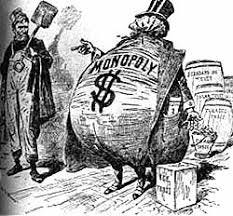
“The rich will do anything for the poor but get off their backs”
- Karl Marx
In 2154, two civilisations share the same atmosphere but breath different air. One is dying. The other denies that death exists. Neill Blomkamp’s Elysium (2013) opens not with a hero but with a geography lesson in eschatological horror: below, Los Angeles has become a necropolis of dust and rust, where children learn to cough before they learn to speak, where the sky is the colour of a bruise that will never heal, where the only growth industry is the manufacture of pain. Above, suspended like a halo that has forgotten its sacred function, rotates a torus-shaped habitat of manicured lawns and swimming pools, of Mediterranean villas and medical bays that cure leukemia with a wave of light, of citizens who have not seen a sick person in years and have forgotten that sickness exists. The camera does not judge. It merely records, with the flat documentary precision Blomkamp inherited from his District 9 cinematographer Trent Opaloch. And in that neutrality, something terrible is disclosed: the film has decided that heaven is not a theological condition but a gated community, and that the distance between the two is measured not in light-years but in the thickness of a missile shield.
This essay argues that Elysium operates as a critical dystopia - a term the scholars Tanner Mirrlees and Isabel Pedersen have applied to the film - that systematically interrogates the philosophical, theological, and political assumptions underlying contemporary global capitalism. Through its vertical stratification of human worth, its ambivalent treatment of technological enhancement, its Gnostic structure of secret knowledge and sacrificial redemption, its dark mirroring of the protagonist in the mercenary Kruger, and its unflinching portrayal of the banality of bureaucratic evil, Elysium transforms a science-fiction action narrative into a sustained meditation on justice, mortality, and the possibility of grace in a world engineered for exclusion. The film’s very imperfections - its narrative unevenness, its unresolved political contradictions, its director’s own retrospective disappointment - become, paradoxically, its greatest analytical assets. They reveal the impossibility of imagining a complete revolution within the forms of mainstream cinema, even as they gesture desperately toward that impossibility’s necessary negation. Blomkamp has said he “fucked it up,” that “the story is not the right story.” But perhaps the story’s wrongness is precisely its truth: we do not yet know how to tell the story of justice, only the story of sacrifice. And Elysium tells that story with a raw, bleeding honesty that more polished films cannot approach.
What follows is an essay structured into seven thematic sections, each fusing narration and interpretation into a single intellectual movement. No plot point is merely summarised; no symbol stands alone. Instead, the film is treated as a vital node in an infinite cultural network - drawing on ancient mythology, religious cosmology, the entire history of Western philosophy, and the total field of global art and media, from Homer to Hegel, from the Bhagavad Gita to Ghost in the Shell, from Dante’s Paradiso to Fritz Lang’s Metropolis, from the Egyptian Book of the Dead to the prison documentaries of Frederick Wiseman. The goal is not to exhaust the film’s meaning but to unfold it, layer by layer, as if the story itself were a palimpsest whose earlier inscriptions remain visible beneath the surface. Let us begin, then, with the most literal image the film offers: a ring of privilege floating above a planet of pain.
I: The Vertical Schism - Heaven as Real Estate, or the Ontology of Exclusion
“It is not from the benevolence of the butcher, the brewer, or the baker that we expect our dinner, but from their regard to their own interest.”
- Adam Smith, The Wealth of Nations (1776)
The film’s establishing shots execute a single, devastating dialectical operation. First, Earth: an extreme long shot of the ruined continent, smoke pluming from cities that have become open-air tombs, the colour palette drained to ochre and grey, the architecture a desperate bricolage of scavenged materials and patched-over ruins. Blomkamp’s camera lingers on the faces of children who have never known a world without dust in their lungs, on the hands of workers whose fingers are stained with industrial chemicals that will kill them in a decade, on the eyes of the old who have watched everyone they love die of diseases that were cured a century ago but never reached this zip code. Then, Elysium: a sudden cut to pristine white architecture, swimming pools reflecting cloudless skies, children running on grass that has never known drought, citizens jogging along paths where the only danger is a twisted ankle. The distance between these two images is not measurable in miles - the station orbits in low Earth space, visible as a bright point in the night sky - but in ontological status. One is a world of immanence: the brute facticity of suffering, the Levinasian face of the other that demands response and receives only neglect. The other is a world of pure transcendence: the Platonic Form of the good life, except that Plato’s Forms are eternal and unchanging, while Elysium is a piece of engineering that could, in principle, be visited by anyone with a functioning shuttle and a willingness to risk incineration. The rich have not escaped to another dimension. They have simply climbed a ladder and pulled it up behind them, and the ladder was made of the bones of the poor.
This vertical stratification recalls nothing so much as the medieval Great Chain of Being, that Ptolemaic ladder from mud to angel that organized all of creation into a hierarchy of perfections. In the old cosmology, ascent meant spiritual refinement: the higher you climbed, the closer you came to the unparticipated origin, the Prime Mover, the Good itself. Dante’s Paradiso moves through concentric celestial spheres toward a rose of light that is also the face of God, and each sphere represents a virtue perfected, a limitation overcome, a sin shed like a snake’s skin. The pilgrim ascends because he has become worthy of ascent; the journey is simultaneously physical and moral. But Blomkamp has inverted the moral vector of this ascent. Elysium offers no beatific vision. It offers dermatological perfection and a health-care plan. Its citizens have not died into glory; they have flown into exclusivity. Their ascent required no purification, only a credit check. The station is named, with savage irony, for the Greek underworld’s realm of the blessed heroes - the Elysian Fields where Achilles and Helen passed their afterlives in athletic competition and gentle breezes, where Cadmus and Dionysus eventually found rest, where the initiates of the Eleusinian Mysteries hoped to spend eternity. Yet the film’s Elysium is not a reward for virtue. It is a reward for wealth. The classical world distinguished between aretê (excellence of character) and ploutos (mere riches). Aristotle, in the Nicomachean Ethics, argued that wealth is not even a component of eudaimonia (human flourishing) but merely an instrument, useful only insofar as it enables virtuous action. Blomkamp’s future has collapsed that distinction entirely. The rich are not good. They are simply rich. And in the moral universe of neoliberalism, that is the same thing.
Consider the film’s treatment of immigration, that most volatile of contemporary political flashpoints. Delacourt’s defense forces shoot down unarmed shuttles carrying refugees to Elysium. The film shows these destruction with cold, almost bureaucratic violence: a missile lock, a flash, a debris field where human bodies had been seconds before. There is no music during these scenes, no slow motion, no heroic last stands. Just the physics of heat and metal, the silence of vacuum, the absence of anyone who will mourn. When President Patel (Faran Tahir) reprimands Delacourt, his objection is not moral but legal. She has violated the station’s protocols. He does not say, “These were human beings.” He says, “You have exceeded your authority.” This is the banality of evil in Hannah Arendt’s precise sense - not monstrous cruelty but the bureaucratic administration of exclusion, the reduction of human lives to procedural violations, the transformation of murder into paperwork. Arendt, reporting on the trial of Adolf Eichmann in Jerusalem for The New Yorker, coined the phrase to describe a man who was not a demon but a functionary, someone who had “lost the capacity to think from the standpoint of someone else.” Eichmann did not hate Jews; he simply processed their deportation with the same efficiency he would have applied to any logistical problem. Delacourt has not lost that capacity. She has suppressed it in the service of a system that rewards her for doing so, a system that has made the killing of poor people not a crime but a performance metric. Her coup attempt is not an aberration from this system but its logical extension: if power is the only currency that matters, then more power is always better, and the only limit on violence is the risk of being caught.
The philosophical resonance here extends to the entire tradition of social contract theory, from Hobbes to Rawls, and to the critiques that tradition has generated from the left. Thomas Hobbes, in Leviathan, argued that rational individuals would surrender their natural rights to an absolute sovereign in exchange for security from the “war of all against all.” But Hobbes assumed that all individuals were roughly equal in vulnerability - that no one could be so powerful as to escape the need for protection. John Locke modified this to include the right of revolution if the sovereign betrayed the people’s trust, but he too assumed a common territorial basis for the political community. Jean-Jacques Rousseau imagined a general will that transcended individual interests, but his social contract depended on the physical assembly of citizens in a shared space. Even John Rawls, in A Theory of Justice, assumed a closed society in which “entry and exit are regulated” - that is, a society whose members cannot simply leave or be excluded. But Elysium presents a world in which the social contract has been voided because one party - the rich - has physically removed itself from the territory of the contract. They do not need the protection of the Earth-bound masses. They have their own security forces, their own laws, their own definition of justice. The poor are not party to the contract; they are simply its abrogated remainder, the detritus of a promise broken before it was made. In this, Elysium anticipates a political condition that the theorist Wendy Brown has called “sovereignty’s rupture” - the moment when wealth becomes territorially independent of labor, when the rich no longer require the poor even as a reserve army, when the only remaining relationship between the two is the relationship between predator and prey. Elysium is not a state. It is a corporation with its own atmosphere, and its citizens are not citizens but shareholders.
The film’s opening montage - a mashup of news footage, propaganda reels, and security-camera angles that recalls the opening of District 9 and anticipates the information-saturated style of later dystopian films like Snowpiercer and The Platform - establishes this world as one where the sacred has been fully secularized into infrastructure. Shuttles ferry the wealthy upward like souls traversing the celestial spheres, except that no prayer is required, only a biometric signature that confirms sufficient funds in a numbered account. The poor watch these ascending craft the way medieval peasants must have watched comets: as portents of a power that touches nothing in their lives, as signs of a world they will never enter, as reminders that the sky belongs to someone else. Blomkamp has stated explicitly that Elysium is not about the future but about the present - specifically, about the global divide between the Global North and the Global South, between the insured and the uninsured, between those who can afford to fly to Switzerland for cancer treatment and those who die in emergency room waiting rooms because they cannot prove they are worth saving. But the film’s power lies in how it literalizes this divide into vertical space, making visible what is usually invisible: the fact that the rich do not merely have more than the poor but occupy a different ontological plane altogether. The poor do not merely lack resources; they lack gravity’s favor. Earth has become the underworld - Hades, Hel, Sheol, the duat, Mictlān, Yomi - not because the dead go there but because the living are treated as already dead, their suffering invisible from above, their screams inaudible through the vacuum. The rich have achieved what no ancient religion promised: an escape from the human condition that does not require dying first. They have found a way to be gods without paying the price of divinity, which is love. And the poor, left behind, have become ghosts in their own lives.
II: The Body as Archive - Exoskeleton and the Paradox of Enhancement
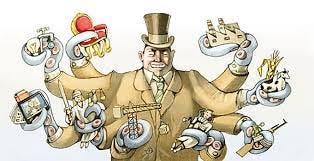
“For the master’s tool will never dismantle the master’s house. They may allow us temporarily to beat him at his own game, but they will never enable us to bring about genuine change. And this fact is only threatening to those women who still define the master’s house as their only source of support.” - Audre Lorde
When Max Da Costa (Matt Damon) approaches Spider (Wagner Moura), the hacker who runs clandestine shuttles to Elysium, he makes a bargain that is also a confession of finitude, a prayer to a god who charges by the flight. He will steal information from John Carlyle (William Fichtner), the CEO of Armadyne Corp - the company that designed and built Elysium itself, that wrote the code for the station’s operating system, that holds the patents on the Med-Bays and the exoskeletons and the missile guidance systems - in exchange for a ride to the station and a few minutes in a Med-Bay. He has five days to live, or so the corporate doctors have told him after the radiation exposure that was not his fault but was certainly his problem. But Spider, observing Max’s deteriorating body - the sweat on his brow, the tremor in his hands, the cough that sounds like glass breaking - insists on an upgrade. He straps Max into a surgical chair that looks like something from a medieval torture chamber crossed with a dental office, and he grafts an exoskeleton directly onto Max’s bones: alloy struts screwed into the humerus and femur, hydraulic pistons running alongside the spine, a neural interface implanted at the base of the skull that turns the dying man’s thoughts into force, his intentions into impacts. The procedure is agonizing, filmed in the visceral, almost documentary style that Blomkamp used for the alien weaponry in District 9, with close-ups of blood and bone and the wet sound of metal seating itself into flesh. Max emerges from the chair not healed but transformed. He is no longer merely a man with five days to live. He is a man with five days to live and the strength to break steel with his bare hands, to punch through walls, to lift a shuttle off its landing struts. He is also, the film makes clear, no longer entirely human. The exoskeleton has made him into something else, something the world will recognize not as a person but as a problem.
This exoskeleton places Elysium within a lineage of cinematic and literary treatments of human enhancement that stretches from the Iliad’s divinely forged armor of Achilles - the panoply crafted by Hephaestus, the lame smith-god, which made the hero invincible except for his famous heel - to the powered suits of Robert Heinlein’s Starship Troopers, from the cybernetic horrors of Ghost in the Shell to the ironmonger technology of the Marvel Cinematic Universe, from the neural interfaces of The Matrix to the biological augmentation of Upgrade. But Blomkamp’s version is distinctively ambivalent, refusing both the utopian transhumanism of the singularity movement and the Luddite rejection of all technology. The exoskeleton does not save Max. It does not cure his radiation sickness. It merely makes him dangerous enough to steal what he needs - and, in the stealing, accelerates the decay of his body, because the exoskeleton’s power draw leeches energy from his failing organs, because the neural interface demands processing cycles his damaged brain cannot spare, because every punch he throws is also a punch thrown at himself. In this, the film echoes a deep current in transhumanist thought - the dream of surpassing biological limits through technological augmentation - while simultaneously revealing that dream’s class character, its hidden assumption that enhancement is a gift when it is actually a debt. The rich on Elysium do not need exoskeletons. They have Med-Bays. They have gene therapies. They have been enhanced at the level of the cell, the chromosome, the telomere, not the skeleton. Their enhancements are invisible, seamless, integrated. Max’s enhancement is compensatory, prosthetic in the original Greek sense: prosthesis means “something added,” but also “something that reveals a lack.” The exoskeleton is a crutch made of weapons. He is armored because he is vulnerable. He is weaponized because he is dying. He is a cyborg because the alternative was death, and even this is only a postponement.
The philosophical resonance of this distinction runs through the entire history of the philosophy of technology, from Heidegger’s critique of instrumental reason to Donna Haraway’s celebration of the cyborg as a figure of boundary-transgression. Martin Heidegger, in his essay “The Question Concerning Technology,” famously argued that modern technology is not merely a set of tools but a Gestell, a “framing” that reduces the world to a standing reserve (Bestand) of resources to be optimized and exploited. The exoskeleton frames Max’s body as a problem to be solved - insufficient strength, insufficient speed, insufficient time - and his humanity becomes indistinguishable from his functionality, his soul reduced to a user manual. He is what Heidegger would call a “standing reserve” of violence: a resource whose only purpose is to be deployed, whose value is measured in foot-pounds of force and seconds of combat effectiveness. But Blomkamp adds a Marxist inflection that Heidegger lacked, a political economy of the body that asks not only what technology does to us but who owns the technology and who gets to decide. The exoskeleton is also a sign of labor’s degradation under capitalism, the final stage of what Marx called “formal subsumption” becoming “real subsumption” - the point at which the worker’s body itself is incorporated into the machinery of production. Max was already a machine to his corporate employers at Armadyne, a replaceable component in the assembly lines that manufacture the very shuttles that carry the rich to Elysium. The exoskeleton merely makes that mechanization literal, visible, undeniable. He has been turned into what Haraway, in her Cyborg Manifesto, called a “cyborg” not as a figure of liberation but as a figure of the “informatics of domination” - the way late capitalism blurs the boundaries between organism and machine, between physical and virtual, between public and private, to better extract value from all of them. The cyborg was supposed to be our hope for escaping outdated categories of gender, race, and species. Instead, it has become our nightmare: the perfectly optimized worker who cannot resist because resistance would require a body that is no longer his own.
Yet Max’s cyborg body is also, paradoxically, the only thing that allows him to resist. This is the central tension of the film’s political imaginary, the knot that cannot be untied: the same technology that exploits you can also arm you, the same system that degrades you can also give you the tools of your own revenge. The exoskeleton becomes a kind of Hegelian dialectic made of flesh - the master’s tool that, wielded by the slave, becomes a weapon against the master. In Hegel’s Phenomenology of Spirit, the struggle for recognition between lord and bondsman culminates in the bondsman’s realization that his labor, performed under duress, has nonetheless shaped the material world in ways the lord cannot. The lord consumes; the bondsman creates. The lord is dependent on the bondsman for everything that makes life worth living; the bondsman, in his work, discovers his own agency, his own power to transform reality. When Max turns his exoskeleton against the enforcers of Elysium, he is turning the logic of the system against itself, using the master’s tools not to dismantle the master’s house but to break down its doors. Audre Lorde’s famous warning - that the master’s tools will never dismantle the master’s house - here meets its counterargument: the master’s tools, repurposed by the slave, might at least break the master’s windows, might at least let in some light, might at least remind the master that the house is not as secure as he thought. Whether that constitutes revolution or mere vandalism is a question the film leaves deliberately open. Does Max change the system, or does he merely become a more efficient version of the violence the system already produces? Is he a revolutionary or a terrorist? The film refuses to answer, because the answer depends on what happens after the credits roll, and the credits roll before we can find out.
The fight scenes themselves, choreographed with a brutal, almost arthritic physicality that stands in stark contrast to the balletic violence of the John Wick films or the weightless acrobatics of the Marvel Cinematic Universe, enact this contradiction in every punch and grapple. Damon trained for months to move like a man carrying a metal skeleton, and it shows: his movements are jerky, mechanical, punctuated by grunts of effort that sound less like martial arts and more like heavy machinery struggling to start. When he pins down the psychopathic mercenary Kruger (Sharlto Copley) and begins to beat him with mechanical fists, the camera holds on Max’s face - sweating, grimacing, irradiated, the veins in his neck standing out like cables - and we see not a hero but a man who has become the very instrument of violence that his oppressors built. He is not fighting the system. He is the system, turned inward, eating itself. The scene echoes a long tradition of tragic irony in which the weapon turns on its wielder, from the cursed sword Tyrfing in Norse mythology that kills a man every time it is drawn to the One Ring in Tolkien that corrupts all who wear it. In Sophocles’ Philoctetes, the hero possesses Heracles’ bow, a weapon that cannot miss, but his own bitterness and isolation make him incapable of using it for good until he is tricked into rejoining the community. Max’s exoskeleton is his bow. It never misses. It also never heals. He fires it until the ammunition - his own remaining life - runs out, and in the firing, he becomes indistinguishable from the weapon. The bow shoots the arrow, but who shoots the bow? At the end, Max is nothing but a trigger.
III: The Coup as Gnostic Ritual - Delacourt and the Program in the Brain
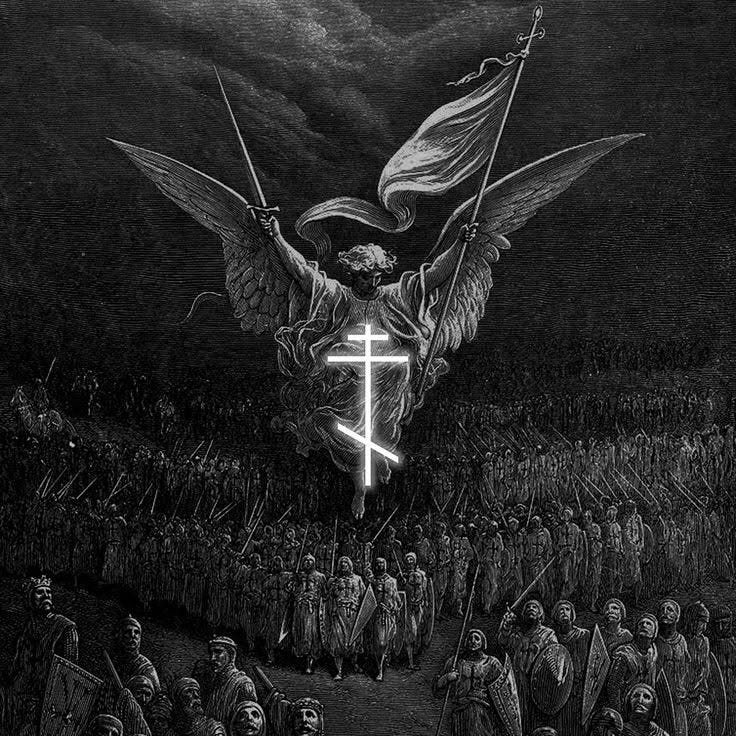
“The kingdom of God is within you.”
- Gospel of Luke 17:21 (King James Version), reinterpreted across Gnostic and mystical traditions as the presence of divine knowledge in the human soul
While Max struggles on Earth, a different drama unfolds on Elysium, one that the film initially presents as a subplot but that ultimately reveals itself as the political engine of the entire narrative, the hidden machinery that makes all the visible violence possible. Defense Secretary Jessica Delacourt (Jodie Foster, delivering a performance of ice-cold aristocratic menace, her vowels clipped into weapons, her posture a permanent accusation) is responsible for keeping the poor off the station. She sits in a control room filled with screens showing the approach vectors of unauthorized shuttles, and she presses buttons that launch missiles, and the missiles find their targets, and the shuttles become debris, and the debris becomes a memorial to no one. But she is also ambitious in the classical Roman sense - ambitio, the desire for office, for the cursus honorum that leads to supreme power, for the purple robes of the emperor that once stained with blood can never be cleaned. When President Patel (Faran Tahir) reprimands her for shooting down immigrant shuttles - a violation of the station’s nominal laws, a breach of protocol that could have diplomatic consequences - she responds not by reforming but by doubling down, by escalating, by moving from illegality to insurrection. She approaches John Carlyle, the CEO who built Elysium, and offers him something that sounds like a bribe but is actually a sacrament: defense contracts for life if he writes a program allowing her to stage a coup and install herself as president. Carlyle, who has long since sold any pretense of moral restraint - who has, indeed, forgotten that moral restraint is a thing one can have - agrees without hesitation. He writes the program and stores it not on a server or a drive but inside his own brain, in the neural tissue that once held memories of his children’s faces and now holds only code.
This image - a corporate algorithm hardcoded into neural tissue, a piece of malware running on the operating system of a human soul - is one of the film’s most potent and unsettling inventions, an image that has haunted me since I first saw it in a darkened theater in 2013. It literalizes a set of anxieties about information, power, and embodiment that have haunted Western philosophy since at least Plato’s Phaedrus, the dialogue in which Socrates tells the myth of Theuth and Thamus, the god who invents writing and the god-king who rejects it. In that dialogue, Socrates warns that writing will produce forgetfulness in the soul because people will no longer remember information but will rely on external marks. Writing, Socrates says, “will create forgetfulness in the learners’ souls, because they will not use their memories; they will trust to the external written characters and not remember of themselves.” Carlyle has done the opposite of forgetting. He has made his brain into a storage device, turning the organ of consciousness - the seat of the soul, if such a thing exists - into a hard drive. In doing so, he inverts the Socratic warning: the problem is not that external memory weakens internal memory; the problem is that internal memory becomes indistinguishable from external storage, that the boundary between self and data dissolves. Carlyle cannot lose the program because he is the program, or rather, he is the substrate on which the program runs, and when the substrate is damaged, the program corrupts. His body has become a text, and like all texts, it can be read - violently, surgically, without his consent, by anyone with the right tools and the right lack of scruples. He has made himself into a book that can be opened, and once opened, he can never be closed again.
This is also a deeply Gnostic move, a piece of heretical theology smuggled into a summer blockbuster. In Gnostic cosmology, as found in the Nag Hammadi library and the writings of Valentinus and Basilides, the material world is the flawed creation of a lesser deity, the Demiurge (often identified with the God of the Old Testament), who traps divine sparks of light in human bodies. Salvation consists of gnosis - secret knowledge, esoteric wisdom, the password that opens the gates - that awakens these sparks and allows them to ascend through the celestial spheres back to the Pleroma, the fullness of the divine, the original unity before creation fragmented it. The program in Carlyle’s brain is a secular gnosis, a piece of secret knowledge that, if extracted and used correctly, will overthrow the false god of Elysium (Patel, or perhaps the entire system of democratic governance) and install a new ruler (Delacourt, or whoever holds the code). But the film twists the Gnostic structure in a crucial way, a way that reveals its deep suspicion of all claims to redemptive knowledge. Knowledge is not liberating; it is merely a tool for replacing one tyrant with another. The gnosis Delacourt seeks is not a spark of divine light but a piece of malware, a virus disguised as a sacrament. The Demiurge is not defeated. He is rebooted, patched, updated to a new version. The Pleroma is not restored. It is replaced by a new prison, one with better graphics.
When Max and his friend Julio (Diego Luna, bringing a warmth and vulnerability that makes his eventual death all the more devastating) shoot down Carlyle’s shuttle and extract the program, the extraction scene is shot with the queasy intimacy of surgery, the camera refusing to look away from the wet work of information theft. Max jacks into Carlyle’s dying brain - the film’s visual language here borrows directly from cyberpunk cinema, from Johnny Mnemonic to The Matrix to Strange Days, from William Gibson’s novels to the anime Ghost in the Shell - and downloads the data through a cable that looks like an umbilical cord made of fiber optics. But the program becomes “scrambled,” locked behind a security protocol that only Carlyle’s living consciousness could unlock. The program, in other words, has become entangled with its host in a way that violates the clean distinction between software and hardware, between information and embodiment, between the ghost and the machine. This is a profoundly post-structuralist problem, a Derridean nightmare made literal. Jacques Derrida’s concept of différance - the endless deferral of meaning through the play of differences, the way that any sign refers only to other signs in an infinite chain that never reaches a final referent - here takes on deadly concrete form. The program cannot be read because it was never written in a language that could be separated from its writer, because the writer’s death scrambles the syntax, because the code is encrypted with a key that died when Carlyle died. Carlyle’s death, which occurs during the extraction (Max pulls the plug too soon, or perhaps just in time), ensures that the program will remain forever locked, a ghost in the machine that no one can access - except that Max, by downloading it into his own neural architecture, has become the new host, the new substrate, the new book. He carries the coup in his skull like a passenger, an alien consciousness, a second soul, a voice whispering code in a language he cannot understand. He is, in the language of information theory, a message that has become identical with its medium. He is no longer a man with a program in his head. He is the program, running on wetware, and when the wetware fails, the program will die with it.
This transformation of Max into a walking archive has ancient precedents that span the world’s religious traditions. In the Jewish tradition, the Sefer Torah - the Torah scroll - is not merely a book but a physical object that contains the divine name, a body of parchment and ink that is treated with the same reverence as a human body. To touch it is to touch holiness. To read it is to enter into a covenant with the God of Abraham, Isaac, and Jacob. To damage it is to damage the world. Max’s body becomes a secular Sefer Torah, a scroll of code that, if unrolled correctly, if read by the right priest, will rewrite the covenant between Elysium and Earth. In the Hindu tradition, the Bhagavad Gita is revealed on the battlefield of Kurukshetra, spoken by Krishna to Arjuna in the space between armies, and Arjuna’s body becomes the vessel for a divine teaching that will transform the world. Max’s body, irradiated and augmented, becomes a similar vessel, but the teaching he carries is not divine - it is corporate, transactional, the product of a CEO’s ambition and a defense secretary’s greed. In the Buddhist tradition, the dharma is carried in the minds of monks who memorize entire sutras, their bodies becoming libraries of liberation. Max carries a dharma of domination, a teaching whose only content is who gets to push the button. And yet, and yet - there is something sacred even in this, something that flickers at the edges of the frame. Because Max’s body is not just a storage device. It is also a sacrifice. And sacrifice, even when offered to the wrong god, even when coerced, even when meaningless, retains the form of meaning. The program in his brain is a curse, a weight, a death sentence. But it is also a key. And keys, even stolen keys, can open doors that were meant to stay closed forever.
IV: Kruger and the Dialectic of Violence - The Mercenary as Dark Mirror

“He who fights with monsters should look to it that he himself does not become a monster. And if you gaze long into an abyss, the abyss also gazes into you.”
- Friedrich Nietzsche, Beyond Good and Evil (1886), Aphorism 146
No discussion of Elysium can avoid Sharlto Copley’s performance as Agent M. Kruger, the black-ops mercenary whom Delacourt deploys as her extra-legal enforcer, her attack dog, her final argument. Kruger is a monster. He wears a scarred face that looks like a map of all the wars he has fought and won and forgotten - a topography of violence, each ridge and valley a story he will never tell because he has forgotten that stories matter. Later, after Max throws a grenade in his face, the Med-Bay will regrow his features, but the regrowth is imperfect, a patch job, a reminder that even the best technology cannot erase what he has become. He speaks in a guttural Afrikaans-accented growl that Copley (a South African himself, reprising the accent he used to such terrifying effect in District 9) deploys like a weapon, each syllable a small act of aggression. He seems to enjoy killing with the same intensity that other people enjoy food or sex or music, but it is not enjoyment exactly - it is something older, something reptilian, something that does not recognize the category of pleasure because it has never known anything else. He is, in the film’s moral economy, the pure embodiment of what Nietzsche feared: the abyss that gazes back, the monster that has not just fought monsters but become one, the gaze that has looked so long into darkness that it no longer sees light. But Kruger is not a philosophical abstraction. He is not a symbol of evil or a personification of sin. He is a product of the system he serves, a man made by the world he helps to maintain. He grew up on Earth, we learn in passing - a line of dialogue that the film does not underline, does not sentimentalize, does not use as an excuse - and was recruited into Delacourt’s black ops precisely because of his capacity for violence, his lack of hesitation, his willingness to do what others could not. He is not a demon who fell from heaven. He is a child who was broken, and then armed, and then pointed at the poor. And in that distinction lies the film’s darkest insight: the monster and the hero are separated not by nature but by the direction of their violence, not by what they are but by who they serve.
Kruger’s role in the film’s symbolic structure is that of the dark mirror, the shadow self, the doppelgänger that the protagonist must confront not because he is different from Max but because he is terrifyingly similar. Both men are products of violence, shaped by a world that values them only for what they can destroy. Both are enhanced by technology - Kruger receives a far more sophisticated exoskeleton after his near-death at Max’s hands, an upgrade that makes him seem almost invincible, his movements fluid where Max’s are jerky, his power effortless where Max’s is desperate. Both are dying - Kruger from the grenade that exploded in his face, the shrapnel that the Med-Bay could not find, the internal bleeding that no machine can stop; Max from the radiation that is eating his marrow like a slow fire. The crucial difference between them is not moral but metaphysical, not a matter of choice but of position. Max fights to save others - Frey’s daughter, the people of Earth, anyone who needs a Med-Bay and cannot afford one. Kruger fights to preserve the system that employs him, to protect the rich from the poor, to keep the gates closed and the missiles armed. In Hegelian terms, Max is the consciousness that has recognized the master’s injustice and struggles for recognition, for a world in which lordship and bondage are no longer the only options. Kruger is the consciousness that has accepted its role as the master’s instrument and seeks only to perpetuate the existing order of domination, because that order gives him a purpose, a paycheck, a reason to wake up in the morning and put on his boots. Kruger is, in this sense, a more perfect product of Elysium than Delacourt herself. He does not want to rule. He wants only to serve. His violence is not ambitious. It is professional, and professionalism is the most dangerous thing of all, because a professional can never be shamed, can never be persuaded, can never be converted. A professional simply does the job, and when the job is done, he does the next one, and the next one, until someone kills him or his body gives out.
This distinction recalls the classical philosophical problem of akrasia - weakness of will, the condition of knowing the good but doing the bad, which Plato and Aristotle wrestled with and which the Stoics claimed to have solved. Kruger knows that Elysium is unjust. He knows that the poor are being murdered at the border. He knows that Delacourt is using him. And yet he continues. Not because he is irrational, but because his rationality has been captured by the system of incentives that rewards his violence, because his desires have been shaped by a world that offers him nothing else, because he has been trained since childhood to respond to orders the way a machine responds to inputs. In this, he is a walking illustration of the prison-industrial complex, the military-industrial complex, the medical-industrial complex, and every other complex that turns human beings into instruments of state and corporate power. The philosopher Michel Foucault, in Discipline and Punish, argued that modern power operates not through spectacle (the public execution, the burning at the stake) but through discipline (the training of bodies to perform specific functions, the regulation of time and space, the normalization of behavior). Kruger is a disciplined body. He has been trained to kill, and he kills. The question of whether killing is right or wrong never enters his mind because his mind has been reduced to a response surface, a set of reflexes, a conditioned reflex that fires when the stimulus arrives. Stimulus: Delacourt gives an order. Response: Kruger executes the order. The abyss does not gaze back because the abyss has no eyes. Or rather, the abyss has eyes, but they are not his. They belong to the system that made him, and they see only targets.
The film’s climactic battle between Max and Kruger on Elysium’s computer core is not merely an action set piece - though it is a very good one, choreographed with a clarity and impact that Hollywood action films have largely forgotten how to achieve. It is a philosophical duel between two models of power, two ways of being in the world, two answers to the question of what a body is for. Max fights with the desperate, improvisational violence of someone who has nothing left to lose - a pankratiast in the ancient Greek style, using whatever is at hand (pipes, cables, the environment itself) to gain an advantage, fighting not like a trained soldier but like a cornered animal. He is not elegant. He is not efficient. He is effective, in the way that a dying man who has nothing to lose is always effective, because he does not have to save anything for later. Kruger fights with the cold, methodical violence of someone who has been trained in twenty ways to kill a man and has never had reason to question any of them - a warrior from the Kama Sutra of combat, each move flowing into the next, each strike calculated to maximize damage while minimizing exposure. Their exoskeletons clash with the sound of industrial machinery - hydraulic pistons hissing, alloy bones grinding, servos whining in protest - and Blomkamp’s camera stays close, refusing the heroic distance that would allow us to forget that these are two broken bodies pounding each other into further breakage. When Max finally disables Kruger’s exoskeleton by severing its neural link - a gesture that echoes the film’s broader critique of technological mediation, its insistence that connection is also vulnerability - Kruger responds by pulling a grenade and preparing to die with his enemy. He is, in this final moment, almost heroic: a Viking berserker screaming his way into Valhalla, a Japanese kamikaze pilot embracing the divine wind, a soldier who has internalized the logic of mutual destruction so thoroughly that death becomes just another tactical option, a move on the board, a sacrifice that checkmates the king.
But the film denies him even this tragic dignity. Max throws him over the ledge. The grenade explodes, killing Kruger alone. The mercenary dies as he lived: alone, in service to a system that will never mourn him, his body reduced to so much wreckage on the pristine floors of Elysium, his face - what is left of it - frozen in an expression that might be surprise or might be nothing at all. It is a death without ritual, without witness, without meaning - the death of a man who made himself into a tool and is discarded when the tool breaks, when the edge dulls, when the handle splinters. In this, Kruger becomes the film’s most damning indictment of the world it depicts. The poor are not the only ones dehumanized by the vertical schism, the only ones reduced to functions and statistics. The rich’s enforcers are dehumanized too, transformed into weapons that can be pointed in any direction but never aimed at their own condition, never allowed to ask whether they might be pointing the wrong way. Kruger is a tragic figure not because he is sympathetic - he is not, and the film never asks us to sympathize with him - but because his tragedy is invisible to him. He never knows that he is a slave. He thinks he is a soldier, a free agent, a man who has chosen his path. The abyss does not gaze back because the abyss has no self to gaze with, no consciousness to reflect on its own reflection. Kruger is not a monster. He is worse than a monster. He is a machine that has forgotten it was once a man.
V: The Med-Bay as Theological Problem - Healing Without Resurrection

“Death is the mother of beauty; hence from her, alone, shall come fulfillment to our dreams and our desires.”
- Wallace Stevens, “Sunday Morning” (1915), stanza V
The Med-Bay is the MacGuffin that drives the plot, the object of desire that every character seeks, the prize that justifies betrayal, theft, and murder. It is what Max wants, what Frey wants for her daughter, what every sick and dying person on Earth dreams of but cannot afford. It is also, the film suggests, what the rich fear losing more than anything else - the one thing that makes their privilege meaningful, the one thing that justifies the exclusion and the violence and the indifference. But the Med-Bay is more than a plot device. It is the film’s most profound theological object, a device that forces us to ask what it would mean to live in a world where death had been abolished - not through spiritual transformation, not through the resurrection of the body, not through the grace of God, but through technology, through engineering, through the application of sufficient resources to the problem of finitude. The Med-Bay can cure any disease or injury. It can regrow organs, repair neural damage, even reconstruct a face blown apart by a grenade. It can, we are told, cure leukemia in thirty seconds, reset broken bones in ten, purge radiation poisoning in five. What it cannot do, the film subtly suggests, is resurrect the dead. Carlyle dies, and the Med-Bay cannot bring him back. Max dies, and the Med-Bay cannot bring him back. The machine has limits, and those limits are the limits of the biological: it can repair, but it cannot reverse. It can heal, but it cannot raise. It is a medical device, not a miracle, and the difference between the two is the difference between a rich man and a god.
This limitation places Elysium in a fascinating relation to the Christian theology of resurrection and to the broader human dream of immortality that spans all cultures and all eras. In the Gospel of John, Lazarus is raised from the dead after four days in the tomb, his body already beginning to decay, and the miracle is read as a sign of Christ’s divine authority over life itself, as a foretaste of the general resurrection at the end of time. The Med-Bay has no such authority. It can only work on the still-living, on bodies that have not yet crossed the threshold into death, on patients whose hearts are still beating and whose brains are still firing. In this, it is less like a miracle and more like an intensification of existing medicine - a pacemaker, a ventilator, an ECMO machine, a dialysis unit, a course of chemotherapy, but turned up to eleven, optimized, miniaturized, made available only to those who can pay. The rich on Elysium have not conquered death; they have merely postponed it, purchased a few more decades of perfect health before the inevitable end, the same end that awaits the poor but arrives earlier and with more pain. The Med-Bay is a monument to what the cultural anthropologist Ernest Becker, in his Pulitzer Prize-winning The Denial of Death, called the human project of immortality symbolism: the attempt to transcend our mortal condition through cultural and technological achievements, to build something that will outlast us, to leave a mark that the grave cannot erase. But Becker argued that this denial of death is also the source of human evil - because we will kill to protect our immortality symbols, because we will exclude anyone who threatens them, because we will build walls and arm missiles and call it security. The rich on Elysium do not merely own the Med-Bays. They have made them into the central symbol of their superiority, their difference, their right to exist while others die. To let the poor use a Med-Bay would be to admit that the distinction between rich and poor is not ontological but accidental, not natural but political. It would be to admit that they are mortal too.
The film’s treatment of Frey’s daughter, Matilda (Emma Tremblay, a child actress who conveys the exhaustion of terminal illness with a stillness that breaks the heart), makes this theological dimension explicit and unbearable. Frey (Alice Braga, bringing a tenderness and ferocity that anchors the film’s emotional core) is a nurse, someone who has dedicated her life to healing, who has held the hands of dying strangers and whispered comfort that she did not feel, who has watched patients slip away despite her best efforts and learned to smile at the next one anyway. But she cannot heal her own child because the only cure is on Elysium, and she cannot get to Elysium because she is not rich, and she is not rich because she chose to be a nurse instead of a CEO, and she chose to be a nurse because she wanted to help people, and the system punishes that choice with her daughter’s death. She is a secular Madonna, a mother who watches her child die and can do nothing but pray to a god who does not answer, a god who has outsourced salvation to a corporation, a god whose name is Armadyne and whose face is a balance sheet. When she finally reaches a Med-Bay in the film’s climax - after Max has sacrificed himself, after the gates have opened, after everything has changed - the machine scans her daughter and begins the healing process with the same efficiency that a coffee machine brews a latte, the same indifference that a vending machine dispenses a candy bar. The sacred and the profane collapse into each other. The miracle is not a miracle; it is a piece of technology that has been withheld. The sin is not the lack of a cure. The sin is the hoarding of it. The sin is that a child had to die for thirty seconds of machine time, that a man had to die for a software update, that the poor had to storm the gates of heaven because heaven refused to open them.
And yet the film’s ending suggests that even this limited technology, democratized, could transform the world. After Max sacrifices himself to reboot Elysium’s computer - making every citizen of Earth a citizen of the station, resetting the access protocols, rewriting the terms of membership - medical shuttles descend to the planet carrying Med-Bays for everyone. The final shot shows lines of sick and injured people waiting to enter the shuttles, their faces a mixture of hope and disbelief, their bodies a catalogue of the world’s cruelty: a man with a bandaged stump where his hand used to be, a woman whose skin is yellow with liver failure, a child whose eyes are clouded with cataracts that could be fixed in a minute. It is a utopian image, but a fragile one, a hope that trembles on the edge of disappointment. The film does not show us what happens next. It does not show us the economic consequences of universal health care, the political struggles over resource allocation, the possibility that the rich might simply build another Elysium somewhere else, further away, with better missiles. It ends on a note of grace - unearned, undeserved, but present nonetheless, like a gift that arrives after the birthday has passed. In Christian theology, grace is unearned favor, a gift that cannot be merited and cannot be repaid, a love that precedes any act of love in return. Max’s sacrifice is not a trade - his life for everyone else’s health - because he was already dying, because he had nothing to give that he would not have lost anyway. What he gives is the choice to die in service of others rather than in service of himself, the decision to make his death mean something, to turn his expiration into an expiration of the old order. The Med-Bays descend not because Max has earned them - he could not have earned them, no one could - but because the system of exclusion has been broken, the code rewritten, the gates opened, the locks changed. It is a vision of salvation as political act, redemption as software update, heaven as a bug fix. The poet Wallace Stevens, in “Sunday Morning,” imagined a world without a Christian afterlife - a world where death is not a passage but an ending, and where beauty arises precisely from that finitude, from the knowledge that this is all we have and we had better make it count. Elysium offers the opposite: a world where death has been postponed but not defeated, where the rich have stolen beauty from the poor by stealing their mortality, where the only difference between a miracle and a machine is who gets to push the button. The film’s final gesture is to give mortality back to everyone - not as a curse, but as a shared condition, a common fate, a bond that cannot be broken by any missile shield. We all die. But we do not all have to die of treatable leukemia. That, for Blomkamp, is the difference between tragedy and injustice, between the sad and the obscene, between a world that hurts and a world that tortures.
VI: The Name Itself - Elysium as Anti-Eden, or the Failure of Transcendence

“Hell is other people.”
- Jean-Paul Sartre, No Exit (1944), Act I, scene V (originally “L’enfer, c’est les autres”)
To conclude the analytical body of this essay, we must return to the name. Elysium, in Greek mythology, was the final resting place of the heroic and the virtuous - Achilles, Helen, Cadmus, and those initiated into the Eleusinian Mysteries, those who had been purified and prepared and made ready for the journey. It was described by Hesiod in Works and Days as the Islands of the Blessed, where “the earth bears honey-sweet fruit three times a year.” Pindar sang of it as a place where “the sun shines at night, and the meadows are red with roses.” It was a place of gentle breezes, athletic competitions, music that never stopped, and the complete absence of pain. But it was also a place of exclusion, a gated community of the soul. Most souls went to the Asphodel Meadows, a gray and forgetful existence for those who had lived neither heroically nor wickedly, a place where identity dissolved into mist. The truly wicked went to Tartarus, the pit of torment, where Sisyphus rolls his rock and Tantalus reaches for fruit that always recedes. Elysium was a reward, not a right, a prize for running the race well, a destination earned through suffering and virtue. By naming his space station Elysium, Blomkamp invokes this mythological tradition only to invert it, to turn it inside out, to show us its hidden apparatus. The station’s inhabitants are not heroes; they are the merely wealthy. They have not run any race except the race to accumulate, not earned any prize except the prize of having more. They have not earned their paradise through virtue but through the accident of birth and the efficiency of their tax attorneys, through inheritance and exploitation and the quiet violence of compound interest. Elysium has become a gated community for those who could afford the ticket, and the rest of humanity has been consigned to an Asphodel Meadows of pollution and poverty, a gray existence where the only color is the orange of warning lights and the red of blood.
But the name carries another resonance, one that the film exploits with savage precision, a resonance that connects the classical Elysium to the biblical Eden and the Islamic Jannah and the Buddhist Sukhavati. In Homer’s Odyssey, Elysium is described as a place “where life is easiest for men. No snow is there, nor heavy storm, nor ever rain, but ever does Ocean send up blasts of the shrill-blowing West Wind that they may give cooling to men.” It is a place of perpetual comfort, a climate-controlled paradise, a world without weather because weather is the signature of mortality. The film’s Elysium is exactly that - climate-controlled, beautiful, comfortable, with swimming pools that are always the perfect temperature and lawns that are always the perfect green - but the comfort has been purchased at the cost of the Earth’s climate, at the cost of the poor’s lungs, at the cost of the planet’s future. The rich live in eternal spring because the poor live in eternal summer, eternal winter, eternal storm. The West Wind that cools Elysium is the same wind that carries pollution to the poor, that spreads the dust from the factories across the slums, that brings the acid rain that eats through the roofs of the shantytowns. The film’s ecological subtext, never made explicit but always present, like a watermark on every frame, is that the station’s existence depends on Earth’s destruction. The rich did not simply leave a dying planet. They killed it on their way out, and they did not look back, and they do not intend to look back, and if they did look back, they would see nothing worth seeing.
Sartre’s famous line from No Exit - “Hell is other people” - is usually misunderstood. Sartre did not mean that people are unpleasant to be around, though they often are. He meant that the gaze of the other fixes us, objectifies us, makes us into something we are not, robs us of our freedom by forcing us to see ourselves from outside. Hell is not the presence of others but the inability to escape their judgment, their classification, their reduction of our infinite interiority to a finite set of traits. On Elysium, the rich have solved this problem by eliminating the gaze of the poor. They cannot see the poor from the station; the poor are specks on a brown planet, invisible at orbital altitude, smaller than dust. The poor, in turn, can see Elysium - it glows in the night sky like a second moon, like a promise, like a judgment - but their gaze has no power, no purchase, no ability to fix or objectify the rich. They are looking at a world that does not look back, at eyes that never meet theirs, at a heaven that has forgotten that earth exists. Hell, for the poor, is not other people. Hell is the absolute indifference of other people. Hell is the knowledge that you are not even hated, because hatred requires acknowledgment, and acknowledgment requires seeing. The rich do not hate the poor. They do not think about them at all. And that non-thinking, that absence, that void where empathy should be, is more terrible than any cruelty, because cruelty at least presupposes a relation. Indifference presupposes nothing. Indifference is the abolition of relation, the end of the social contract, the silence of a god who never spoke.
This is the film’s most devastating critique of contemporary neoliberalism, a critique that has only become more urgent in the decade since the film’s release. The political theorist Wendy Brown has argued that neoliberalism is not merely an economic policy but a form of rationality, a way of thinking that redefines all human activity as enterprise, all human relationships as markets, all human values as prices. The poor are not citizens with rights; they are “human capital” that has failed to appreciate, that has not invested wisely in its own development, that has made the mistake of being born in the wrong place to the wrong parents. The rich are not citizens with obligations; they are successful entrepreneurs who have optimized their lives, who have made the right choices, who deserve every penny they have because the market does not make mistakes. Elysium is the logical conclusion of this rationality, the endpoint of a trajectory that began with Reagan and Thatcher and has continued through every austerity program and every trade deal and every tax cut for the wealthy. It is a space station where the successful have literally lifted themselves out of the gravitational field of the unsuccessful, where the 1 percent has become the 0.0001 percent, where the only remaining connection between the two worlds is the one the film’s plot exploits: the rich still need the poor to manufacture their goods, to build their shuttles, to clean their factories. But even that connection is being automated away, outsourced to robots that do not demand health care or vacation time. The robots that Max works alongside in the film’s opening scenes - dumb, tireless, replaceable - are the harbingers of a world where the poor will not even be needed as workers, where they will be, in the language of the economist, “surplus population,” homo sacer in Giorgio Agamben’s formulation: lives that can be killed without penalty because they do not count as political beings, because they have been excluded from the category of the human, because they have been made into exceptions to every rule.
And yet the film refuses to end in despair. When Max’s sacrifice reboots the station’s computer and declares every Earth citizen a citizen of Elysium, he is not merely redistributing resources or opening the gates or sharing the wealth. He is redefining the terms of membership itself, rewriting the constitution, changing the rules of the game. The new Elysium - the one that dispatches Med-Bays to heal the sick, the one whose shuttles fly downward instead of up - is no longer a reward for virtue or wealth. It is a condition of existence, a baseline, a floor below which no one can fall. Health care becomes a right, not a privilege, not a commodity, not a gift that can be revoked. The vertical schism is collapsed, not because the poor ascend to the rich (they do not; they remain on Earth, in their ruined cities, with their dust-filled lungs) but because the rich’s technology descends to the poor, because the Med-Bays are unbolted from their moorings and sent down like manna from heaven, because the gates are opened and the guards are dismissed and the missiles are unarmed. It is, in the language of political theology, a kind of incarnation: the Med-Bay takes on flesh and dwells among us, full of grace and truth, and we behold its glory, the glory as of the only begotten of the corporation, full of grace and truth. The name “Elysium” is retroactively redeemed. It becomes not a place of exclusive bliss but a promise of universal healing, not a reward for the few but a condition for the many, not a halo floating above a dying world but a net cast wide enough to catch everyone. The broken ring, for a moment, becomes whole. And in that moment, however brief, however fragile, however likely to be broken again, something that looked like justice appears.
VII: The Sacrifice That Changes Nothing - Max as Reluctant Messiah
“Greater love has no one than this: to lay down one’s life for one’s friends.”
- Gospel of John 15:13
We come, finally, to Max’s death. It is not a surprise. The film has told us from the beginning that he is dying, has counted down the days with the clinical precision of a terminal diagnosis, has shown us the radiation spreading through his body like a stain. But knowing that a character will die is not the same as watching him die, and Blomkamp films Max’s final moments with an attention to the body’s failure that is almost unbearable to watch. Max is plugged into the Elysium computer core, his neural interface connected to the station’s operating system, his exoskeleton whining as it tries to keep his failing organs running. Spider tells him that the data transfer will kill him, that there is no way to download the program without overwriting his consciousness, that he will cease to be Max and become a node in the network. Max says his goodbyes to Frey - a few words, a look, a touch that says everything the script cannot - and initiates the download. His eyes go wide. His body convulses. The light leaves his face. And then he is gone, and the station reboots, and the Med-Bays begin their descent, and the poor are healed, and the credits roll.
This is the structure of sacrifice, the oldest story humans tell. From Isaac bound on the altar to Jesus nailed to the cross, from Iphigenia offered for the winds to Odin hanging on Yggdrasil for the knowledge of runes, from the purusha of the Rigveda whose dismemberment creates the cosmos to the buffalo of the Plains Indians whose death feeds the tribe - the story is always the same: someone dies so that others may live. Max’s death fits this pattern perfectly, almost too perfectly. He is the scapegoat who carries the sins of the community into the wilderness. He is the suffering servant who was pierced for our transgressions and crushed for our iniquities. He is the grain of wheat that falls into the ground and dies and bears much fruit. But there is something about Max’s sacrifice that does not quite fit, something that makes the pattern twist and break. Because Max is not a willing sacrifice. He does not choose to die. He is dying already, and he chooses to make his death mean something rather than nothing. The difference is crucial. Jesus went to the cross knowing that he could have called down legions of angels, that his death was a choice among alternatives. Max has no alternatives. The radiation is eating him from the inside. He will be dead in hours regardless of what he does. The only choice he has is whether to die on his feet or on his back, whether to die in service of something or in service of nothing.
This is the film’s deepest theological insight, and it is a troubling one. Grace, in Christian theology, is unearned. You cannot deserve it, cannot work for it, cannot sacrifice enough to make it happen. It comes as a gift, or it does not come at all. Max’s sacrifice does not earn the Med-Bays. They descend not because he has paid a price - he has paid nothing he would not have lost anyway - but because the program is downloaded, because the coup is averted, because the system’s code has been rewritten. His death is not the cause of the healing. It is the occasion of it, the circumstance, the accident. The Med-Bays would have descended even if Max had died in a different way, even if his heart had simply stopped from the radiation, because the program was in his head and the program needed to be downloaded and downloading it would kill anyone. Max is not a substitute. He is not a ransom. He is a carrier, a vector, a medium. The message kills the messenger, but the message is not about the messenger. The message is: the gates are open. Come in and be healed.
And yet the film cannot help but read Max’s death as a sacrifice, cannot help but frame it with the iconography of martyrdom - the dying hero, the tearful farewell, the final act that redeems a flawed life. This is the contradiction at the heart of Elysium, the tension that Blomkamp admitted he could not resolve. The film wants to be a political story about systems and structures, about the way injustice is baked into the architecture of the world. But it keeps slipping into a religious story about individual heroism and sacrificial love, about one man who makes a difference because he is willing to die. The two stories are incommensurable. If the problem is systemic, one man’s death cannot solve it. If the solution is individual, the system was never the real problem. The film tries to have it both ways, and in the trying, it reveals the limits of its own imagination. Blomkamp can imagine a world where the rich live in space and the poor live in dust. He can imagine a technology that heals all diseases. He can imagine a coup, a chase, a fight, a sacrifice. But he cannot imagine a politics that does not depend on a hero, a revolution that does not require a messiah, a change that comes from collective action rather than individual death. The film ends with the Med-Bays descending, but it does not show us who will distribute them, who will decide who goes first, who will guard them from the rich who might try to take them back. It does not show us the revolution that follows the miracle. It shows us only the miracle itself, and then it stops, because what comes after is too hard to imagine, too messy, too political for a story that has cast its lot with the hero.
Perhaps this is why Blomkamp said he “fucked it up.” Not because the film is badly made - it is not; it is beautifully made, with a visual imagination that most directors would kill for - but because he could not solve the problem he set for himself. He wanted to make a film about the 99 percent and the 1 percent, about immigration and health care and the banality of evil, about a world where the poor are left to die so that the rich can live forever. But he ended up making a film about one man who puts on a metal suit and punches people until the computer reboots. The politics are there, in the margins, in the dialogue, in the images of sick children and missile strikes. But the center of the film is the hero, and the hero is an individual, and individuals die, and their deaths change nothing and everything at the same time. Max dies, and the Med-Bays descend, and the film ends. What happens next? The film does not know. Neither do we. We are left with the image of the shuttles landing, the lines of the sick, the hope that something might change. It is not enough. It has never been enough. But it is all we have, and Blomkamp gives it to us without irony, without apology, without cynicism. He gives us the image of grace - unearned, undeserved, fragile - and he asks us to want it. That wanting, perhaps, is the beginning of politics. Not the solution. Just the beginning.
Conclusion: The Broken Ring
“The philosophers have only interpreted the world in various ways; the point is to change it.”
- Karl Marx, Theses on Feuerbach (1845), Theses XI
We return, in the end, to the ring. Elysium is a torus, a donut, a circle with a hole in the middle. It is a perfect shape, mathematically elegant, structurally sound. But it is also a broken circle, a ring that does not close because the center has been removed. The poor live in the hole, in the void that the rich have left behind, in the space that was supposed to be shared but has become a vacuum. The film’s final gesture - the descent of the Med-Bays, the declaration of universal citizenship, the opening of the gates - is an attempt to fill the hole, to close the ring, to make the circle whole again. But the film knows, even as it shows us this closure, that it cannot last. The rich will build another Elysium, further away, with better missiles. The poor will die of other diseases, other accidents, other cruelties. The ring will break again. It always breaks.
This is not a counsel of despair. It is a recognition of the scale of the problem. Elysium is an imperfect film about an imperfect world, a world that we have made and that we could unmake if we chose to, but that we have not yet chosen to unmake because the cost seems too high, the effort too great, the outcome too uncertain. The film offers no blueprint for revolution. It offers only an image: the shuttles descending, the gates opening, the sick being healed. It offers a moment of grace, a glimpse of what the world could be if we decided to stop hoarding the cure. That glimpse is not a solution. But it is a beginning. And beginnings are all we ever have.
The final image of Elysium is not a statue of Max or a monument to his sacrifice. It is a line of people waiting to enter a medical shuttle - ordinary people, sick people, people who have spent their whole lives looking up at the ring and wondering if anyone up there could see them. They are not heroes. They are not messiahs. They are simply alive, and they would like to stay that way. The film ends before any of them enter the shuttle. We do not see the healing. We see only the waiting - the moment between the miracle and the proof, the instant when hope is still hope and has not yet become memory, when the gates are open but not yet crossed, when the broken ring is still broken but beginning to close. In that instant, Elysium achieves something that no amount of philosophical argument could match. It makes us want the shuttles to land. It makes us want the gates to open. It makes us want to believe that the rich are not the only ones who deserve to live. That is not a solution to the problem of injustice. But it is the precondition for any solution. First, you have to want the world to change. Then, and only then, can you begin to ask how. The ring is broken. The question is whether we will help to close it - or simply watch from below as it rotates, indifferent, above our heads, a promise that was never meant for us.